
Septic tank installation in Plant City
Out in east Hillsborough there is no sewer line coming, so the system you put in the ground is the system for the next thirty years. Jacob sizes it, permits it through the Hillsborough County health department, and sets the drain field high enough to stay above the sandy soil water table through every wet season.
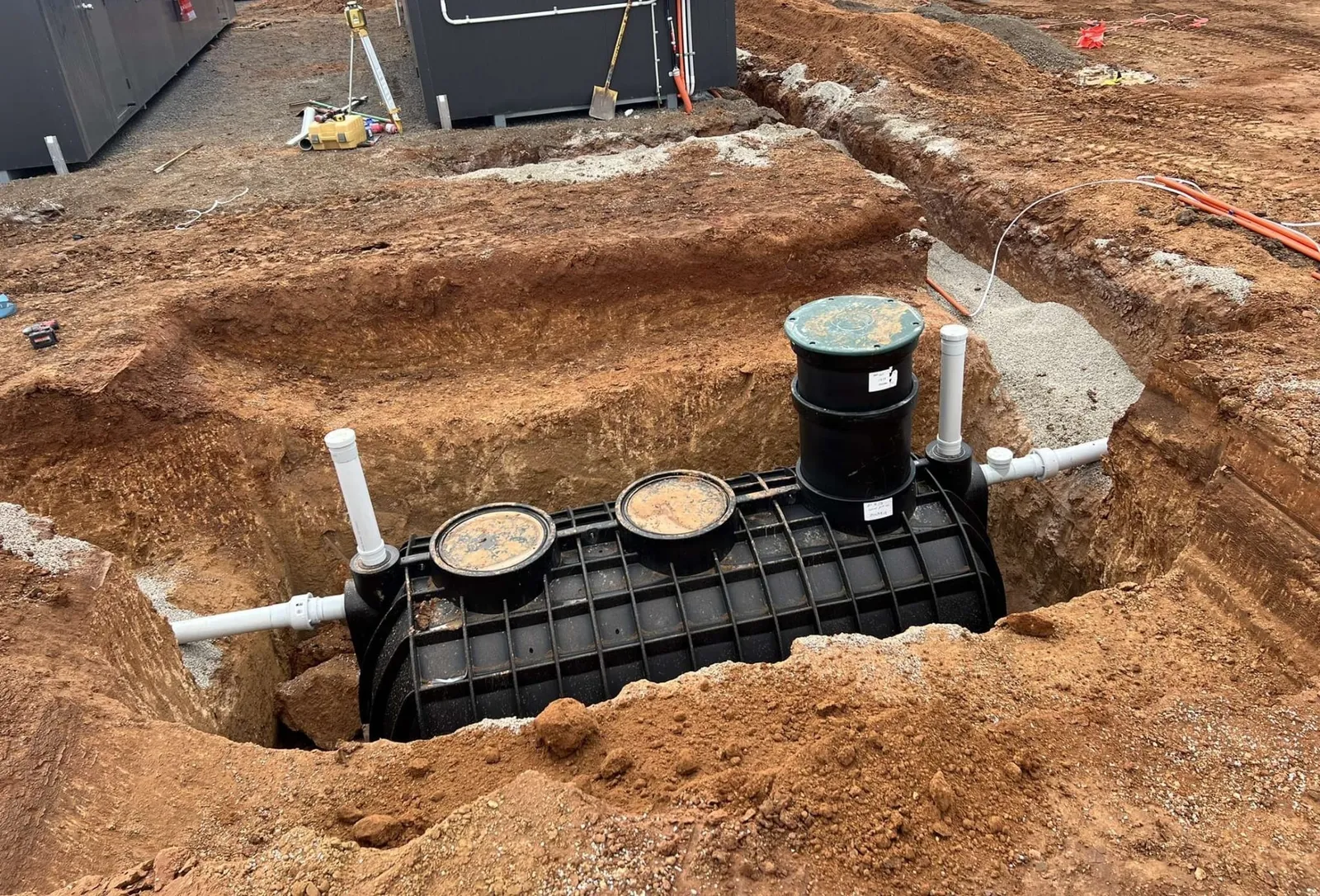
Installing a system Plant City ground can carry
Every installation starts underground, with the soil, and around Plant City the soil is sand over a water table that rises with the season. Sandy ground percolates fast, which is good, but on low-lying acreage and near the creeks and drainage that thread the ag belt, the seasonal high water table climbs enough to set the legal depth of a drain field. Before anything is dug, the state requires a site evaluation and a soil test that reads exactly how high that water table gets. We schedule those, walk the evaluator through the property, and handle the application with the Florida Department of Health in Hillsborough County so the permit lands without you chasing paperwork.
Then comes the part homeowners never see and live with longest. The hole has to be cut clean and to grade. The tank has to sit dead level on stable bedding, because a tank that settles crooked holds sludge in the wrong corner for its whole life. On lower or wetter lots the field frequently has to be raised, sometimes as a full mound of clean engineered fill, to get the trenches above the wet-season water line. Getting that elevation right is the difference between a system that serves thirty years on a Cork or Springhead property and one that struggles every August. Jacob runs the excavator himself, sets the tank himself, and checks every elevation himself. There is no crew of subcontractors to manage and no version of this where you find out later what got skipped.
We install complete conventional and mound systems for new construction on Plant City acreage, and we replace failed tanks and fields on the older homesteads near downtown and out along the farm roads. Because the company also does site preparation and land grading, the same machine that sets your system can build the lot up around it, cut a pad for a barn or shop, and correct the drainage that acreage properties so often need. One contractor, one schedule, one person responsible for the finished product. When the inspection passes and the system is covered, the yard is graded smooth and ready for sod, documented in our gallery alongside every other Plant City job.
Materials are not all equal, and it shows over decades. We set concrete tanks from established Florida precast yards, with the joints sealed and the lids fitted right, and we plumb them in schedule-rated pipe rather than the thin-wall stuff that crushes under a settling trench or a farm truck. Risers come standard so every future pump-out and inspection happens at grade instead of under a foot of Plant City sand. None of that shows up in a drive-by price comparison, and all of it shows up when the cheaper system down the road fails first.
Replacing a failed farmstead system?
If your current tank or field is at the end of its life, Jacob will tell you plainly whether repair or replacement is the cheaper path over ten years. Straight answer, firm written price, no pressure.
(863) 514-2176 Send a MessageHow a Plant City installation goes
Walk the site
Jacob comes out, reads the lot, the slope, the well location, the setbacks and any farm infrastructure, and talks through what your household actually needs. The visit costs nothing.
Permit and plan
Soil test, site evaluation and the Hillsborough County health department application all get handled for you, including the water-table read that decides conventional versus mound. You see the firm written price before any dirt moves.
Dig, set, restore
Most residential installations take one to three days in the ground. The tank is set level, the field set high enough for the water table, inspected, covered, and the yard graded back smooth.
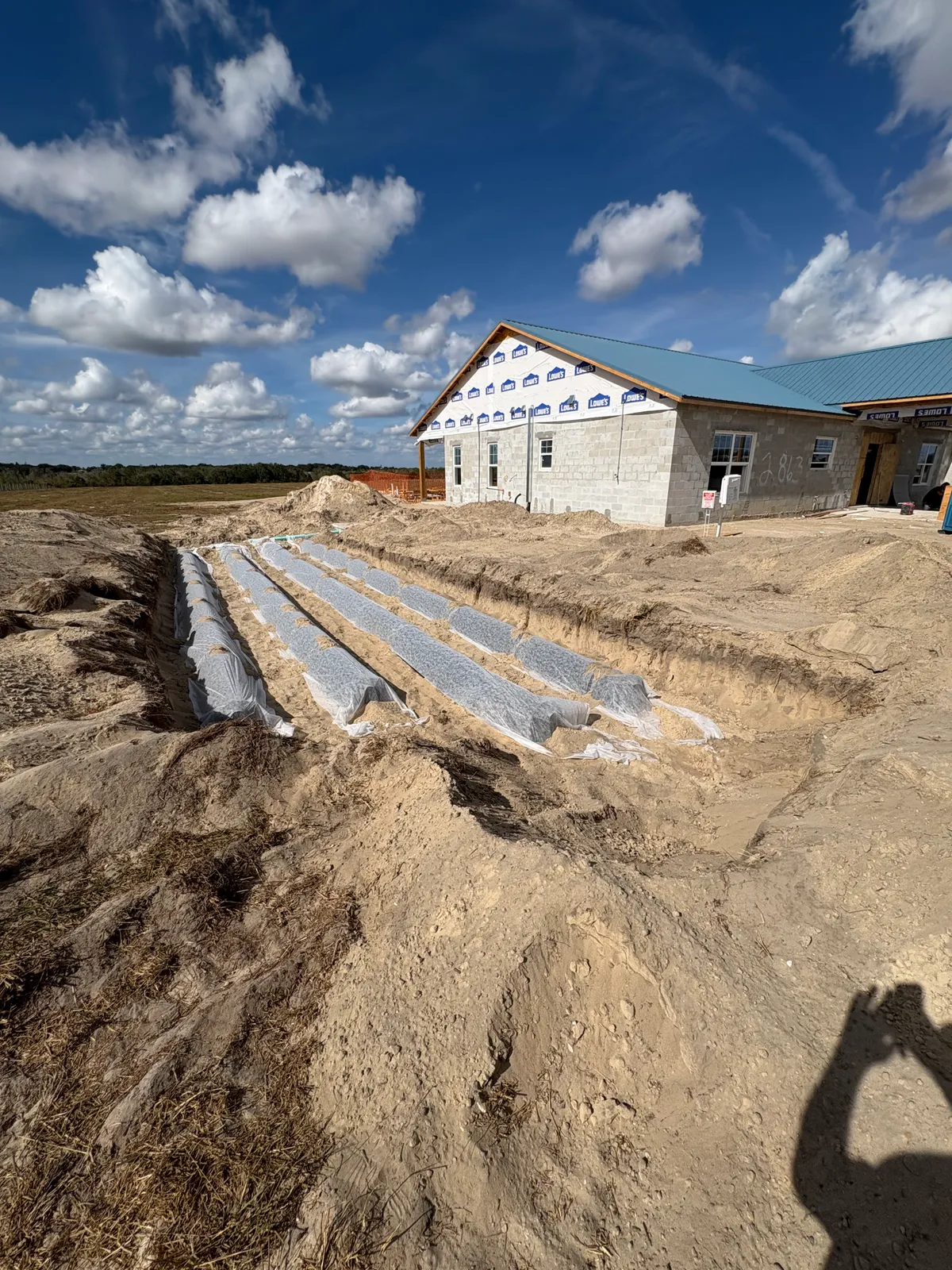
Built for east Hillsborough ground
Septic rules are written statewide, but the ground is local, and Plant City’s ground is sand, farmland and a water table that moves. Lower acreage near the creeks and the wetter edges of the ag belt sits close to a table that rises in summer, which pushes many properties toward raised or mound fields. Higher, drier lots drain freely and a conventional system does the job. The soil test settles it, and knowing which lots need what before you dig is the difference between passing inspection the first time and rebuilding.
Jacob has installed systems across Plant City, from downtown streets to the farm roads out toward Knights and Cork, and the rest of the region for eight years. He works Hillsborough and Polk permitting every month, knows which inspectors look for what, and builds to pass on the first visit. If you are buying acreage and want to know what a system will involve before you close, send the parcel address and he will give you a real answer.
Jacob installed 80 ft of culvert at our home. Fantastic job! Highly recommend! We are very pleased with the finished work. Thank you Jacob!
Nelda Brehse Molnar · Installation customer
Serving all of Plant City
We install and replace systems across the city proper, downtown, Springhead, Knights, Cork, Dover and the rural acreage between, all part of Hillsborough County and the wider service area. If your address says Plant City, or sits right on the edge of it, ask anyway; the answer is almost always yes.
Plant City installation questions, answered straight
These come up at nearly every acreage installation site visit. Anything else, ask before you sign anything, with us or anyone.
What does a new septic system cost in Plant City?
It depends on the system the soil and the county will let you build. Mound systems run higher than conventional ones because of the engineered fill they require, and lower or wetter Plant City lots more often need that raised fill, so plan for it if you sit near a creek or on low ground. Jacob walks the site and gives a firm written price instead of a guess over the phone.
Do Plant City lots need a mound system?
Some do. When the seasonal high water table sits too close to the surface, the state requires the drain field to be raised in a mound of clean fill above the wet-season line. Lower acreage near the creeks and drainage frequently qualifies for mounds; higher, drier lots often carry a conventional system. The soil test decides, not the contractor.
Is septic permitting different in Plant City than in Polk County?
The permit runs through the Florida Department of Health in Hillsborough County instead of Polk, with its own forms and scheduling. We work both counties every month, so the difference is ours to manage, and your quote and timeline already account for it.
What size septic tank does my Plant City house need?
Florida sizes tanks by bedroom count. A three-bedroom home generally needs a mid-size tank and a fourth bedroom pushes it up from there. Jacob sizes for the house you might build onto, not just the one standing today, which matters on older homesteads that have added bathrooms and out-buildings over the years.
Will the installation wreck my acreage yard?
The work area gets dug up, there is no way around that. The difference is what happens after. We grade the disturbed ground smooth, feather it into the rest of the property, and leave it ready for seed or sod. On acreage we also correct the drainage while the machine is there, so the ground often sheds water better after the job than before it.
Can you handle the septic for a new home build on Plant City acreage?
Yes, and it pairs well with our site prep work. We can clear the lot, cut the pad and any barn or shop pads, bring fill to grade, put in the culvert and drive, and install the system on one schedule, which saves you weeks of waiting between separate contractors on a Plant City build.
Who handles the Plant City health department inspection?
We do. The system gets inspected by the Florida Department of Health in Hillsborough County before it is covered, and Jacob schedules that inspection, meets the inspector on site and stands behind the work in person. You are never the one coordinating between a contractor and the county.