
Septic tank installation in Bartow
Putting a new tank and field into Bartow ground is a soil question before it is a plumbing question. Jacob reads the parcel, gets it evaluated, carries the paperwork through the county health department, and builds a system the dirt on your property can actually carry.
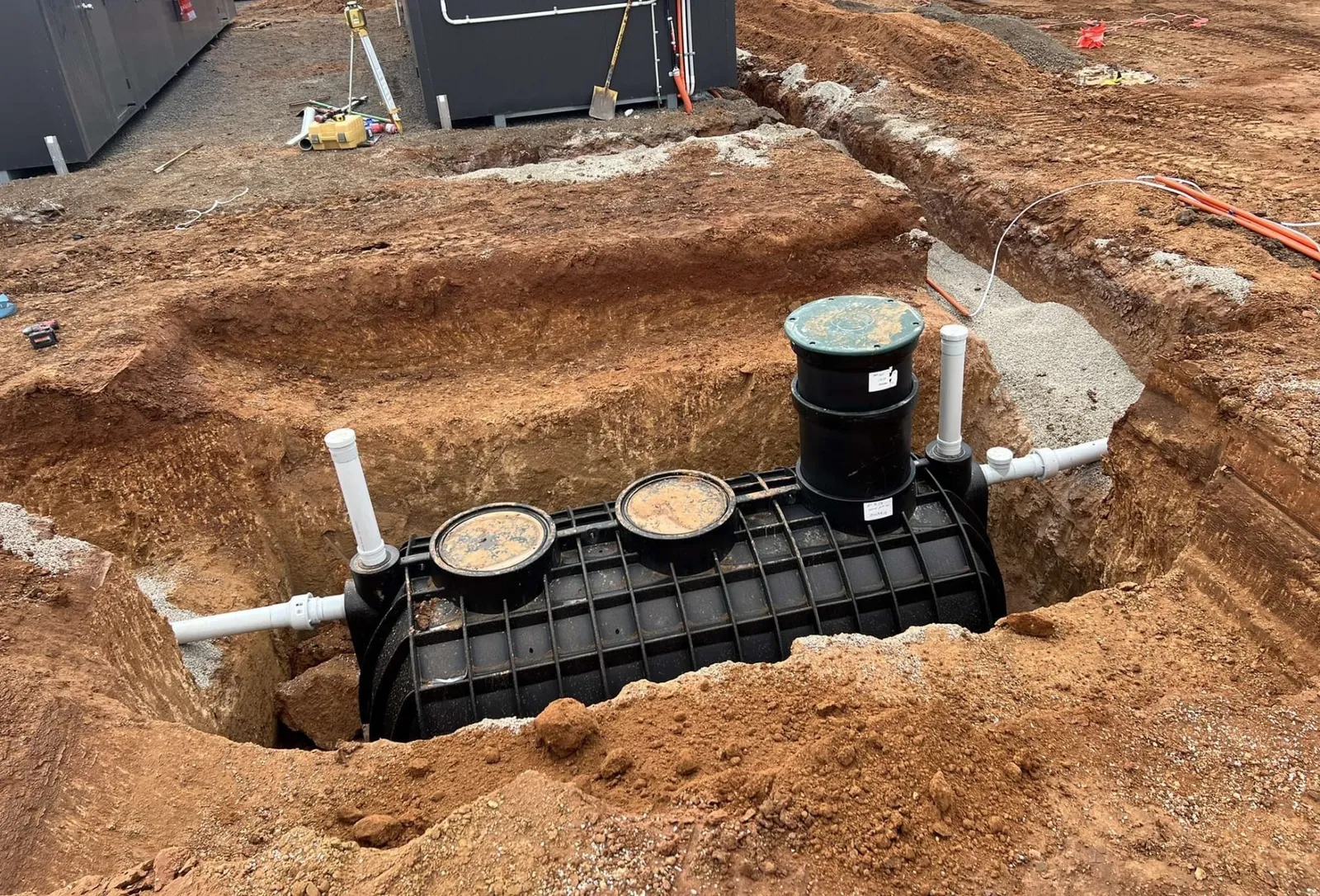
Where the tank and field can go
Bartow is the county seat and one of the oldest towns in Polk, and the sewer map reflects that history. The core has pipe. Move outward and the parcels go septic in a hurry: acreage off Highway 60 running east and west, rural roads heading south toward Fort Meade, homesteads strung up 98 toward Highland City. If your address sits in any of that, a new house or a replacement system means siting a tank and a drain field on your own ground, and where those two things land is decided before anybody digs.
Siting is mostly a subtraction problem. The field has to keep its distance from the well, the property lines, the surface water, and anything else the code puts a setback on. It needs an area large enough to hold the trenches the permit calls for, plus room set aside for a replacement field down the road, which people forget until the day they need it. It has to sit where the tank can drain to it by gravity when the topography allows, because gravity never fails and a pump does. And the whole arrangement needs to stay clear of where you plan to put the shop, the pole barn, the fence line and the second driveway. Homeowners bring us drawings all the time with the field sitting exactly where the RV pad was going.
On acreage, that puzzle usually solves itself, since there is room to work with. On the older lots closer to town it gets tight, and sometimes the answer is a different field configuration in a smaller footprint. Either way, Jacob walks the parcel with you before anything is committed to paper, and that conversation is free. Photos of finished work sit in the gallery, and you can reach him straight through the contact page or at (863) 514-2176.
Buying acreage around Bartow?
Send the parcel number before you sign.
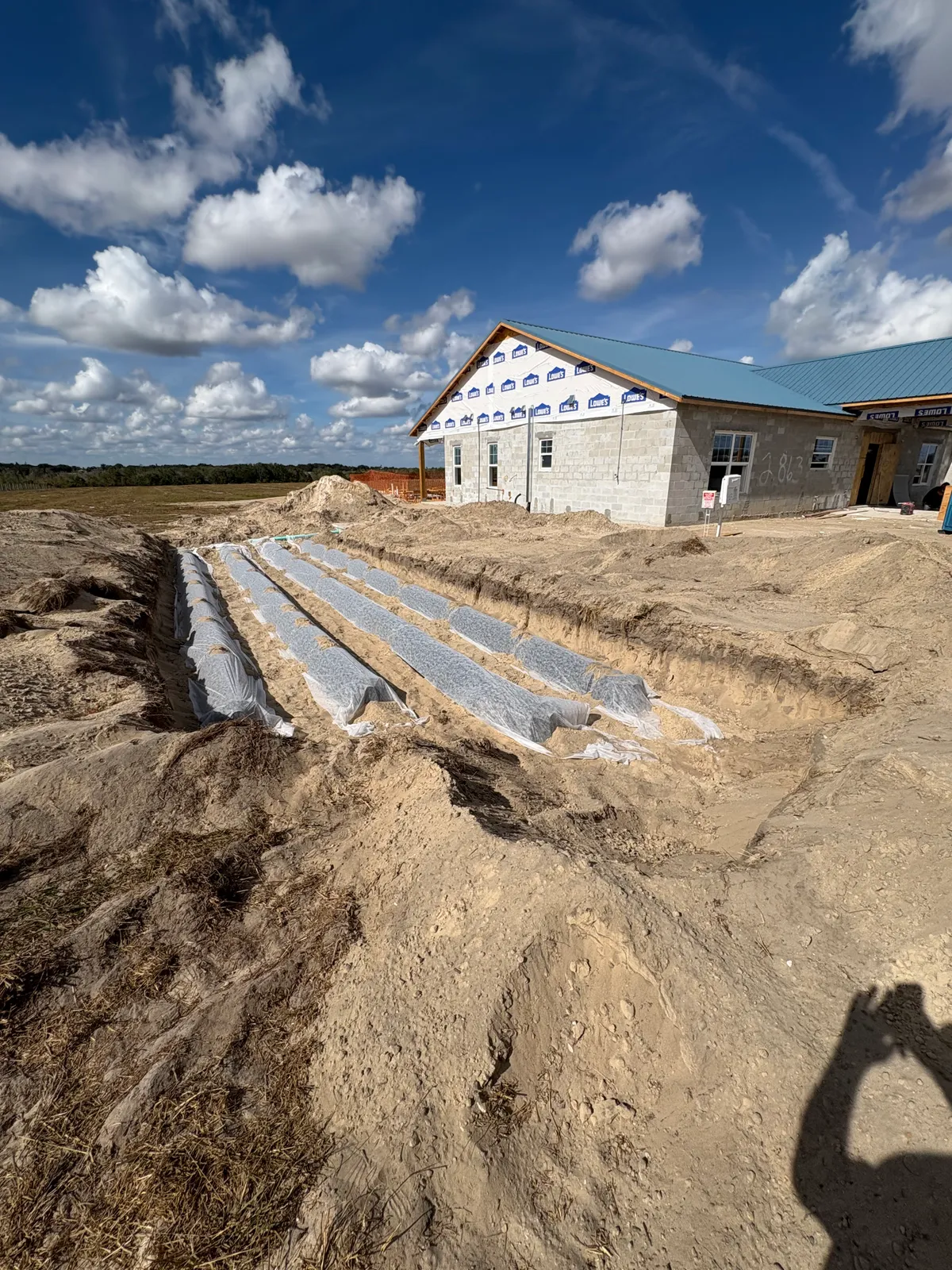
Phosphate country and the clay problem
The southern reaches of Bartow sit in phosphate country, and generations of mining left the ground there uneven in a way no map shows you. Pockets of clay-heavy material sit mixed into the native sand, sometimes within a few hundred feet of each other. That matters more here than almost anywhere else we work, because sand and clay behave like opposite materials once effluent reaches them. Sand takes water and moves it along.
A field designed on the assumption of sand and then built into clay does not fail politely. It backs up, it surfaces, and it does it during the wet months when you least want to be digging. So the soil evaluation on a Bartow parcel is the real design document, not a formality anyone should rush past. It tells us how fast the ground accepts water and how high the seasonal water rises, and those two readings set the size of the field, the shape of it, and whether the site can carry a straightforward gravity system at all. Some Bartow lots need substantially more field area than a lot the same size two towns over. That is not upselling, it is arithmetic the soil hands you.
When a system does eventually need attention, the same understanding of the ground applies. Repair work and drain field restoration around here both start with the same question about what the dirt is doing.
Elevation, the river, and the permit clock
Reading the low ground
The Peace River floodplain side of town makes elevation work harder than usual. A drain field has to sit high enough above wet-season water to keep functioning, so on low parcels the design comes back raised, with clean fill under it. That is a cost and a schedule item, and better to know in week one.
The cut that gets remembered
Grades tie together out here. A pad cut six inches too low gets remembered every June, and the same is true of a field set at the wrong elevation. We shoot the whole area before we design anything, so the tank, the field, the house pad and the drive all agree with each other.
The county process
Applications, evaluations and inspections run through the health department, and their calendar is their calendar. Jacob files the paperwork, meets the evaluator and the inspector on site, and tells you honestly where the file sits. Nobody here promises a date the county has not given.
What a new system costs your yard
There is no version of this work that leaves the ground untouched. A tank hole, a field area and the trench between them all get opened, and a machine has to reach every one of them, which means a working path across the property. On Bartow acreage that is rarely a hardship. On a tighter lot it means planning the route around the trees and the fence you want to keep, and saying so out loud beforehand.
What we control is the finish. Disturbed ground gets graded back smooth and feathered into the rest of the yard, ready for seed or sod, and the risers get set where a hose can reach them years from now, which is what makes future pumping and any inspection a routine visit instead of a shovel hunt. More on the town is on the Bartow page, the wider picture on the Polk County page, and the full map on the service areas page.
The experience was straightforward and honest. Jacob kept in touch and was always here when promised.
Rhonda Carney · Septic customer
Bartow installation questions we hear on site
Seven things come up on nearly every county-seat walk. If yours is not here, put it to Jacob directly and you will get a straight answer.
Concrete, plastic or fiberglass tank, and does it matter?
It matters less than people expect and more than salespeople admit. Concrete is heavy, stable once set, and the long-standing default here. Plastic and fiberglass weigh little, which makes them handy on tight access, though they need careful backfill and can float if the water comes up around an empty one. Site conditions pick the winner.
How much of my Bartow acreage will the machine tear up?
The tank hole, the field area, and a working path wide enough for equipment to reach both. On open acreage that path is easy to route around what you care about. Tell us on the walk which trees, fences and gates matter, and we plan the approach before the machine ever comes off the trailer.
My neighbor’s lot percs fine. Does that tell me anything about mine?
Almost nothing, in this part of the county. Old phosphate ground mixes clay pockets into the native sand, and the mix can change inside a single parcel, never mind across a property line. Your evaluation reads your dirt. That is the only reading the design and the permit will accept.
What does clay actually change about the design?
Mainly the size and shape of the drain field. Ground that accepts water slowly needs more surface area to move the same daily flow, so trenches get longer or more numerous, and sometimes the layout shifts to a different configuration entirely. Occasionally the answer is fill and a raised field instead.
My property is near the Peace River. Am I automatically raised?
Not automatically, but low ground there frequently ends up that way. What decides it is the distance between the bottom of the proposed field and the seasonal high water, measured during the evaluation. Sit high enough above that line and a conventional field works fine, even close to the water.
How long does the whole thing take from first call?
The digging is the short part, usually a matter of days. The county side is what sets the calendar: evaluation, application review, then the inspection before backfill. Start the process while the house plan is still being finalized and the septic will not be what holds up your build.
Can you do the pad and the drive while you are here?
Yes, and on acreage it is the sensible order of operations. The same machine that sets your tank can cut the pad, build the culvert and drive, and handle the pasture drainage. One mobilization, one schedule, and the grades all get set to agree with each other rather than being negotiated between three contractors.