
Drain field restoration in Haines City
A field that ran fine in March and backed up in August has not necessarily failed. It may be drowning. Telling those two apart is the whole job, because they get different answers, and Jacob will tell you which one you have before you spend a dollar.
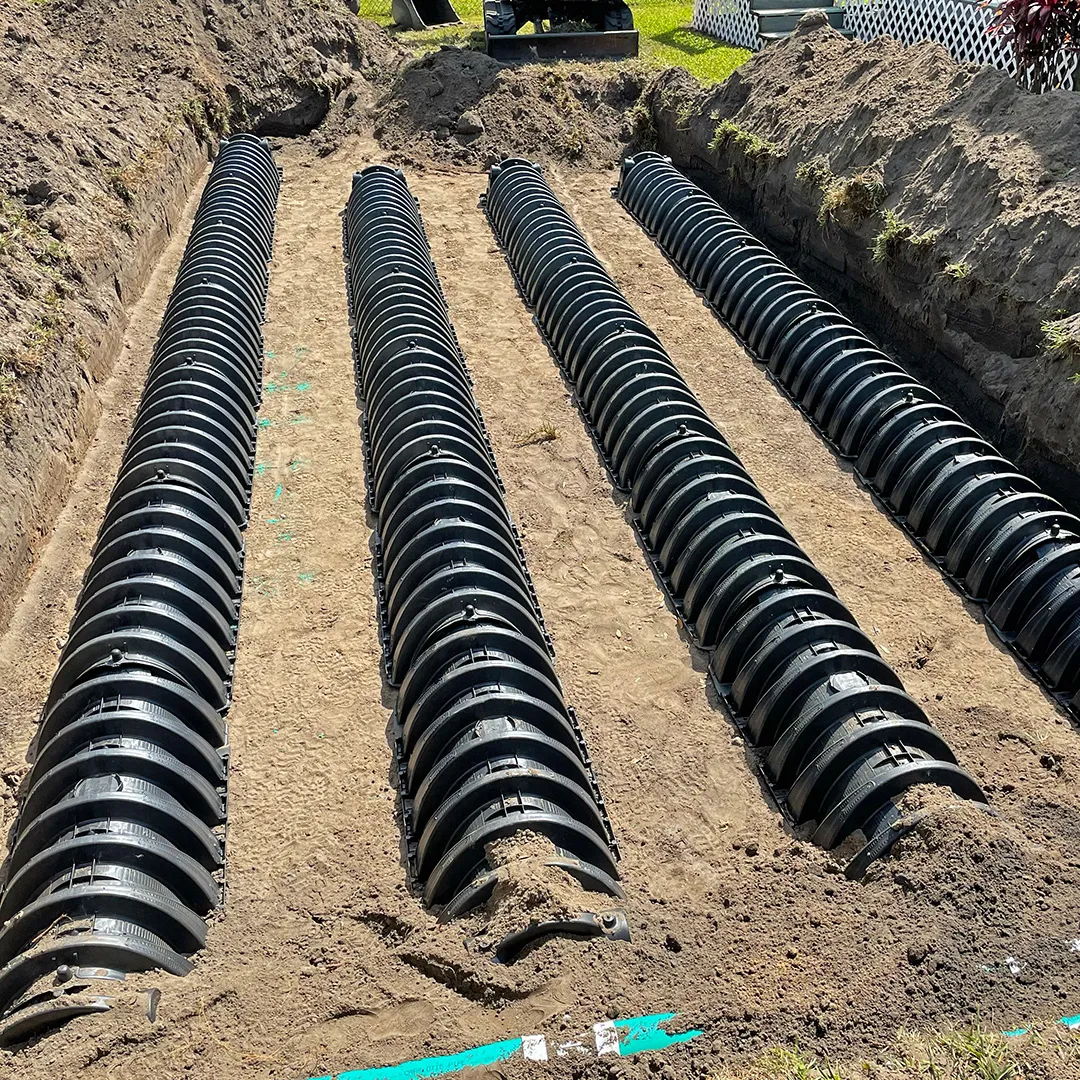
How the work runs here
Two trips for most jobs, and a straight verdict on the first one.
The diagnosis. Tank opened, distribution box uncovered, trenches probed, and the water table read for the season we are actually standing in. That last part is what separates a saturated field from a dead one. Set up a site visit; it costs nothing and obligates you to nothing.
The work. Tank pumped, a settled distribution box re-leveled, the worst line replaced or the trenches relieved and rested, and roof water moved off the field where it has been feeding the problem. Most jobs run one to two days with a single machine on the lot.
The finish. Ground graded back the way we found it, and the handful of habits that protect a recovered field explained without a lecture. Questions a month later? Call (863) 514-2176 and ask.
What actually kills a field
Three things, mostly. The first is biomat, the black greasy layer that builds where effluent meets soil until the bottom of the trench is sealed like a plastic sheet. That takes years and it is the normal way a field ends. The second is compaction: a truck parked over the lines all summer, a shed set on the field because it was the only flat spot, a delivery that cut across the yard after a rain. The third is roots, which find a wet trench and fill it. Every one of those leaves evidence, and we dig enough to see it before anyone talks about scope.
Haines City soil sells the wrong story. It drains beautifully, so people assume the field has room to breathe. What the sand does not tell you is how little vertical space sits between the trench bottom and the water underneath it. Take a good draining soil, give it a thin margin, then raise the water for four months a year, and you get a system with less cushion than the dirt suggests. That is why the same field can pass a dry-season test and flood in the middle of August.
So the honest answer runs both ways. If the tank has been neglected, one line is drowning while the others sit dry, or a downspout has been dumping into one corner for a decade, restoration has a real shot and we will take it. If every trench is sealed with biomat, or the field has spent years underwater, restoration is money spent twice and Jacob will say so standing in your yard. He would rather lose the smaller job than sell you a fix that fails next summer. Either way you see the tank, the box and the trenches yourself, the same as on any repair call. Past work is in the gallery.
Signs the field is in trouble
- Grass over the lines greener and springy underfoot
- Wet ground that outlasts the storm by days
- Drains that slow every rainy season
- Odor outdoors, strongest over the trenches
- Tank full again days after pumping
- Gurgling toilets at the far end of the house
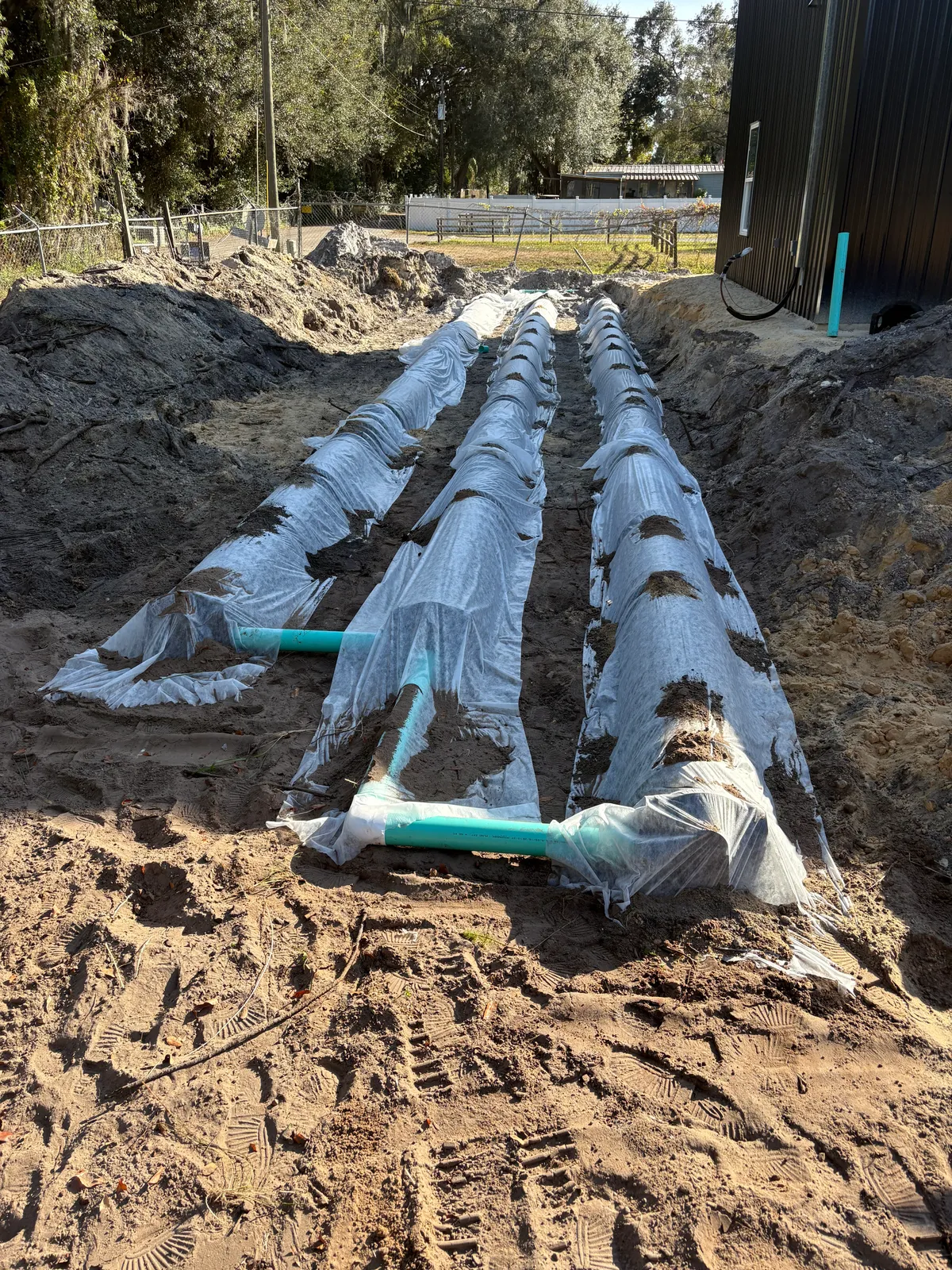
Wet season decides it
Haines City runs on two calendars. From roughly June through September the ground water comes up to meet the trenches, and a field with a thin margin loses it. October through May that same field acts healthy. Anyone who reads your yard in the dry months and calls it fine is reading half the year.
The city splits another way too. Out on the newer subdivision and 55-plus side, the lots are tight, the septic is younger, and the hard question is usually where a replacement field would even go, which is a conversation with the Polk County health department before it is a conversation about equipment. In the older core near the original downtown, the field may have gone in decades ago under practice nobody uses now, sometimes undersized, sometimes in the wrong spot entirely. Those two problems look identical from the driveway and are nothing alike underground, which is why we open things up instead of guessing. When a replacement is the answer, the digging, hauling and final grading are ours, and the tank side gets handled by the same crew that does pumping and tank installation across town.
Amazing customer service his work was top notch highly recommended
Mario Mantecon · Google review
Where we work in Haines City
The old core, the US-27 corridor, the subdivisions off I-4 and the ranch lots out toward Davenport and Lake Hamilton, all inside Polk County and the wider service area. Buying or selling out here? Start with an inspection instead of a guess.
Straight answers on drain fields
What Haines City homeowners ask once the yard goes soft. Yours not here? Ask it directly.
My field is soggy in August and fine in March. Is it failing?
Maybe, and maybe it is only drowning. When the water table comes up in the wet season it steals the space the trenches need, so a field with a thin margin backs up for a few months and recovers. A field killed by biomat stays wet after the weather clears and usually smells. We read both, because the fixes are different.
What causes a drain field to fail out here?
Biomat sealing the bottom of the trenches after years of use, compaction from vehicles or a shed parked over the lines, and roots. Neglecting the tank speeds all three along, since solids that escape a full tank go straight to the field and shorten its life considerably.
Can my field be restored, or do I need a new one?
It depends on what we find. A settled distribution box, one drowned line, a neglected tank or a downspout flooding a corner are all fixable, and a restoration in those cases buys real years. A field sealed end to end, or one sitting in water most of the summer, is done, and no amount of work changes that. Jacob tells you which before any money moves.
Do the septic additives sold in stores fix a clogged field?
No. Biomat is a physical seal in the soil, and nothing poured down a toilet reaches it or dissolves it. We have dug up plenty of fields on a steady additive diet and they looked exactly like the ones that never got any. Save the money for the pump-out.
Is there room for a replacement field on a small subdivision lot?
Often yes, but it takes looking. Newer lots leave less open ground, and siting a replacement area involves the Polk County health department, which reviews the location and the paperwork. We walk the lot, find the workable options and handle the filing rather than leaving you to sort it out.
Can I park on the drain field or put a shed over it?
Please do not. Vehicle weight compacts the soil and crushes the lines, and a shed blocks the evaporation the field depends on. If the field sits where you need to drive or store something, call us first and we will look at whether traffic can be routed or a crossing built properly.
How do I protect a field after it has been restored?
Keep everything heavy off it, point gutters and downspouts away from it, spread laundry across the week instead of one long day, and fix a running toilet the week it starts. Pump the tank on schedule. Those habits decide whether a restored field gives you five more years or fifteen.