
Septic tank inspection in Bartow
You are about to buy a house older than most of the paperwork that should describe it. Somewhere under that yard is a tank, a box and a field, and nobody selling you the place can say for certain where. Finding all three and reading them honestly is the job.
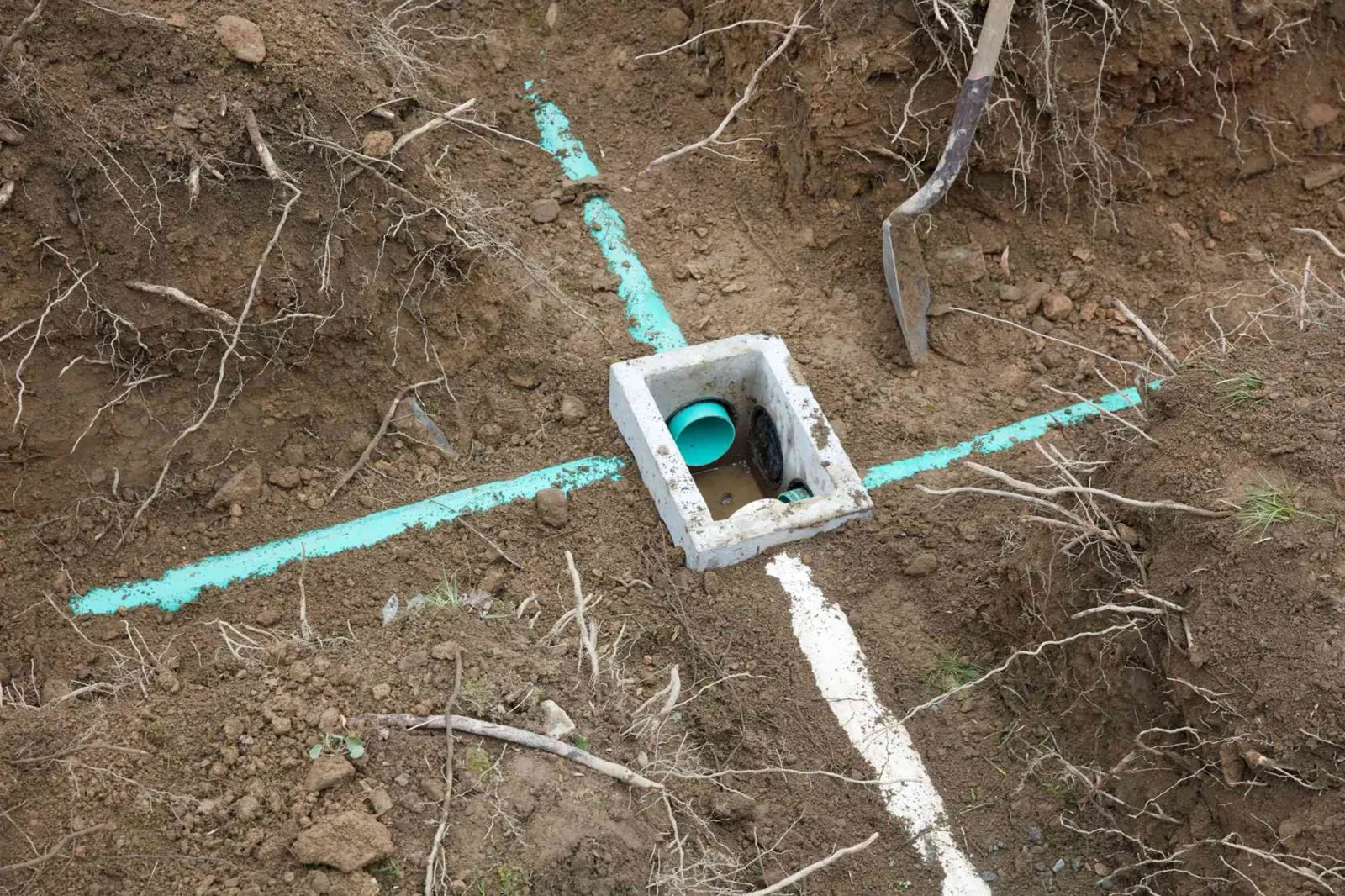
An unfamiliar lot, worked in order
Find it
Jacob traces the line leaving the house, probes the likely ground and digs to the lids. On the older streets there is often nothing on file to work from, so the search is done the hard way.
Open and measure
Lids off, sludge and scum layers measured against the outlet, both baffles examined, the box uncovered, then a probe walked across every field line looking for standing effluent.
Put it on paper
A sketch of where everything sits, photographs of each defect, and a plain summary separating what is worn from what is finished.
Finding a system nobody kept records for
The first hour on an old Bartow lot is spent answering a question the listing never raises: where is the thing? Sewer runs through the core of the old town, so plenty of these houses started on city service and were never septic at all, while the parcel next door has been on a tank since before anybody now living owned it. Once you step past the core, out on the acreage off Highway 60 or down the rural roads toward Fort Meade, tanks turn up in places no modern installer would choose. Under a later addition. Beneath a slab poured over it in the seventies.
Jacob works it backward from the plumbing. Where the waste line leaves the house tells you the direction; the slope of the yard narrows it further; a steel probe pushed through sand finds concrete before a shovel does. County health records help when they exist, and around here they frequently do not, because a good share of these systems went in before anybody was required to file anything. That is not a reason to skip the inspection. It is the reason to have one, and to hire somebody who digs for a living instead of somebody who reads files.
What comes out of that hour matters after closing too. Every lid, the tank ends, the box and the run of the field lines get located and sketched, so the day the house is yours you already know where the access points are and which stripe of lawn should never hold a truck. Owners of these properties often go decades without that drawing, then pay somebody to find it all over again the first time a drain backs up. If the sale goes through and the system needs work, the same map saves the repair crew a half day of hunting.
Under contract already?
Say so when you call and we will build the schedule around your inspection period. Bartow is a short run down 98 from the shop, which makes short notice easier here than most places.
(863) 514-2176 Send a MessageWe’ve used Florida Site and Septic several times for our septic systems needs. They are always professional and fair.
Bruce Britt · Septic system repair
What gets opened, and what the numbers say
Once the lids come off, a septic tank stops being a mystery and starts being a set of measurements. The sludge on the floor is measured against the bottom of the outlet, and the scum mat on the surface against the top of it, because those two numbers together say whether solids are already spilling toward the field. The inlet baffle gets checked for whether it still hangs where it should. The outlet baffle gets checked harder, since that is the part protecting everything downstream, and on the steel tanks still buried around here it is usually the first piece to rust away entirely. Waterline staining above the operating level records every backup the house has had, whether or not the seller remembers them.
Then the box. A distribution box is a small concrete chamber that splits flow between the field lines, and a tilted or root-choked one sends all the water down one trench while the rest sit dry, which kills a field in sections. Uncovering it and watching where the water actually goes takes ten minutes and answers questions the tank alone cannot. Where lines run out from there, they get probed. If old orangeburg or clay pipe runs under a driveway on the property, that stretch gets particular attention, because a crushed run under twenty years of vehicle weight is a common find on these lots and one of the cheaper things on this page to fix.
Reading a field that is already tired
The tank is the easy part. A drain field is where the money is, and it fails slowly enough that a buyer touring on a bright March afternoon will never see it. What Jacob is reading is the ground itself: whether a probe sinks too easily, whether effluent stands at the bottom of the hole, whether the grass over one trench is a different green than the grass beside it, and whether the soil coming up on the probe is the native sand or one of the clay-heavy pockets the phosphate country south of town left behind. Clay under a field laid for sand is a design that was struggling the day it was finished.
Season matters and the report should say which one it saw. Ground read in a dry spring will pass tests that the same ground fails in September, so a field that is marginal in April gets written up as marginal, with a sentence about what wet season will ask of it. Age matters as much: fields put in generations ago were laid to standards that would not clear a permit today, and some are simply full of the fine solids that decades of use leave behind. When that is the finding, restoration is worth pricing before anybody assumes replacement, and if the field is genuinely done, you will hear that plainly instead of hopefully.
Where we inspect around town
Old-town streets, the acreage running east and west off Highway 60, the rural stretches south toward Fort Meade and the homesteads up 98 toward Highland City. Bartow is the seat of Polk County and sits well inside the towns we cover. The work photos show what these jobs look like when the ground is opened.
What the report promises, and what it cannot
An inspection is a record of condition on the day somebody stood over the open lids. It will tell you the tank material and its rough age, whether the baffles are intact, how the box is splitting flow, whether the field is accepting water, and what any defect found would cost to put right. That last number is the one that does work for a buyer, because a specific repair with a specific price is something a seller can respond to, while a vague worry is not.
Here is the other half, said plainly. No inspection is a warranty. A tank sound in the morning can crack in a year, a field passing today can surface after a summer of afternoon storms, and nobody honest will promise you otherwise. The report also stops short of legal ground: whether a missing permit, an undersized tank or an unrecorded system affects your closing is a question for the county health department, your agent, your lender or your closing attorney. Ask us what shape it is in and what it takes to fix, and expect a straight answer. Ask a contractor to interpret your contract and you should be suspicious of anyone willing to try. If the news is bad, the replacement work and the pump-out schedule afterward are both things we handle, and you are free to take the report and hire anybody you like. Send the address and your dates and we will get on it.
Questions from buyers of old Bartow houses
The seven that come up most on these properties. Something else on your mind, write it out and Jacob will get back to you himself.
Nobody can tell me where the tank is. Is that a problem?
It is normal on these properties and it is part of what you are paying for. Jacob works from the direction the waste line leaves the house, the fall of the yard and a steel probe. Give him a morning and he will have the lids open. Very few systems around town stay hidden.
Can you inspect the tank without pumping it first?
We can, and it is a lesser inspection. A full tank hides its own floor, its walls and both baffles, so the read is limited to the operating level and the staining above it. On a purchase we recommend emptying it. If you decline, the report names exactly what went unseen.
The house is on sewer in town. Do I still need this?
Check first, because the core of old Bartow has sewer and the parcels just outside it do not. Plenty of buyers assume city service and inherit a tank in the back yard. If you are unsure which you are buying, that question alone is worth one phone call.
Why does the distribution box matter so much?
Because it decides where the water goes. A box knocked out of level or packed with roots feeds one trench everything and leaves the others dry, so half a field wears out while half sits unused. Finding a bad one early is a cheap repair and can add years to a field.
There is a steel tank on the property. What does that mean?
It means the clock is well past run down. Steel rusts from the baffles outward, and most tanks of that era around Bartow are decades beyond what they were built for. Jacob will report its true condition, and if it has years left he will say so rather than sell you a new one.
How does clay soil change what you find?
Phosphate country south of town left clay pockets mixed through the native sand, and clay moves water slowly. A field sized for sand and built over clay struggles from the beginning. When the probe brings up clay, that goes in the report, because it changes what the field can be expected to carry.
Can the report be used to negotiate with the seller?
That is most of its value. Photographs and a real repair cost for a specific defect give both sides something concrete to work from, and it beats a general worry every time. What you do with it is between you, your agent and the seller. We just supply the facts.