
Septic system repair in Haines City
When a Haines City house starts backing up, the useful question is which part failed, not how big a job somebody can talk you into. Jacob works the US-27 and I-4 corridor, repairs the component that is actually broken, and says so plainly when a system still has years left in it.
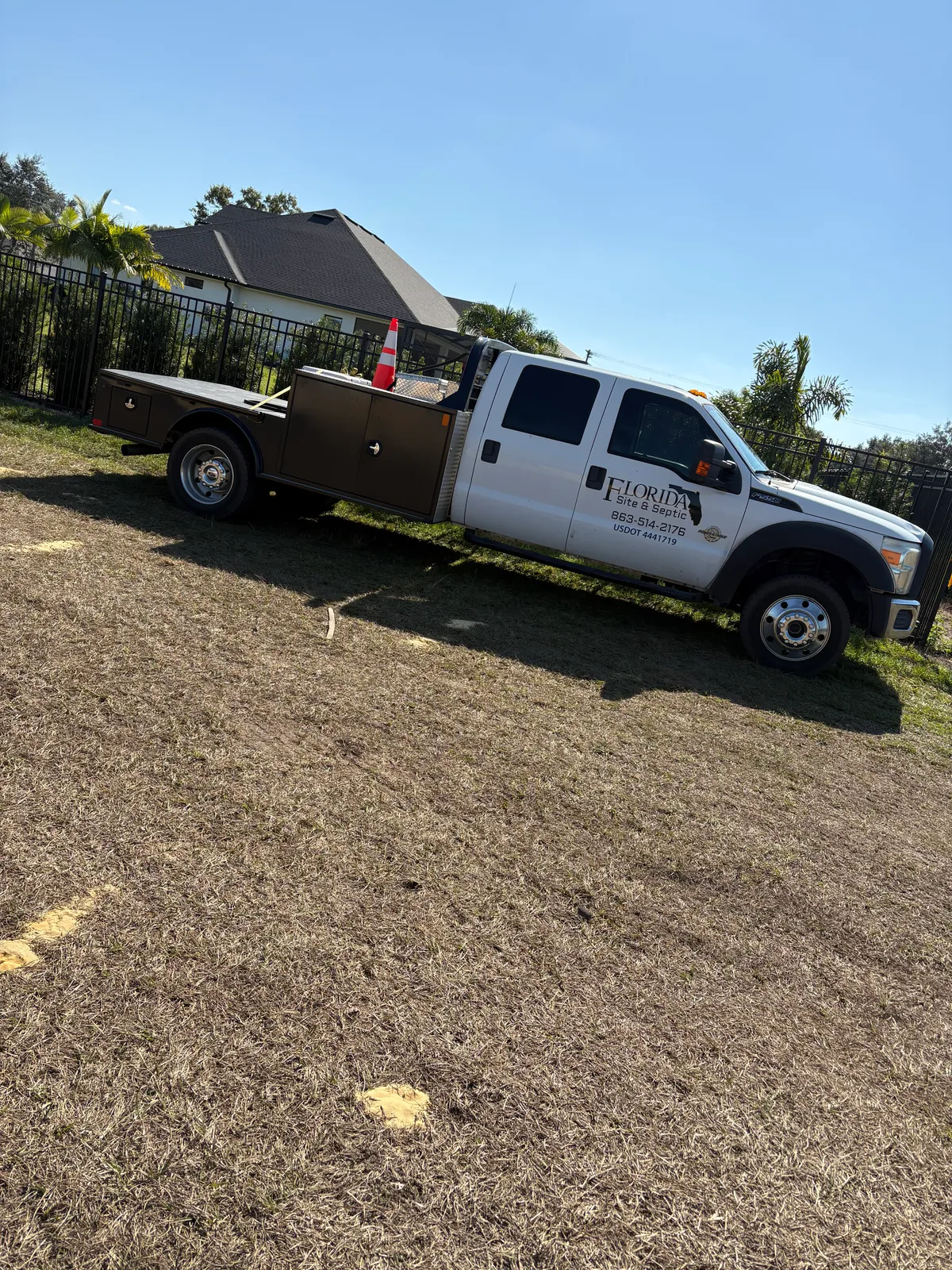
How a repair call runs here
Most visits follow the same short arc, and the fault usually turns up inside the first hour on site.
Tell us what the house is doing. When it started, which drains, whether an alarm is sounding, whether the ground over the field feels soft underfoot. Jacob can often narrow the cause before the truck leaves Lakeland. Call (863) 514-2176 or send photos.
Find the fault before anyone digs. Tank levels read, baffles and the distribution box checked, lines traced, pump and floats tested on systems that have them. In summer that also means separating a broken part from a field that is simply drowning. You get a firm written price for the specific repair.
Fix it, usually that same visit. Lids, risers, baffles, tees, float switches and short line sections are commonly one-day work. Larger digs get scheduled quickly, and Haines City is a straight run from the shop.
What actually breaks, and in what order
Septic parts fail in a fairly predictable sequence, and knowing that order saves Haines City homeowners real money. Baffles go first. An inlet or outlet baffle rots or breaks away, solids start riding out toward the field, and the field begins choking on material it was never built to handle. Distribution boxes are next. In this sandy ground a box can settle half an inch and quietly send most of the flow down one field line until that line drowns while the others stay dry. After that it runs to lids and risers, crushed or root-invaded lines, and on any system with a pump, the pump itself along with its floats and alarm.
A call in August is often not a repair at all. From June through September the water table under this part of Polk County comes up, and a drain field that behaved perfectly in April can back up after a week of afternoon storms with nothing broken in it anywhere. So the first job on a wet-season call is telling those two apart. Jacob reads the tank levels, watches how fast the tank refills after it is pumped down, and checks whether the ground over the field is holding water. Digging before that question is settled is how people pay for work that was never going to fix anything.
Repair against replacement deserves the same straight answer. If the tank is sound and the field takes water once the ground dries out, repair it, every time. If you have paid for three fixes in two years and the field no longer recovers at all, more repairs are money poured into a system that is finished, and it is worth reading what drain field restoration or a full tank replacement involves before spending again.
Roots split this town in half. Around the older core, mature oaks push straight toward the moisture in a weeping joint or a cracked box, and that is the usual culprit on a house built decades ago. Out in the newer subdivisions and the 55-plus communities off US-27, the landscaping is far too young to be the problem, so failures there lean toward settling, construction damage and lines crushed by heavy equipment. Because Florida Site and Septic also does excavation, the digging is handled in-house by the same man who made the diagnosis, and when a job needs the county health department involved he tells you that up front rather than after the trench is open.
Worth a phone call
- Standing water or spongy ground over the field
- Slow drains all over the house at once
- Gurgling from tubs when a toilet flushes
- An alarm sounding on a pump system
- Sewage smell in the yard after rain
- Backups that show up only in wet season
Please do not pull a lid to look for yourself. A septic tank is a confined space and the gas inside it can put a person down in seconds.
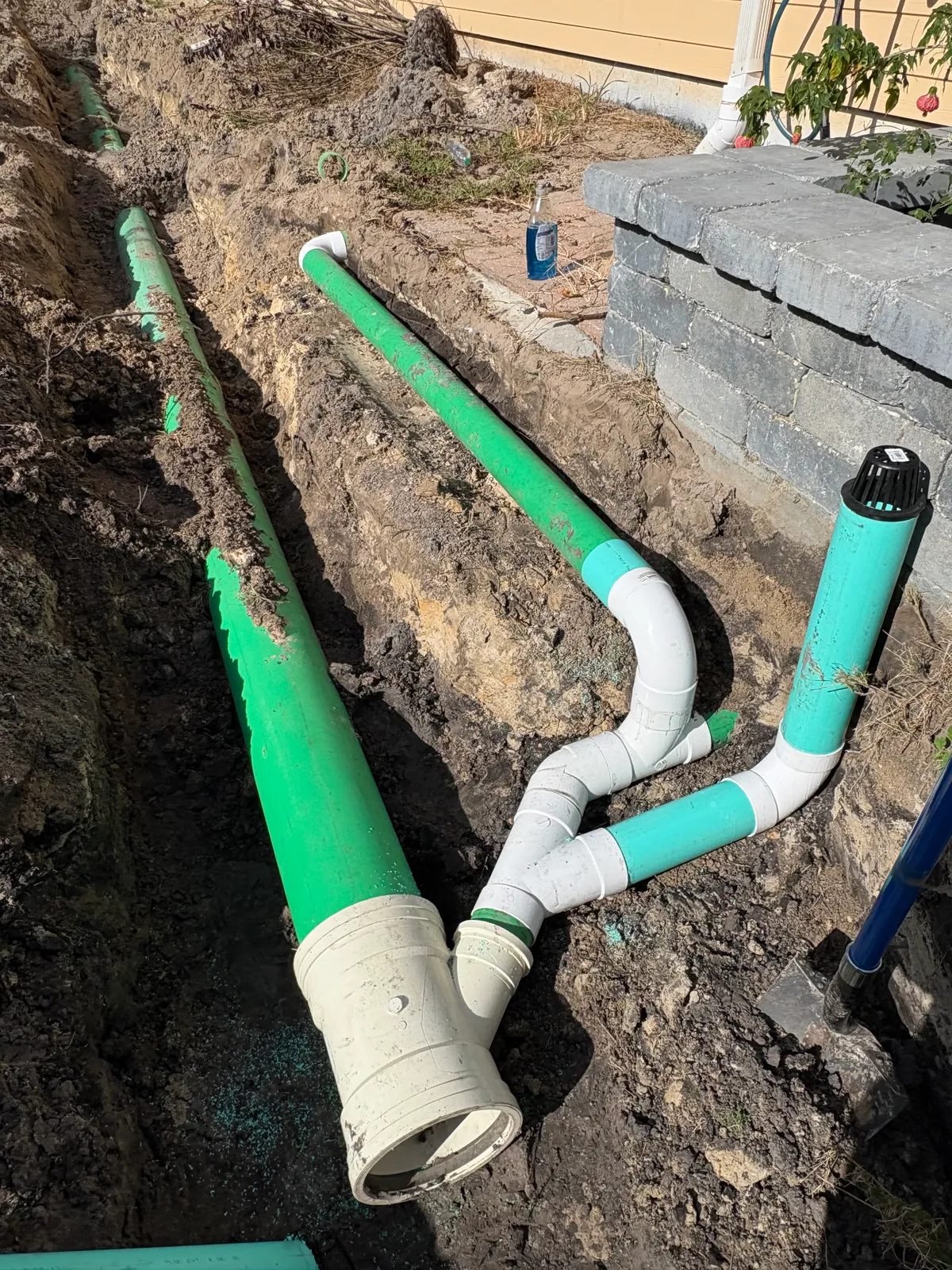
Sandy ground, tidy trenches
Loose sand does not hold a trench wall the way clay does, so a repair dig here has to be cut narrow and backfilled properly or you end up with a sinking scar across the lawn. Jacob runs his own machine, which means the trench is only as wide as the work requires, the spoil goes on boards, and the sod comes up in pieces and goes back down instead of being churned under.
Backfill goes in lifts and gets compacted as it goes, because a trench that settles over the next rainy season becomes a ditch pointing at your house. That finish work never shows on an invoice and stays obvious in the yard for years. The before and afters in the gallery show what the ground looks like when we leave.
Jacob was fabulous! I would strongly recommend this company’s services. He fixed the issues and educated me on my septic system. He was helpful and very professional.
Roxann Bonta · Repair customer
Where we work around town
We repair systems in the older core near Lake Eva, the newer neighborhoods stretching along US-27, the Grenelefe area, and the rural edges running toward Davenport, Dundee and Lake Alfred. Start at the Haines City page for the rest of what we do here, including pumping and inspections. If your mailing address says Haines City, or sits right on the line, ask anyway.
Repair questions we get from Haines City
What people ask once something has already gone wrong. If sewage is in the house, skip the form and call. Otherwise reach out here.
One toilet is slow. Is that the septic?
Usually not. A single slow or backing-up fixture points at a plumbing clog in that branch line. Septic trouble shows up house-wide: the lowest drains all struggle at once, the tub gurgles when a toilet flushes, or a floor drain weeps. Describe what you are seeing and we will tell you which trade you need, even when it is not us.
How do you tell a broken part from a waterlogged field?
By what the tank is doing. A liquid level sitting above the outlet means the trouble is downstream in the field. A level below it means the trouble is between the house and the tank. Then we pump the tank down and watch the refill. Groundwater coming back in fast during a wet stretch is a field and water table problem, not a broken component.
What can I safely check myself?
Three things, all from above ground. Whether the alarm panel is lit or sounding if your system has a pump. Whether the ground over the field is wet, spongy or smells when the weather has been dry. And whether the slowness is house-wide or one fixture. Leave lids, risers and anything requiring a tool to us.
Do you repair pumps, floats and alarms?
Yes. Pump systems are common on the newer builds off US-27, and floats and control panels are the parts that fail most on them. Most are a same-visit swap. If your alarm is going off, stop running water until someone looks at it. The tank has some reserve room, but it is not unlimited.
When does repairing stop making sense?
When the field stops recovering. A sound tank with a field that still takes water after a dry week is worth repairing, and we will say so. But when you have paid for several fixes in a couple of years and the ground stays wet regardless of weather, the system is telling you it is done, and continuing to patch it costs more than doing it once.
Are oak roots really a problem in the older neighborhoods?
They are one of the more common finds on older properties around the core. Roots follow moisture, so a leaking joint, a cracked distribution box or an old line gives them exactly what they want. Out in the newer subdivisions the landscaping has not been in the ground long enough to reach anything, so those failures usually trace to settling or crush damage instead.
Does the county health department get involved?
It depends on the work. Swapping a lid, a baffle or a float is straightforward repair. Anything that changes the tank or the drain field can bring the county health department into it. We will tell you which side of that line your job falls on before we start, and handle that conversation for you rather than leaving you to sort it out.