
Land grading in Lakeland
Water always wins. The only question is whether it wins in your favor. Grading is the art of deciding where rain goes, and on a Florida lot that decision protects your foundation, your septic field, your driveway and your sanity every summer storm season.
What good grading fixes
The call usually starts with a symptom. Water standing against the slab after every storm. A back yard that stays swamp for a week. A driveway washing out at the same spot every June. A low corner where the kids’ trampoline sinks. Behind all of them is the same cause: somewhere, the ground is pitched wrong, and water is obeying it perfectly.
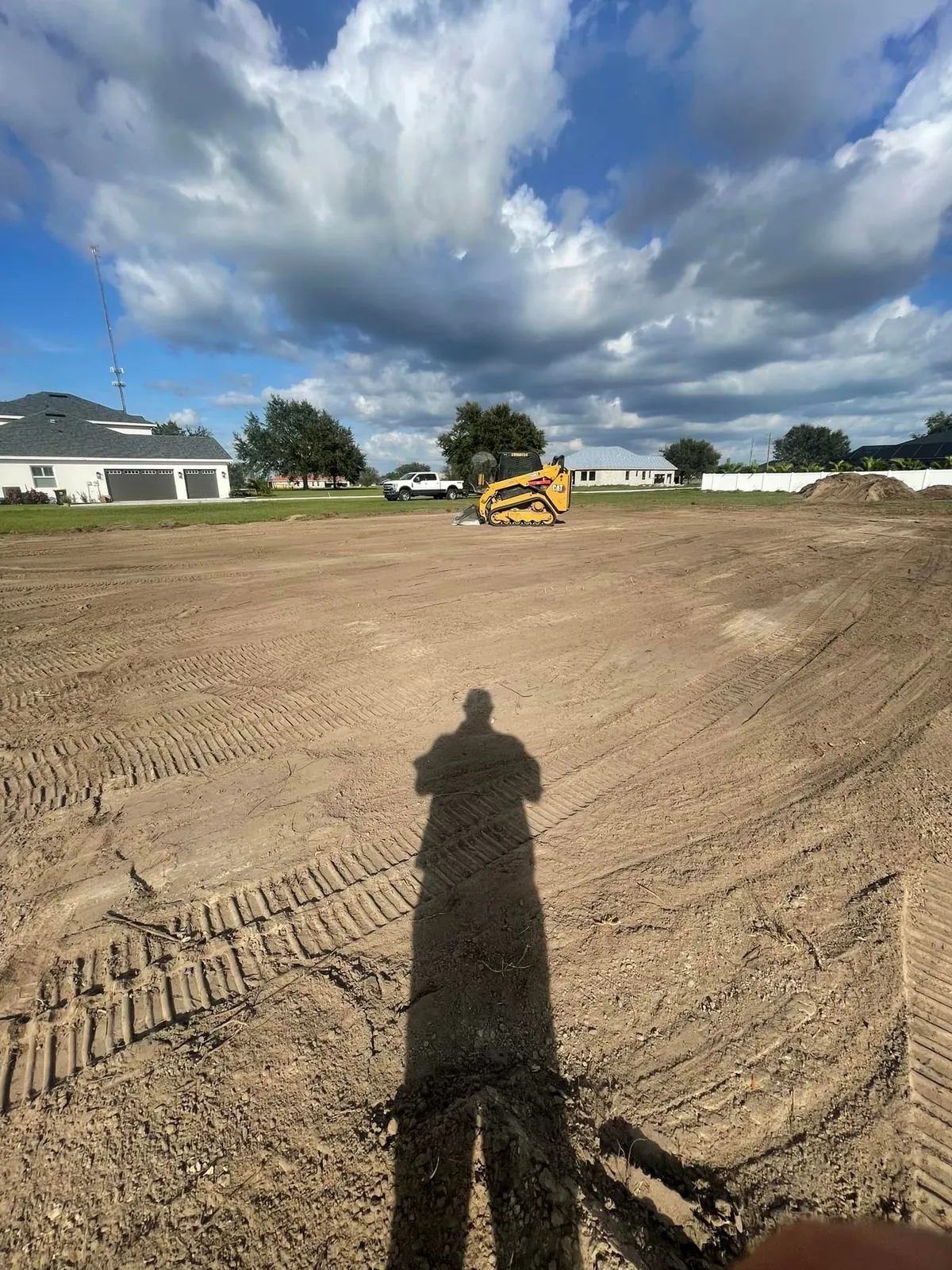
Grading fixes the pitch. Sometimes that means re-establishing the gentle fall away from the house that the original builder got right and fifteen years of mulch beds and settling got wrong. Sometimes it is cutting a swale, a shallow grassed channel that carries roof and yard water to where it can soak harmlessly. Sometimes it is building up a low area with compacted fill so it stops collecting the neighborhood’s runoff. Jacob reads the lot, finds where the water wants to go, and shapes the ground so that path stops being your problem.
The same skills serve new work: final grading around fresh construction, building pads cut level and compacted to take a barn or garage, yards regraded after a pool dig, and the finish grading that follows our own septic installations and excavation work. Every job ends with ground smooth enough to mow and pitched to drain, with the results sitting in the gallery next to the rest of the work.
Customers sometimes ask why grading quotes vary so wildly between contractors. The honest answer is compaction and finish. Pushing dirt into a low spot takes an hour; placing it in lifts, compacting each one and blending the new grade into the old so it neither settles nor sheds water the wrong way takes longer and costs more. The cheap version looks identical the day it is done and entirely different after the first wet season. We only sell the version that still works in five years.
Water against the house?
Foundation-side ponding is the grading problem that gets expensive if ignored. A morning of machine work now beats a slab repair later. Get it looked at.
(863) 514-2176 Send a MessageHow a grading job goes
Walk it in the rain, if possible
The best diagnostic is water doing its thing. Jacob reads slopes, soil and the existing drainage paths, then explains the fix in plain terms.
Firm price on the whole fix
Cut, fill, compaction, hauling and finish all in one written number. No hourly meter running while a machine pushes dirt back and forth.
Shaped, compacted, finished
Grades cut and verified, fill compacted in lifts so it stays put, and the surface left ready for seed, sod or gravel.
Florida lots drain differently
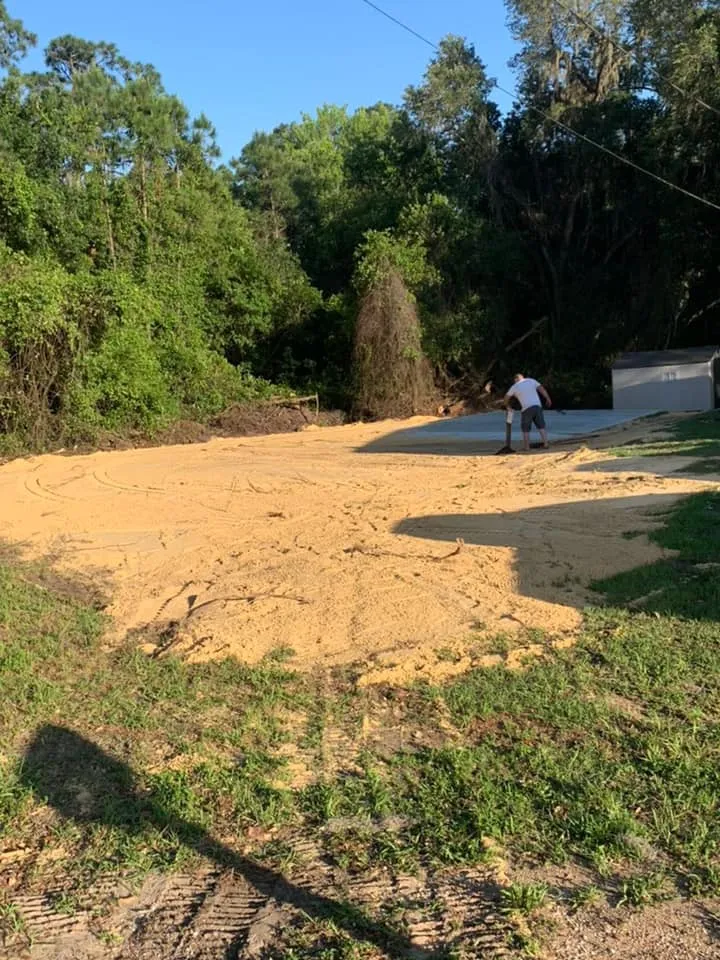
Out-of-state grading instincts fail here. Our ground is flat, our rain comes ten inches at a time, and the water table can sit two feet under the grass in wet season. You cannot just pitch everything to the street; the street is often no lower than the lawn. Grading in Polk County is about creating gentle, deliberate fall over long runs and giving water someplace legal and harmless to collect.
Around Poinciana and Davenport, builders pack houses onto flat sandy lots where every inch of pitch matters. The older acreage around Kathleen brings different work: long driveways shedding water into pastures, pond overflow paths, barn pads. Jacob grades both every month, and the firm price covers the lot you actually have, not a textbook one.
One habit worth copying from the customers who never call back with problems: deal with grading in dry season, before the rain proves the point. The lots that get shaped in February are the ones that sail through July without a puddle.
Excellent customer service and high-quality work!
Land grading customer · Google review
Where we do this work
Land Grading runs anywhere within fifty miles of Lakeland: all of Polk County and the eastern edge of Hillsborough. The service areas page lists every town with its own local page, and if your address sits on the edge of the map, ask anyway; the answer is usually yes.
Grading questions, answered straight
The questions wet yards generate. If yours is more specific, describe the problem and include photos after a storm if you have them.
How much does land grading cost in Lakeland?
Small regrades like fixing the pitch along one side of a house often run several hundred to a couple thousand dollars. Whole-yard regrades, pads and large fill jobs scale from there with area and trucked material. You get one firm written price after a site look, and it includes finish work, not just rough pushing.
How do I know if my yard needs grading or a drain?
Usually grading first. French drains and catch basins treat symptoms and clog over years; correct surface pitch works forever and needs no maintenance. The honest assessment sometimes lands on both, but starting with a pipe in a badly pitched yard is paying twice.
Can you fix water pooling against my foundation?
Yes, and it is one of the most common calls. The fix is typically re-establishing six inches of fall over the first ten feet from the wall, sometimes with a swale to carry the collected water around the house. A day or less of work for most homes, and your slab stops soaking.
Will grading disturb my whole lawn?
Only where the ground actually needs to change. Drive paths and work areas get protected where possible, disturbed areas get finish-graded smooth, and you choose seed, sod or leaving it ready for your landscaper. The machine leaves; the lawn recovers.
Do you bring in fill dirt, and is it clean?
Yes, from known local sources, and it is clean fill, not construction debris with grass clippings on top. Fill gets placed and compacted in lifts so the new grade does not settle back into the same low spot two summers from now.
Can you grade around my septic system without damaging it?
Better than anyone, because installing those systems is the other half of this company. Jacob knows exactly where tanks, lids and drain field lines live and how much cover they need. Grading near septic is routine here, not a risk.
When is the best time of year for grading work?
Dry season, roughly November through May, gives the cleanest working conditions and the best compaction. That said, drainage problems announce themselves in the summer rains, and plenty of grading happens then too. If the ground is workable, the job gets done; if a storm window forces a pause, you hear about it before it happens.