
Site preparation in Auburndale
A raw parcel off Berkley Road has to become flat, firm, buildable ground before the first block gets laid. Jacob clears it, settles where the septic can legally sit, then builds and compacts the pad that carries your slab. One operator runs it from the first tree down to the final pass, and the price is on paper before he starts.

Clearing the Berkley corridor lots
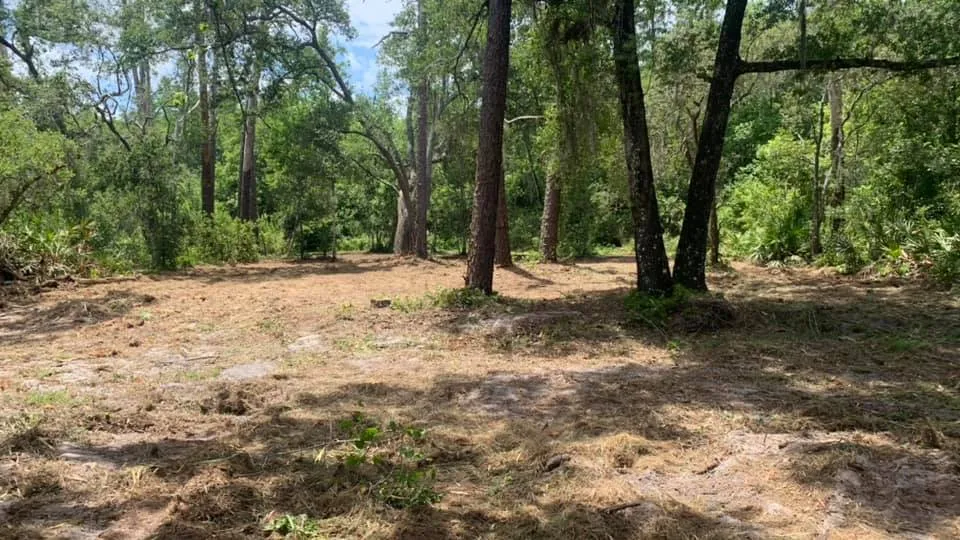
Most parcels getting cleared for houses, shops and small warehouses along Berkley Road start out as brush, scrub and a mix of pines and oaks. The first real decision is what happens to all of it. One option hauls every scrap off the property. The other cuts the underbrush and mulches it right where it stood, and on a good share of these parcels that is the better call.
Mulching keeps dump trucks off the road, leaves the chewed-up material on the ground where it slows erosion, and lets an owner keep the good trees standing while everything beneath them gets cleaned out. Hauling earns its place where the pad, the drive and the septic area need bare dirt. Mulch and stumps buried under a building pad rot, settle and leave the slab bridging a hollow.
So most lots end up a mix of both. The edges get thinned and mulched in place, and the footprint where something will be built gets stripped clean down to mineral soil. That split is decided on the walk, with you standing there, so the oak you wanted to keep is still standing when the machine leaves.
Under the footprint, clearing goes deeper than the surface. Stumps come out whole, the root mat gets raked out of the soil, and the dark organic topsoil gets pushed aside so the fill sits on firm sand. Skip that step and a pad can look perfect on the morning the slab is poured, then sink in patches later as the buried wood rots away beneath it.
The main site preparation page covers the full scope, cleared and padded lots are in the gallery, and you can line up the walk through the contact page.
What a prepared lot includes
- Clearing limits walked and agreed
- Brush mulched in place or hauled
- Septic area located and kept clear
- Fill brought in and spread in layers
- Pad compacted to carry a slab
- Stem-wall interiors filled and packed
- Drive and drainage roughed in
Septic placement comes before the pad
The costliest mistake on a new lot is setting the house exactly where the septic needed to go. We settle that question before any fill arrives.
On a lake-area parcel this step can reshape the whole plan. On the sandier lots farther back it usually comes down to one soil test, and the pad layout follows right behind it.
Find the legal envelope. Setbacks from wells, property lines, the house itself and any surface water decide where a drain field may sit, and on lots near Lake Ariana or Lake Juliana that envelope shrinks. Soil matters too. The sandier ground away from the lakes takes water well, which keeps a conventional system simple. Permitting and the site evaluation run through the Florida Department of Health in Polk County, and Jacob handles that paperwork.
Build the pad. Fill goes down in layers, and each layer gets compacted before the next one lands, so the finished pad carries a slab evenly and never lets one corner drop. Block stem-wall foundations get the same treatment inside the walls, packed tight so the floor poured on top has nothing soft beneath it.
Do it on one trip. With the machine already on the lot, the septic system can go in alongside the pad, and the drive and its culvert crossing can be cut before the equipment leaves. Skipping a second mobilization is real money, and you never wait on a different crew to fit you in. Ask how that would sequence on your lot at (863) 514-2176.
Hand it over ready. When the pad is done, the edges get dressed, deliveries get a firm path in, and the septic area stays flagged so nobody parks a pallet of block on top of it. The builder walks onto ground that is ready to work, and you know exactly what was done and where.
Walk the parcel before you buy it
Anyone eyeing land in Auburndale can have Jacob walk it before closing. A twenty-minute look tells you how much clearing the lot needs, how much fill the pad will swallow, where a septic system is allowed to go and what the driveway run will involve. Those four things are what turn a cheap lot into an expensive one, and none of them show up in a listing photo.
Some buyers find the parcel is every bit as easy as it looks. Others learn the low back half will eat several loads of fill, or that a lake setback pushes the drain field into the only spot the house would fit, and they take that back to the seller before signing. A buyer holding that information bargains on facts, and nobody walks away from the visit guessing.
The walk also covers what a survey never flags: where the lot’s water goes after a hard rain, whether the road ditch will need a culvert under the drive, and how a loaded concrete truck reaches the pad without sinking. Each of those changes what the lot will really take to build on.
If the land sits low and holds water after a storm, the grading conversation starts on that same visit.
Used Florida Site and Septic, they were very accommodating and finished the work in a timely manner. Would use them again – great work.
Kurt M · Google review
Small commercial along US 92 and Berkley Road
The small shops and warehouses going up near US 92 and Berkley Road get the same care as a house lot: pads, drainage, utility trenching and parking areas, timed to your GC’s schedule. Drainage gets the same attention as the pad, because a parking area has to shed its water somewhere allowed, and a pad sitting low on flat ground turns into a pond. Auburndale sits inside Polk County and the full service area. The Auburndale page covers the rest of town, including drain field restoration for the older systems around the lakes.
Before the first tree comes down
What lot buyers and builders ask most often. Something else? Put it to Jacob.
Should I mulch the brush or have it hauled away?
Often a bit of both. Mulching in place is cleaner for the edges of the lot and keeps the good trees standing. Anywhere a slab, a drive or a septic field will sit needs bare dirt, because buried organic material rots and settles. We mark which areas get which before starting.
Why does the septic location get decided before the house?
Because the drain field has the stricter rules. Setbacks from wells, property lines and any nearby lake limit where it can legally sit, and the soil test decides how big it must be. Place the house first and you can end up with no legal spot left for the system.
What goes into a compacted building pad?
Clean fill brought in, spread in layers and compacted one layer at a time until the whole pad is firm and even. Block stem-wall foundations get filled and packed inside the walls the same way. The goal is a base that carries a slab without settling under any corner.
Can you look at a lot before I close on it?
Yes, and it is worth doing. A short walk shows the clearing involved, the fill the pad will want, where a septic system can go and how far the drive has to run. You go into the negotiation with real numbers instead of the listing description.
Do you prepare sites for small commercial buildings?
Yes. The company started in commercial site prep. Shops and small warehouses along US 92 and Berkley Road get the same work as a house lot at a larger scale: clearing, pads, drainage, utility trenching and parking areas, scheduled around what your general contractor needs.
Will clearing hurt the trees I want to keep?
Not if the limits are set first. We walk the lot with you, mark the trees that stay, and keep machines and fill off their roots as far as the layout allows. Mulching the underbrush around them, instead of scraping, leaves the ground under those trees mostly undisturbed.
How do I get a price for preparing my lot?
Text a few photos and the address, or use the contact page, and Jacob walks the parcel with you. The written price covers clearing, fill, compaction and any hauling, with the septic and drive priced alongside if you want everything done in one visit.