
Excavation in Lakeland
This is where the company started: a firefighter with an excavator doing dig work on his days off, done carefully enough that the referrals never stopped. Eight years later the machines are bigger and the standard is the same. Trenches, culverts, ponds, demolition and the digging nobody else wants to do precisely.
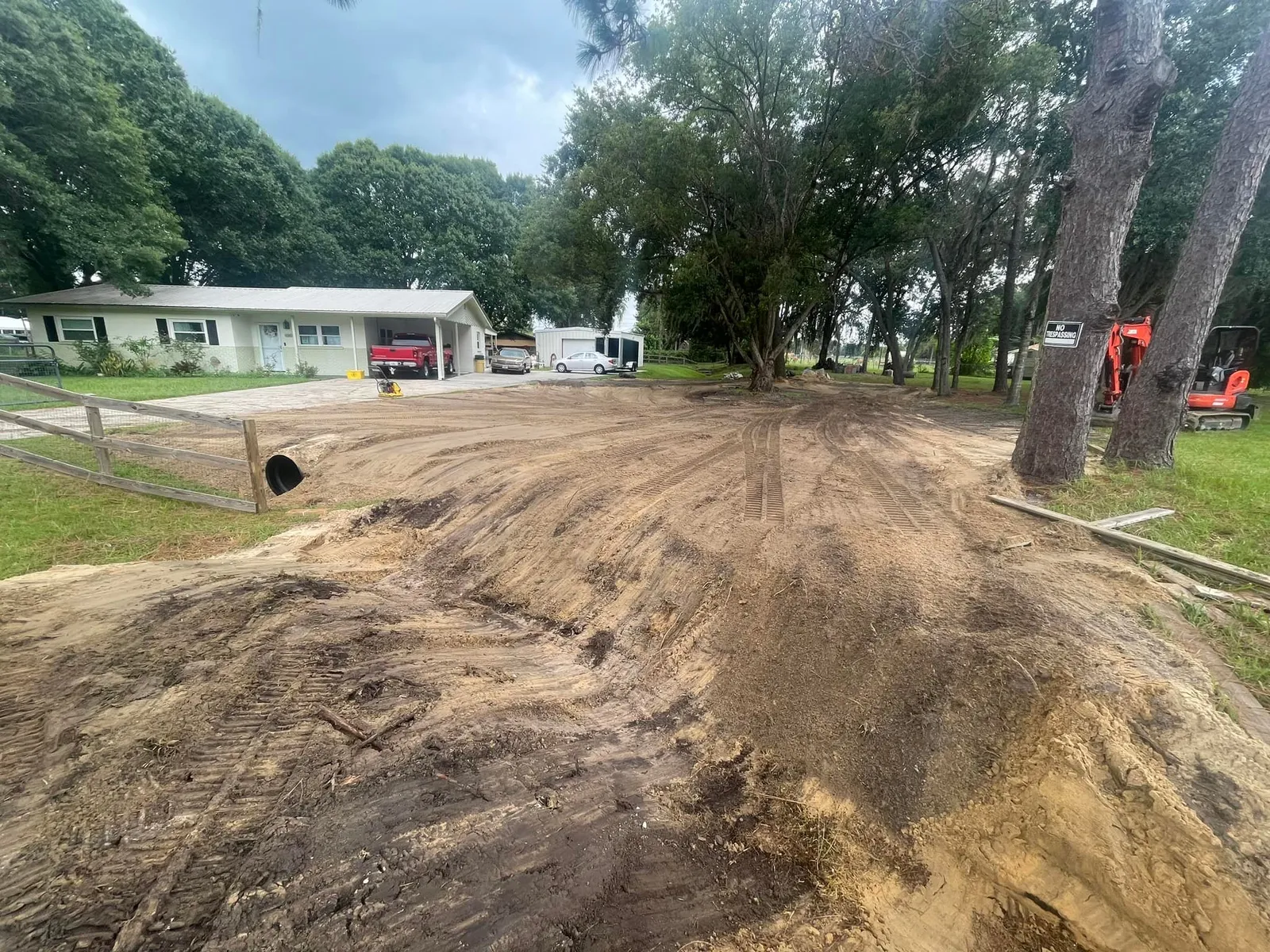
Dig work, done to the line
Excavation is a precision trade pretending to be a brute-force one. Anybody can move dirt. The skill is in moving exactly the right dirt: a trench that holds grade for the whole run so the pipe in it actually drains, a culvert set at the elevation that moves water instead of damming it, a pond cut with stable side slopes that will not slough back in by next summer, a stump pulled without wrecking the irrigation line two feet away.
Jacob runs the machine on every job. That single fact changes how the work goes, because the person on the sticks is the same person who quoted it, the same person who will answer the phone if anything needs adjusting, and the same person whose name is on the company. He digs around utilities like they are his own, calls in locates before any job that needs them, and leaves spoil managed instead of dumped wherever the bucket happened to swing.
Common work includes culvert installation for driveways (the job Nelda hired us for below), drainage ditches and swales, footer and foundation digs, pool and pond excavation, stump and debris removal, trenching for water, power and septic lines, and tear-outs of old slabs and structures. If it involves a bucket in Polk County ground, describe the job and you will get a straight answer on whether it fits and what it costs. Plenty of the finished work is in the gallery.
Contractors and builders use us as their dig sub for the same reason homeowners do: the quote holds, the dates hold, and the work passes inspection without drama. If you are a GC who needs footers cut to print or utilities trenched on a schedule, the same owner-operated arrangement applies, and Jacob speaks fluent blueprint when the job calls for it.
The kinds of digging we do
Culverts and driveways
Driveway culverts sized and set to county spec, with the gravel or finished drive over the top. One call from bare ditch to drivable entrance.
Trenching and drainage
Utility trenches, French drains, swales and ditch work cut to grade, so water and pipe both go where they are supposed to.
Ponds, pads and tear-outs
Pond digs with stable slopes, building pads cut and compacted, old slabs and structures broken out and hauled off.
Ground we know by feel
Fifty miles around Lakeland covers more soil variety than most operators see in a career. Ridge sand that flows like sugar and needs wide slopes. Phosphate-country clay near Mulberry and Bartow that turns to grease in the rain. High water table ground toward Polk City where every hole becomes a well if you dig on the wrong week.
Jacob has put a bucket in all of it. That experience shows up in quotes that hold, timelines that hold, and holes that stay the shape he cut them. It is also why the septic side of the business exists: dig work this careful is exactly what septic systems need, and the two trades share every machine in the yard.
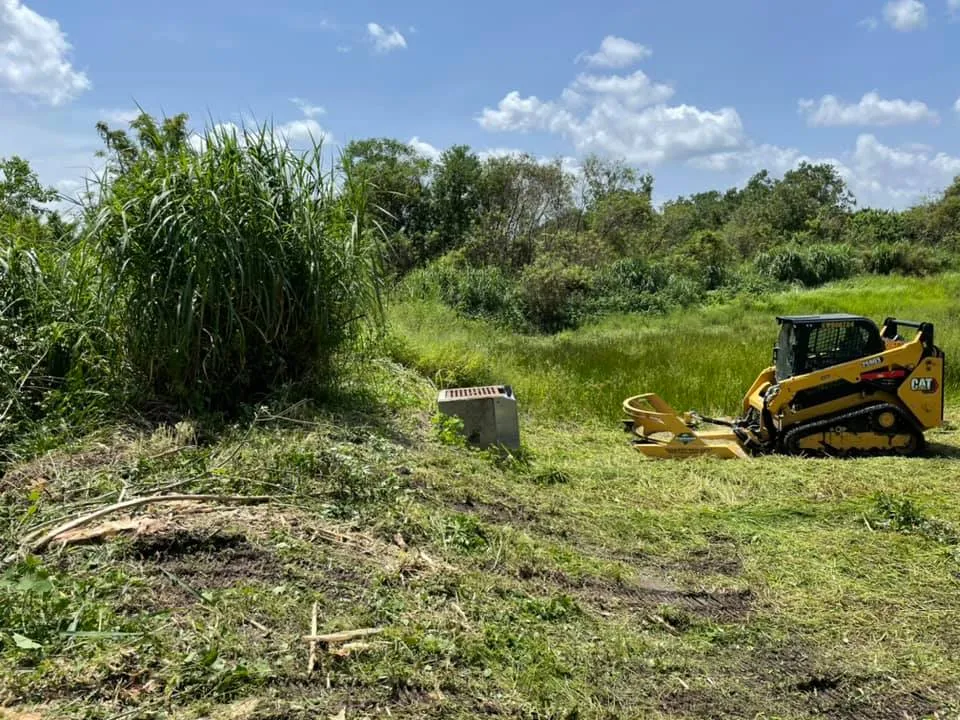
Jacob installed 80 ft of culvert at our home. Fantastic job! Highly recommend! We are very pleased with the finished work. Thank you Jacob!
Nelda Brehse Molnar · Culvert installation, Lakeland
Eighty feet of culvert, one happy household
Culvert jobs are the bread and butter of rural Polk County, and they reward being done right the first time. Set at the wrong height, a culvert floods your drive and your neighbor’s. Set right, you never think about it again. Tell us about yours.
Where we do this work
Excavation runs anywhere within fifty miles of Lakeland: all of Polk County and the eastern edge of Hillsborough. The service areas page lists every town with its own local page, and if your address sits on the edge of the map, ask anyway; the answer is usually yes.
Excavation questions, answered straight
What property owners ask before the machine shows up. For job-specific questions, send photos of the site and get a real answer.
How much does excavation work cost in Polk County?
Small jobs like a single trench or stump run a few hundred dollars; driveway culverts commonly land near a thousand to a few thousand installed depending on length and pipe size; ponds and pads scale with cubic yards. Every quote is a firm written number after a site look, never an hourly open tab.
Do I need permits for excavation on my own property?
Depends on the work. Driveway culverts on county road frontage need a right-of-way permit, ponds above a certain size involve water management review, and anything near wetlands gets attention. Routine trenching and grading on private land usually does not. Jacob tells you what your specific job requires and pulls what needs pulling.
Will you call in utility locates before digging?
Always, on any job near marked or suspected utilities. Florida 811 locates are free and the law, and skipping them is how driveways turn into fiber-optic repair bills. Private lines like well-to-house water and septic runs do not show on locates, which is where experience reading a property earns its keep.
Can you work on small residential lots or tight access?
Yes. The equipment ranges down to machines that fit through a standard gate. Tight-access work takes longer and gets planned more carefully, but city lots in Lakeland get dug every month without losing a fence panel.
Do you haul away the dirt and debris?
Either way you want it. Spoil can be hauled off, used to fill low spots on your own land as part of grading, or bermed where you direct. Stumps, concrete and tear-out debris get hauled and disposed of properly. It is all priced into the written quote up front.
How soon can you get to my job?
Small jobs often fit within a week or two; larger ones get a scheduled window you can plan around. Jacob keeps his calendar honest because every review on this site mentions him showing up when promised, and that is not changing.
What size jobs are too small or too big?
Very few are too small; a single stump or one trench is a normal Tuesday. On the large end, the practical ceiling is what one experienced operator and his equipment can do well. Subdivision-scale earthmoving is not the lane; everything property-scale is.