
Drain field restoration in Lakeland
A struggling drain field does not always mean a new drain field. Caught early enough, many can be restored for a fraction of replacement cost. The key is an honest read on which side of the line yours sits, and that is what Jacob gives you.
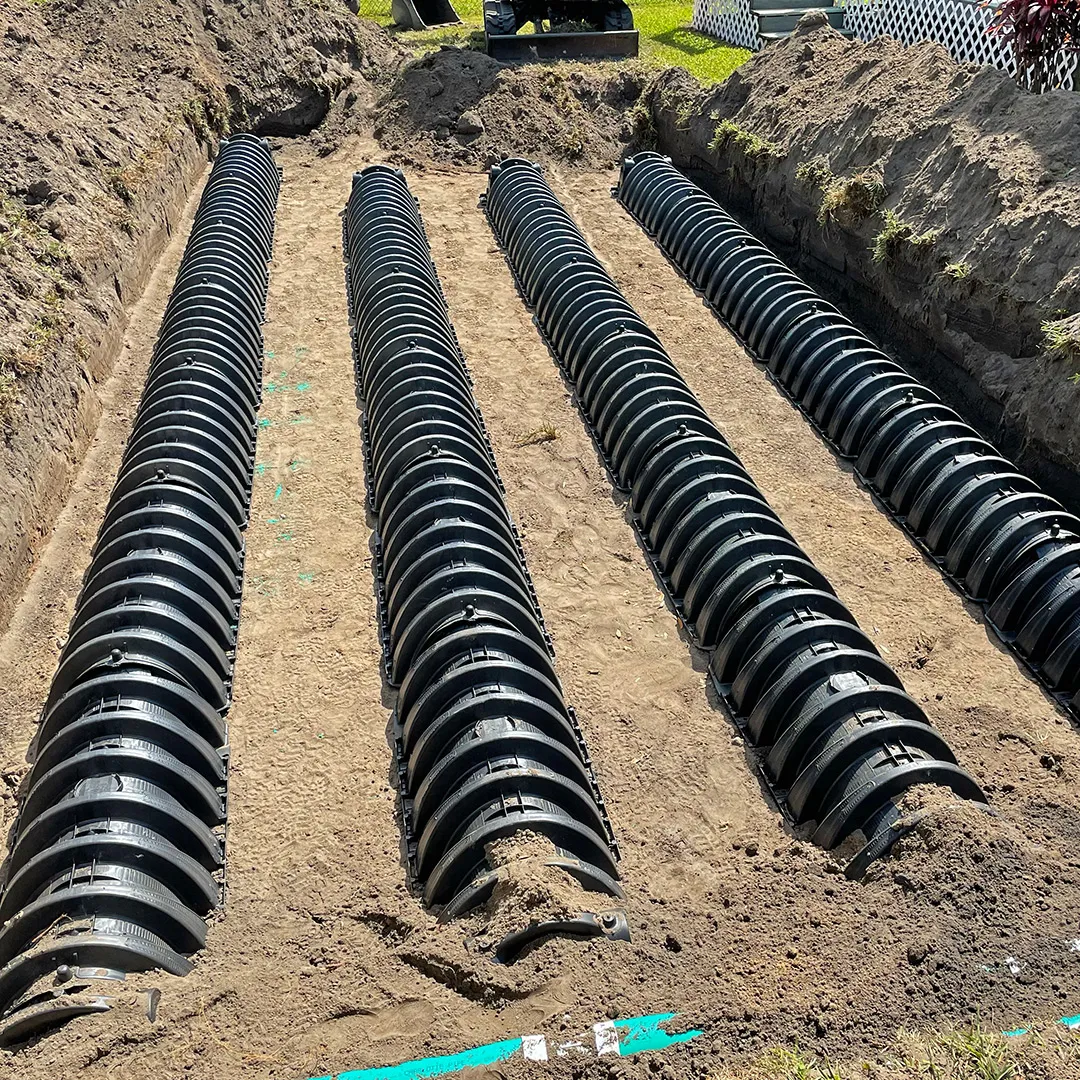
What restoration actually means
Drain fields fail from the top down. Years of fine solids slip past the tank and build a black, greasy biomat layer where the pipe meets the soil. The soil itself is usually fine; the interface is clogged. Restoration attacks that interface: pumping the tank to stop the feed, mechanically relieving the field, and in many cases replacing the worst line or two while the rest of the field recovers capacity. When the d-box has settled and one line has been drowning while others sat dry, simply re-leveling the split buys the field years.
The honest part matters because restoration is oversold in Florida. If a field has been fully saturated for years, if the biomat has sealed every line, or if the seasonal water table has risen into the trenches, restoration is a band-aid and Jacob will say so to your face rather than take the smaller check twice. What he will not do is jump you straight to a full replacement when an intervention at a fraction of the cost has a real chance of working. You get the actual odds, in plain words, standing in your yard.
Every restoration starts with the same diagnostic work as a repair call: tank opened, levels read, d-box exposed, lines probed. You see the evidence before you spend anything. And since the digging, hauling and final grading are all done in-house, the price covers the finished yard, with the work documented like everything else in our gallery.
Timing matters more with drain fields than with any other septic work. A field showing its first symptoms in spring is a restoration candidate; the same field after two more wet seasons of full saturation usually is not. If your yard is telling you something, the cheapest possible move is finding out what it is saying this month instead of next year. The site visit costs nothing and commits you to nothing.
Signs your field is struggling
- Grass bright green and spongy over the field
- Standing water that outlasts the rain
- Slow drains that worsen in wet weather
- Sewage odor outdoors near the field
- Tank refills with backflow right after pumping
- Puddling over one trench line only
How a restoration goes
Three visits’ worth of clarity, usually compressed into two.
Site read and verdict. Jacob inspects the tank, the d-box and the field, then tells you whether restoration has a genuine shot or whether you would be paying twice. Book the visit; it costs nothing.
The intervention. Tank pumped, the failing line or d-box corrected, the field relieved and rested. Most restorations are a one-to-two-day job with one machine in the yard.
The follow-through. Disturbed ground graded and finished, plus the usage habits that protect the field’s recovery, explained without a lecture. Questions later? Call (863) 514-2176 anytime.
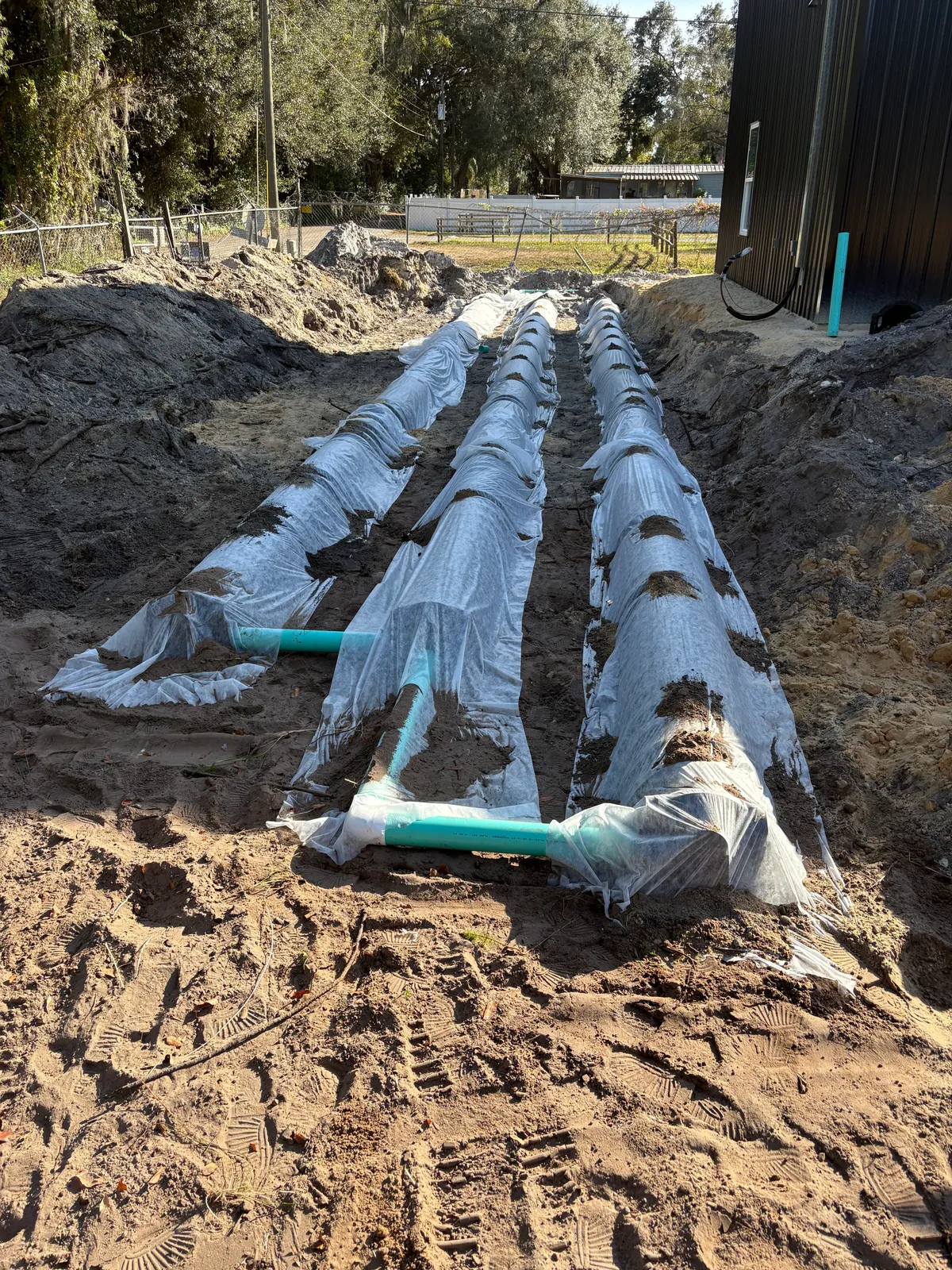
Florida fields fail differently
In Polk County the enemy is water from below as much as waste from above. Summer rains lift the water table into the trench zone in low-lying areas around Polk City and the Green Swamp edge, and a field that spends August underwater cannot breathe no matter how clean the lines are.
Restoration here often includes grading work: building up low ground, cutting a swale to move roof and yard water away from the field, or extending downspouts that have been quietly flooding one corner of the system for a decade. Because grading is half our business, those fixes are part of the job, and they are frequently the difference between a restoration that lasts and one that does not. Homes from Bartow to Haines City have gotten years more life out of fields other contractors had condemned.
Amazing customer service his work was top notch highly recommended
Mario Mantecon · Google review
Where we do this work
Drain Field Restoration runs anywhere within fifty miles of Lakeland: all of Polk County and the eastern edge of Hillsborough. The service areas page lists every town with its own local page, and if your address sits on the edge of the map, ask anyway; the answer is usually yes.
Drain field questions, answered straight
The questions that come up when a yard goes soggy. Yours not here? Ask it directly.
How do I know if my drain field is failing or just wet from rain?
Watch the timeline. Rain puddles dry within a day or two of the weather clearing; a failing field stays spongy and may smell. Rain water is also clear, while field effluent leaves a gray film. If the wet spot maps to where your lines run and outlasts the weather, get it looked at.
How much does drain field restoration cost vs replacement?
Restoration runs a fraction of what a full drain field replacement costs once you add the excavation and Polk County permitting. That gap is exactly why an honest assessment matters: a restoration with a real chance of working saves you the difference, and one without wastes the smaller sum.
How long does a restored drain field last?
When the failure was caught early and the cause was corrected, restorations commonly buy five to ten years and sometimes much more. When the field was already fully sealed with biomat, no restoration lasts, which is why Jacob tells you the odds before you pay rather than after.
Can I drive or park over my drain field?
No, and it is one of the most common causes of failure we dig up. Vehicle weight compacts the soil and crushes the lines. If your field sits where vehicles need to go, talk to us about rerouting traffic or armoring a crossing properly before the damage is done.
Does a failing drain field mean my tank is bad too?
Usually not. Tanks and fields age on different clocks. Concrete tanks often outlive two fields. The inspection covers both, and you only fix what is actually failing.
Will you need a permit for restoration work?
Depends on scope. Repairs in kind and maintenance generally need less paperwork than a replacement; anything that modifies the system goes through the Polk County health department. Jacob handles whatever filing the job requires, the same as on a full installation.
What can I do to help a recovering drain field?
Spread water use across the week instead of marathon laundry days, fix running toilets the week they start, keep vehicles and structures off the field, and route gutters away from it. Those four habits are most of what determines whether a restored field lasts five years or fifteen.