
Drain field restoration in Auburndale
Around the lakes and the old downtown, a lot of houses still drain into the system they were built with, and most of those houses have grown since. When the field starts to struggle, Jacob pumps the tank, digs until he can see what is going on, and tells you plainly whether it can be brought back.
Old systems under bigger houses
A septic field gets sized for the house it was built to serve. Add a bedroom, a second bathroom or a guest suite over the garage, and that same field is suddenly carrying more water every day than anyone planned for. That is the story behind many of the tired systems around Lake Ariana, Lake Juliana and the older blocks near downtown. The system was designed honestly decades ago. It is now working for a household it was never drawn for, and the field is the part that pays for it.
The field usually speaks up before the house does. Grass over the lines turns brighter green than the rest of the yard and feels spongy underfoot. Drains slow down, and they get slower in a wet week. You catch a sewage smell outside on a still evening. A puddle is still sitting there a full day after the rain quit. Around here that last one deserves the most attention. Auburndale’s sandy topsoil swallows a storm quickly, so ground that stays wet is usually water coming up out of the field.
Lake-side fields carry an extra handicap. When the lakes run high, ground water climbs under the yard, so a field with a thin margin can flood from underneath during a wet stretch and look perfectly fine the rest of the year. Before anybody calls a field finished, we want to know whether it is failing or simply wet. The full service is described on the main drain field restoration page, finished work from around the county is in the gallery, and a visit starts with a short note here.
Worth a call this week
- Grass over the field greener than the rest of the lawn
- Spongy ground when you walk the lines
- Tubs and toilets slower after a rainy stretch
- Sewage odor outside the house
- Standing water that outlasts the storm
- Gurgling drains on laundry day
Restore it or replace it? The shovel decides.
Nobody can tell a field that will come back from one that is gone by looking at the grass. The answer is underground, so that is where Jacob looks.
Open the system up. The lids come off and the tank gets measured: sludge on the bottom, scum on top, and the condition of the baffles that keep solids in the tank and out of the lines. The distribution box gets uncovered too, to see whether it has settled out of level and started sending most of the flow down a single line.
Probe the lines. A probe worked down the length of each line shows where effluent is standing and where the soil is still taking it. A field that is soaked at one end and dry at the other tells a very different story from one that is saturated wall to wall.
Restore it when it is caught early. If the soil still has life in it, restoration goes after the cause. That can mean replacing a failed baffle, leveling the box, clearing what escaped into the lines, resting the overloaded section of the field, or moving roof water somewhere else. Sometimes that last part takes real land grading. The field itself stays right where it is.
Replace it when it is gone. When the soil under the trenches has sealed off, resting it will not help, and the only fix that lasts is a new field on fresh ground. Near the lakes that means working inside the surface-water setbacks and designing from elevation. The permit, site evaluation and inspections go through the Florida Department of Health in Polk County, and Jacob handles all of it. The new field gets built by the same person who did the diagnosis, as a septic tank installation job. Want to talk it through first? Call (863) 514-2176.

Why the tank gets cleaned first
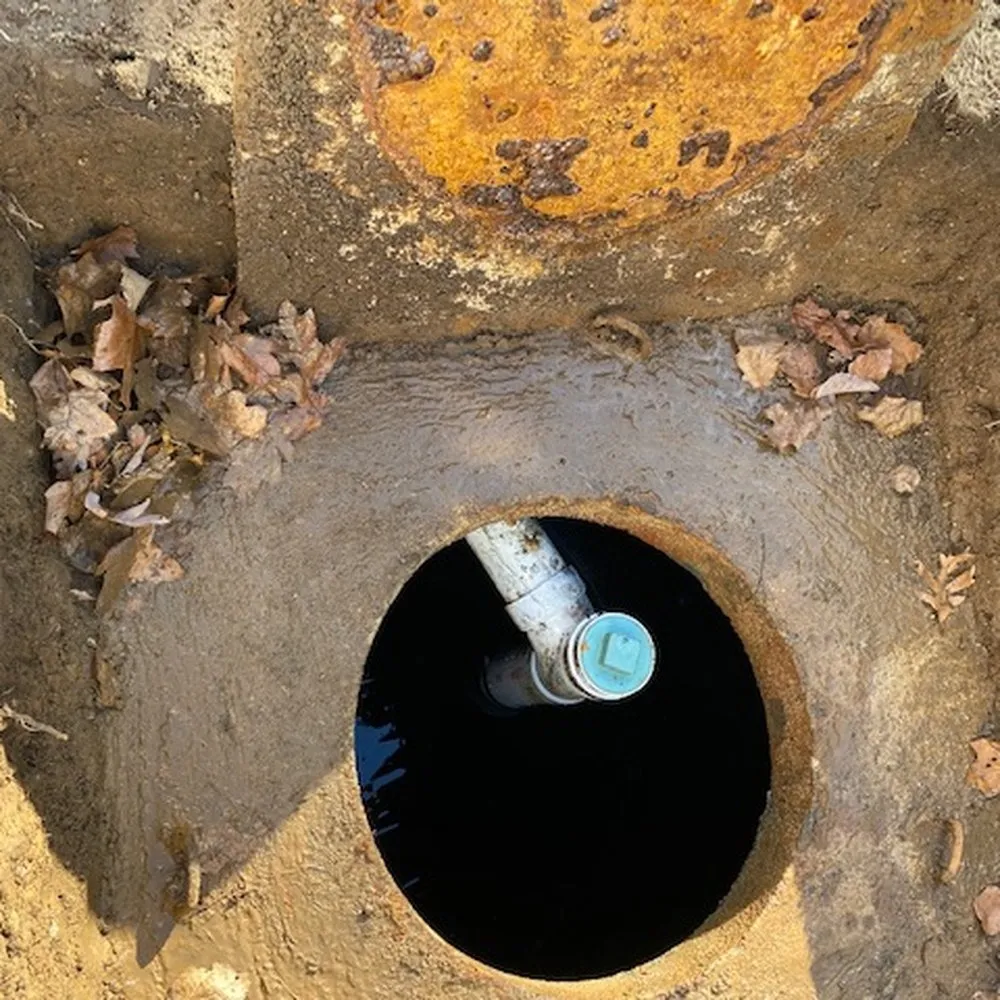
Every restoration begins at the tank. A full tank lets solids drift out into the field with each flush, and anything that reaches the field stays there, sealing the soil a little more every time. So before anything else happens, the tank gets pumped down and washed out the way it is in this photo: suction hose inside, water sprayed down the walls, until the concrete and the fittings are plain to see.
A clean tank shows things a full one hides. A crack in the wall. An outlet baffle that rusted through or broke off years ago. A tank that is simply too small for the house it serves today. Each of those changes the plan for the field, and none of them shows up from the yard.
Jacob measures what comes out at every pump-out, so your next pumping date gets set by your own tank instead of a mailer. The older in-town tanks around Auburndale deserve a look every three to four years. Keep to that habit after a restoration and the field has a fair shot at a long second run.
Jacob was fabulous! I would strongly recommend this company’s services. He fixed the issues and educated me on my septic system. He was helpful and very professional.
Roxann Bonta · Google review
Around the lakes and the old downtown
This work lives mostly in the established neighborhoods, where the systems are oldest and the houses have grown the most. In a normal week, a field that needs looking at gets looked at the same week. The rest of the local picture is on the Auburndale page. Building on a new lot out by Berkley Road instead? That starts with site preparation and excavation, and the septic gets planned alongside them.
Soggy yard? Start with these.
What Auburndale homeowners want to know once the ground over the field stops drying out. Anything else, ask Jacob directly.
How can I tell if it is the field or just a clogged pipe?
Where the trouble shows up is the clue. One slow sink or toilet usually means a clog in that fixture’s line. Every drain in the house slowing together, especially after rain, points further out toward the tank or the field. Opening the tank settles it fast, because the liquid level shows whether water is leaving the tank or backing up inside it.
Will pumping the tank fix my drain field?
Pumping is always the first step, and it buys relief, but on its own it does not repair a field. It removes what is sitting in the tank, while the real trouble in a struggling field is out in the soil along the lines. What pumping does is stop more solids from reaching the field while we work out what the field needs.
We added onto the house. Is that why the field is struggling?
It may be. A field drawn for a smaller household is now taking more water every day, and older systems near the lakes have less room to spare to begin with. Sometimes restoration plus better water habits is enough. Other times the field has to grow to match the house, which means a permit and new field area.
Why does the yard only flood over the field when the lake is high?
Near Lake Ariana and Lake Juliana the water table rides with the lake. When the lake comes up, ground water rises under the field and takes away the dry soil the field needs to work. The field itself may be healthy and simply short on separation. The fix depends on how often that happens and how high the water climbs.
Can I drive or park on the field once it is restored?
No, and that rule matters even more after the work. The pipes and sand under a field are not built to carry weight, and one truck tire can crush a line or pack the soil so tight it quits taking water. Park somewhere else, keep trailers and equipment off it, and steer yard crews around it.
Does restoring a drain field need a permit?
It depends on the work. Jobs that require one go through the Florida Department of Health in Polk County, and Jacob files and handles that paperwork himself. A replacement field always goes through the permit process. You get told before the job starts whether yours needs one, so nothing about the paperwork catches you off guard.
Can I send photos before you come out?
Please do. A few pictures of the wet spot, the grass over the field and the tank lids, texted to (863) 514-2176, give Jacob a head start on the diagnosis. Phone advice costs nothing, and sometimes it turns out the septic is fine and the yard just needs its drainage corrected.
Wet patch out back? Text Jacob a picture.
Most diagnoses start with a photo and a short conversation. If the field needs a real look, you get a date, a firm written price and an answer you can understand.