
Septic tank installation in Auburndale
Auburndale needs two kinds of septic work at the same time. Bare lots along Berkley Road and the I-4 corridor need a first system under a first house. Older homes around Lake Ariana and Lake Juliana need replacements that fit inside tighter rules. Jacob designs from the soil test and the elevation, files the permit, and runs the machine himself.
Two kinds of install in one town
Out along Berkley Road and up toward I-4, an installation usually starts with a bare lot. The builder has a house plan, the county wants a site evaluation, and somebody has to decide where the tank, the field and the reserve area go before the slab is poured. That order matters. Set the pad first and you can box the septic into the one corner of the lot that tests worst. The sandier ground away from the lakes takes water well, so most of these lots end up with a conventional system: a tank, a distribution box and a field of trenches or chambers. Simple systems on good sand tend to last a long time when they get pumped on schedule.
In the older blocks near downtown and around the lakes, the job usually starts with an old system instead of a bare lot. A lot of those replacements trace back to a distribution box that settled out of level years ago and sent most of the flow down one or two lines until those trenches gave out. Nobody sees it happen, because the box is buried and the yard looks fine until the day it does not. When we open one of these systems, the box is one of the first things we dig to, and its new replacement goes in on a compacted base so it stays level this time. The new field gets drawn to today’s rules, which by the lakes means a set separation above high water and setbacks that shrink the usable yard. A mound comes in only where the ground cannot give that separation.
Both kinds start the same way, with Jacob walking the property and reading the ground before anybody draws a line on paper. If you are building, bring the house plan along, because it saves a second trip. Finished installs are in the gallery, the whole service is laid out on the main septic tank installation page, and the walk itself is a short form away: book it here.
What the site evaluation settles
- Where the tank and field can legally sit
- How high the seasonal water table rides
- Whether the soil takes a conventional field
- Whether engineered fill is required
- Where the reserve area belongs
- How far the house sewer has to run
From permit to final inspection
Every new or replacement system in this county goes through the Florida Department of Health in Polk County. Here is the order an Auburndale install runs in.
Site evaluation and soil test. The health department needs to see the ground: soil borings, the water table, and the setbacks from wells, lakes and property lines. Jacob schedules the evaluation, meets the evaluator on the lot, and builds the design on what the borings actually showed.
Design and permit. The system gets drawn to fit the size of the house and the soil under it. Jacob files the application with the health department, so you never stand in a line or sit on hold to keep it moving. Once the permit is issued, the work date goes on the calendar, and that date holds.
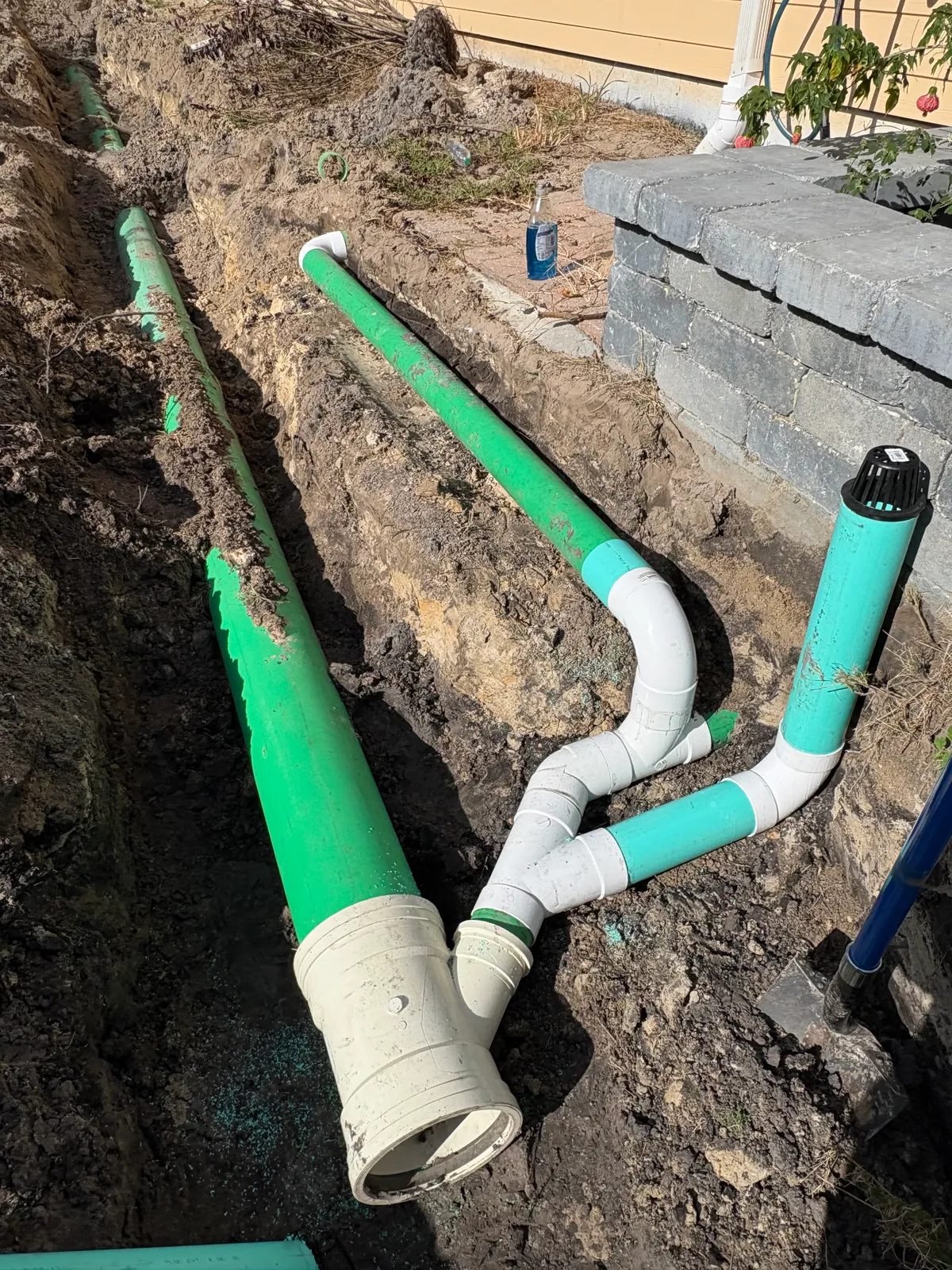
Building sewer and tank. The building sewer is the pipe that carries everything from the house to the tank, the run you see in the photo above. On a new build it starts at the stub-out by the slab. On a replacement it ties into the existing line, and any cracked or sagging pipe gets replaced while the trench is open. Slope is the whole game on that run, because a pipe without enough fall lets solids settle and back up toward the house. The tank goes in level, at the depth the design calls for, with the lids where you can find them later.
Field, inspection and backfill. The drain field goes in next, and the inspector sees the work open before any of it gets covered. After the final inspection the yard is backfilled and shaped so roof water runs away from the field. When a lot needs more than a rake can give it, that becomes land grading on the same visit.
Sizing the field to the ground you own
The tank holds solids back. The field is where the water actually leaves, and it gets sized to two things: how much water the house sends out, and how quickly the soil can take it. More bedrooms means more people and more water, so the field grows with the house. On good Auburndale sand the soil is generous and the field stays compact. On ground that drains slower, the same house needs more trench area to do the same job.
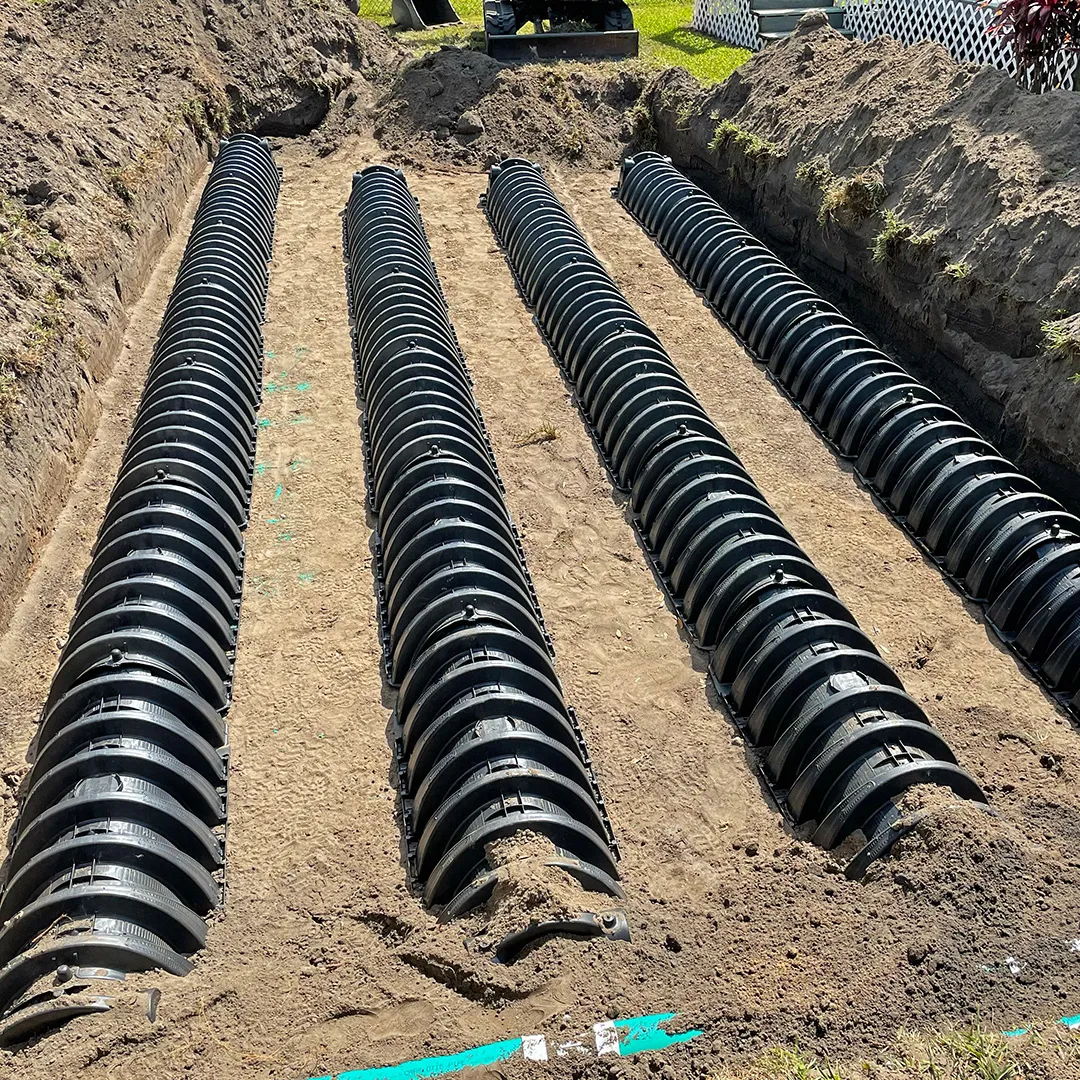
Chambers like the ones in this photo are one way to build that field. They are arched plastic sections laid in rows in a sandy excavation, leaving open space over the soil, and they get covered once the inspector has signed off. Stone and pipe is the older method and it still works fine. Which one fits your lot depends on the design and the site, and Jacob tells you why before the work starts.
Whatever goes in the ground, the lot needs space held back for a future field. Property lines, wells, the driveway and, by the lakes, the water’s edge all claim room first. On a tight lake-side parcel, finding that reserve area can be the hardest part of the whole design. On a freshly cleared lot off Berkley Road it is usually simple, especially when the excavation and the septic get planned as one job.
We’ve used Florida Site and Septic several times for our septic systems needs. They are always professional and fair. We would highly recommend them.
Bruce Britt · Google review
Both kinds of install, one calendar
Auburndale lands early or late on a route day out of Lakeland. New installs on the Berkley Road and I-4 side and replacements around the lakes run on the same calendar and get priced the same way, in writing before any digging. More about the town lives on the Auburndale page. If your current system only needs help bringing the field back, start with drain field restoration before anybody talks about a new one.
What owners and builders ask first
The questions that come up before a new system goes into the ground. Yours is not on the list? Send it to Jacob.
How do I know if my lot needs a mound system?
The site evaluation tells you. Soil borings show where the seasonal water table sits, and the design needs a set separation between that water and the bottom of the field. Away from the lakes, the sand usually gives that room and a conventional field works. Near Lake Ariana or Lake Juliana, the water can ride high enough that engineered fill has to build the field up.
Who takes care of the permit?
We do. Septic permits, site evaluations and inspections here all go through the Florida Department of Health in Polk County. Jacob files the application, schedules the evaluation and is standing on the lot when the inspector arrives. You hear what is happening at each step, and you never have to call an office yourself to keep things moving.
How long does a new install take from start to finish?
Most of the calendar belongs to the paperwork. The evaluation, the design and the permit come first, and their timing follows the health department’s schedule. The digging itself is the short part of the job. Once the permit is in hand, Jacob gives you a date, shows up on that date, and the inspection follows the install.
Should the septic go in before or after the building pad?
Plan it before. The field location has to come out of the site evaluation, and a pad set without that answer can leave the septic squeezed into the worst ground on the lot. When we handle both, the pad and the system are laid out together and built in one visit, which keeps a second machine trip off your bill.
Can my old tank stay if the field is being replaced?
Sometimes. A sound tank with good baffles and a solid lid can keep working with a new field. A cracked tank, a rotted baffle, or a tank too small for the house as it stands now gets replaced. Jacob pumps it out and looks inside before deciding, then tells you which way it went and shows you why.
What size tank does my house need?
Tank size follows the house, mostly the bedroom count, because the rules use bedrooms to predict how much water a household sends out. An addition that adds bedrooms can push an existing system past what it was built for. That is one of the most common reasons an older home near the lakes ends up needing a replacement.
How do I take care of a brand-new system?
Nothing with an engine belongs on the field or the tank, apart from the mower. Trees go well away from the lines, and downspouts should drop their water somewhere other than the field. Then pump on a schedule. A newer system on good sand can usually go five years between pump-outs, and Jacob sets your interval from what he measures.
Clearing a lot off Berkley Road? Put the septic on that calendar.
One walk covers where the house sits, where the system goes and what it all costs on paper. Call or text the shop and pick a morning.