
Land grading in Auburndale
After the next afternoon storm, go look at where the water sits. Sand in this part of Polk drinks rain fast, so a puddle still there the following morning is the yard’s shape talking. Jacob reads how your lot falls, moves dirt until water runs away from the house, and writes down what that costs before a single bucket of fill shows up.
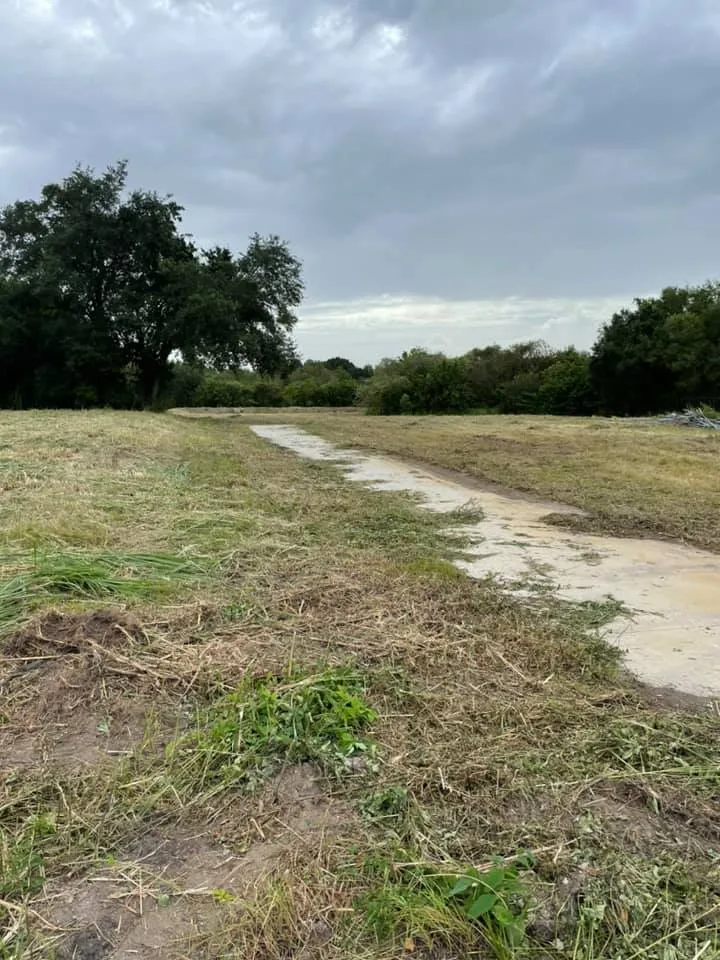
Why rain parks in the yard between the lakes
The neighborhoods between Lake Ariana and Lake Juliana sit on ground with almost no fall to it. Rain lands, finds no downhill and spreads out. The sand underneath would gladly take it, and across most of the yard it does. Anywhere the surface dishes even a little, though, water gathers faster than it can soak in. Add a slab, a driveway and a roof all shedding toward the same low corner, and you get the puddle that greets you every July afternoon.
That is why a wet spot that lingers here says more about the shape of the ground than about the forecast. Fast-draining topsoil should be dry within hours of an ordinary storm. When one patch stays soggy, something is steering water to it: a yard that tilts back toward the house, a patio poured a touch low, a fence line that built up a little dam of sod and leaves over the years, or a downspout emptying into the one spot that cannot get rid of it.
Grading fixes the steering. The yard gets reshaped so the first stretch away from every slab falls outward, and the collected water is handed to a swale that carries it somewhere it can soak in or leave the lot without bothering anyone. Pipes and pumps rarely enter into it. On flat sand, the right shape does most of the work by itself, and it keeps working without anything to clog or wear out.
Older yards near the old downtown have had decades to drift. Roots lift the turf, flower beds get built up a little higher every spring, a shed lands right where water used to cross. None of it looks like much by itself. Together it can turn a yard that drained fine for ages into one that holds water against the house.
Downspouts get a look on the same visit. A gutter that empties beside the foundation can undo a perfect grade, so the outlet gets turned or extended to drop its water where the new slope can carry it. It is a small fix that protects everything else we shaped.
The main service details live on the land grading page, finished yards are in the gallery, and a walk of your lot starts with a quick note through the contact page.
Signs the grade is the problem
- Puddles still there the morning after
- Water standing against the slab
- Sod dying in one low strip
- Mulch beds washed onto the walk
- A damp garage floor after storms
- Ruts where a trench was backfilled
- Sod seams sinking on a new build
Finish grade on the new Berkley builds
A new house off Berkley Road is only as dry as the last few inches of dirt around it. That final shaping happens after the pad and before the sod, and it is the step most likely to get rushed.
Builders and owner-builders both call for it on its own, and it is priced as its own job.
Rough grade comes first. Once the slab is in and the trades are done tracking across the lot, the leftover ruts, spoil piles and stray fill get pulled back into a rough shape. The big decisions happen here: which way each side of the house drains, where the swale runs, and how the driveway ties into the yard around it.
Finish grade before sod. The surface gets dressed smooth, with the fall away from the house held steady all the way around, and the swale lines cut clean so the sod crew can lay right into them. Sod rolled out over a bad grade looks fine for a season. Then the first big storm finds every low spot under it.
Putting a yard back after other work. A septic install or a utility trench leaves soft ground behind. Backfill keeps settling for months and turns into ruts and sunken lines unless it was compacted and crowned properly the first time. When we dig, we put the grade back ourselves. When somebody else dug, we can fix what they left. Ask about either at (863) 514-2176.
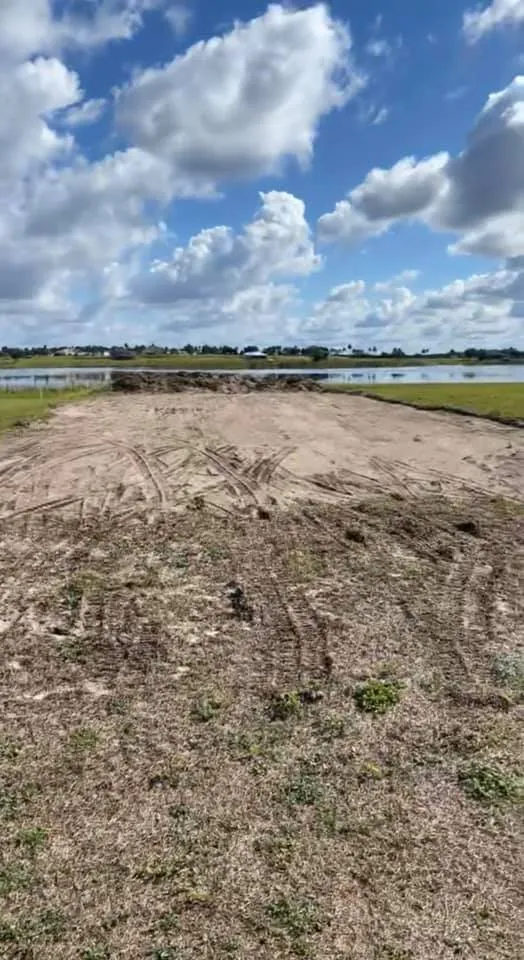
Grading down to the water
Grading a yard that runs down to Lake Ariana or Lake Juliana is a different job from grading a lot on the dry side of town. Ground water under those yards sits closer to the surface and moves with the lake, so a low spot that drains fine in a dry spring can hold water all through a wet summer for reasons the surface shape has nothing to do with.
We grade those lots with the high-water months in mind. The house side gets enough fall and enough fill to stay above the wet ground. The yard gets shaped to send runoff toward the lake gradually, because a rush of water carries sand with it, and nothing gets piled where a storm could push it into the water.
Many of those lake homes are older and run older septic systems, and the grade around a drain field matters almost as much as the field itself. Roof and yard water poured across a field shortens its life. That overlap is why grading and drain field restoration so often end up on the same visit.
Excellent customer service and high-quality work!
Land grading customer · Google review
Grading jobs on both halves of town
New construction along Berkley Road needs finish grade, and the older yards around the lakes need their water moved. Auburndale sits inside our Polk County coverage, with every other town listed on the service area page. More local detail is on the Auburndale page, and a lot that still needs clearing or a pad starts with site preparation. Same-week scheduling is normal for Auburndale, so a yard walk rarely waits long.
Questions about water and grade
What owners ask once the puddles get old. Anything else on your mind, send it to Jacob.
Why does my yard stay wet when the soil is sand?
Because the water is being steered there. Sand around Auburndale drains quickly, so ground that stays soggy after a normal rain usually sits in a low spot collecting runoff from the roof, the drive or the lot next door. Reshaping the surface fixes that far more often than any buried drain pipe.
Will grading keep water away from my house?
That is the main reason to do it. The ground right around the slab gets shaped to fall outward on every side, and the water it sheds is handed off to a swale. Once rain has somewhere better to go, it stops collecting against the walls and creeping under doors.
Do I need grading before sod on a new build?
Yes, and it deserves care. Finish grade is the last chance to set how the yard drains before grass covers everything. Sod laid over ruts or a yard tilting back toward the house looks fine for a few weeks, then shows every low spot the first time it storms hard.
My yard sank where a trench was dug. Can that be fixed?
Yes. Settled backfill gets topped up, compacted and crowned slightly so it ends level once the ground finishes settling. If the sunken line sits over a septic pipe or a drain field, Jacob checks what is underneath before adding weight, because heavy fill on a field causes its own trouble.
Does a lakefront lot need a different approach?
It needs more planning. Ground water sits close to the surface near Lake Ariana and Lake Juliana, so we grade for the wet months. That means keeping the house side high enough, slowing runoff toward the shore and never leaving loose fill where a storm can wash it in.
What is a swale, and do I need one?
A swale is a broad, shallow channel shaped into the ground to carry water away gently. On the flat lots between the lakes it is often the simplest fix, since it gives runoff a path with nothing to clog. Whether you need one depends on where your water is coming from.
How is the price for grading worked out?
Jacob walks the yard, looks at where water collects and where it needs to go, and figures how much dirt has to move. You get a firm written price covering the grading, any fill and the cleanup. Texting photos of the puddles right after a storm speeds that up.