
Septic tank pumping in Bartow
The county seat runs a lot of tanks that predate the people living over them. We find the lids, empty the tank down to the floor, read what the open access is telling us about the years ahead, and say it plainly.

How often an older Bartow tank wants emptying
Age changes the math
A tank that went in the ground generations ago is usually smaller than what a builder would set today, and smaller capacity means less room for sludge before it starts riding out to the field. Two people over an aging tank can land on a shorter cycle than four people over a modern one, which surprises almost everybody.
Measured, not guessed
Jacob drops a stick and reads the sludge blanket on the floor and the crust up top. Those two numbers, plus who lives in the house, produce the interval. It is arithmetic anybody can follow once somebody shows you the stick, and Jacob would rather show you than tell you.
The Peace River factor
Homes down in the floodplain reaches carry less margin for error.
Finding a lid nobody has seen in decades
Plenty of Bartow properties changed hands three or four times since the tank went in, and the paperwork trail died somewhere along the way. Nobody at closing mentioned a tank. There is no drawing in a drawer. The seller thought the house was on city sewer because the older core mostly is, and then the parcel turns out to sit just past where the line stops. That is a normal Tuesday for us.
Locating is the detective part of the job, and Jacob likes it. We follow the sewer line out of the house, probe on the likely run, and read the yard for the flat green rectangle and the settled soil that mark where somebody dug once. On acreage off Highway 60 the tank can sit farther from the house than you would ever guess, because whoever set it put it where the machine could reach. Once we open it, we mark it, and we can put risers in so nobody has to hunt again. Then the tank gets a proper look, and if the news is bad you will hear about the repair side instead of a vague warning.
Twelve miles from the shop
Bartow sits close enough to Lakeland that it lands on the regular morning run, so booking is usually a matter of days rather than weeks, and an active backup moves ahead of routine work. Pick a date or call (863) 514-2176.
Why the truck takes everything, not the easy part
Here is what actually happens when the hose goes down. A tank holds three things in layers: a crust of grease and floating material on the surface, a column of relatively clear liquid in the middle, and a bed of settled solids on the bottom that has been compacting since the last visit. Only that middle layer is meant to leave the tank on its own and travel out to the field.
The shortcut is easy and it looks identical on paper. Drop the hose through one opening, pull until the level drops, coil up and write an invoice. The liquid comes out fast because liquid always does. Meanwhile the bed on the floor has barely moved, the crust broke apart and settled instead of leaving, and the second chamber never got touched at all. The homeowner sees an empty-looking tank and pays full freight for maybe half the job.
So we work the hose across the floor and break the crust up deliberately, and we open the second chamber even when the lid over it takes real digging to reach. Backwashing some liquid in to loosen a hardened bed is normal on tanks that have gone a long stretch, and it is worth the extra time on the clock. What comes out gets hauled to a permitted disposal site the way state rules require, logged and documented.
Then Jacob reads the tank while it is open and empty, which is the only moment anybody can. Sludge depth versus time since the last service tells you the real interval. The condition of the inlet and outlet tells you what the next few years look like. And once the tank is dry, whether liquid comes back in through the outlet tells you the single most important thing about the system. Photos of your own tank go with you either way. See finished work in the gallery, or line up an inspection if you are buying a place with an unknown system.
Used Florida Site and Septic, they were very accommodating and finished the work in a timely manner.
Kurt M · Septic customer
Rusted steel, and what it means for the hose
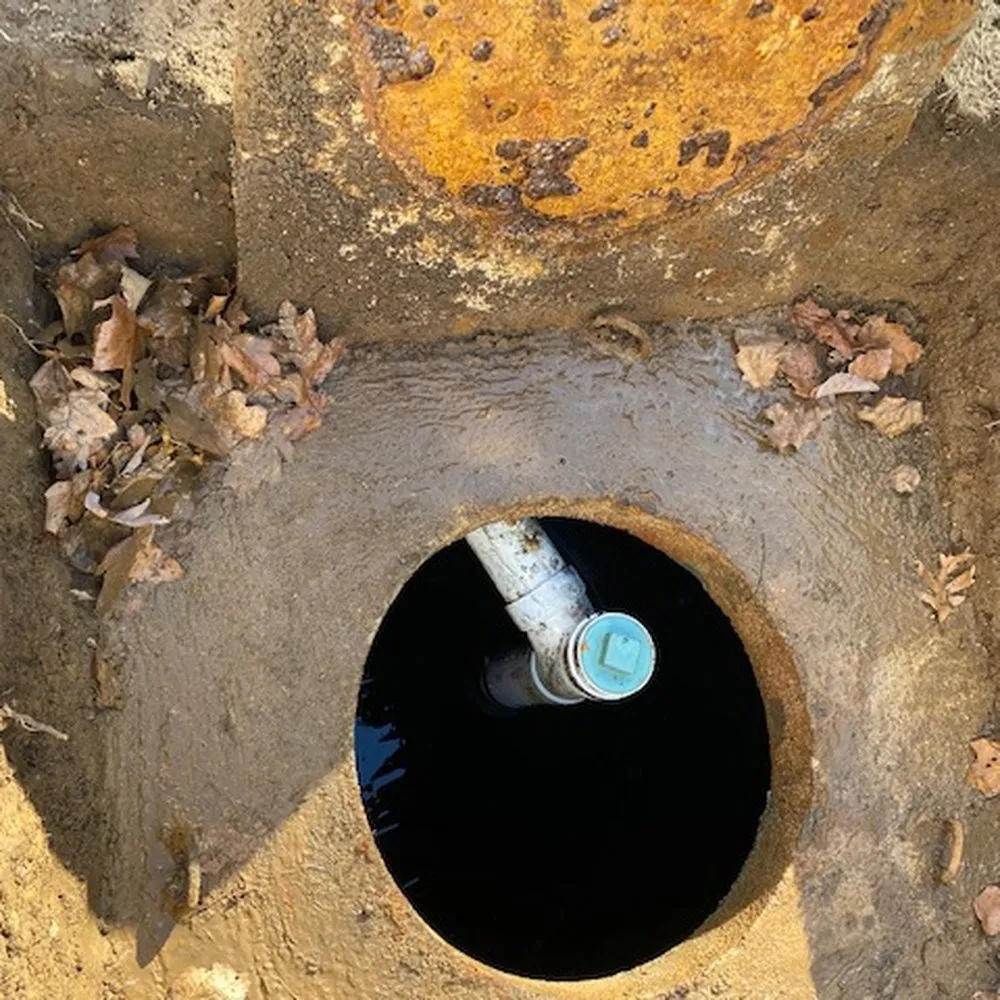
Older Bartow properties still turn up steel tanks, and steel rusts from the baffles down. A baffle is the simple internal wall that forces incoming waste downward and keeps the floating crust from riding straight out the outlet pipe. When it corrodes away, nothing stops the crust, and grease starts making the trip to the field.
Pumping a tank in that condition calls for a lighter touch. Rusted-through steel can be structurally thin, so we work the hose carefully instead of leaning on the walls, and we tell you what we found rather than letting you learn later. A missing baffle is not a reason to panic, but it is a reason to plan, and sometimes the honest answer is a replacement tank rather than one more round of service. Ask Jacob directly.
Wet months change the whole conversation
Summer rain lifts the water table under every drain field in Polk, and the clay-influenced ground in the phosphate country south of town holds it longer than clean sand does. A field that handled the household fine in March can stop accepting normal flow by August, and the tank simply fills to the outlet and sits there. Schedule routine work in the drier stretch of the year if you have the choice, because a pump-out done ahead of the season is worth more than one done during it. We run the whole Bartow map either way: the old-town streets, the acreage east and west along Highway 60, the rural roads south toward Fort Meade and the homesteads up 98 toward Highland City. It is all part of Polk County and the wider service area.
Bartow pump-out questions, answered straight
The things people around the county seat actually ask while the truck is idling. Got another one? Send it over.
Nobody knows where the tank is at our Bartow house. Can you still pump it?
Almost always. We trace the line leaving the house, probe along the likely run and read the yard for the settled ground that marks an old dig. Older parcels here changed hands several times and the records vanished, so this is routine work rather than an unusual request. Locating time is part of the visit.
How often does an older tank around Bartow need pumping?
It depends on tank size and how many people are on it, which is why we measure rather than quote a calendar. Older systems here tend to hold less than modern ones, so the cycle often lands shorter than owners expect. Jacob gives you a number that fits your household before he leaves.
What is the difference between emptying the tank and just lowering the level?
The liquid in the middle comes out easily, but the settled bed on the floor and the crust on top are what cause the trouble. Removing only the liquid looks the same on the invoice and leaves the actual problem in place. We work the hose across the floor and open both chambers.
Should I wait until the wet season is over to schedule?
If nothing is backing up, yes, ahead of the summer is the better time. Once rain lifts the water table the drain field has less capacity, and clay-influenced ground south of town holds that water longer. If drains are already slow, do not wait for a better month. Call and we will fit you in.
Our tank is steel. Does that change the pump-out?
It changes how carefully we work. Steel corrodes at the baffles first, and a tank that has been in the ground for decades can be thin in places, so we avoid putting weight on it and use a gentler technique. You get an honest report on the condition and what it means for planning.
Will pumping stop my drains from running slow?
Sometimes it is the whole fix, and sometimes it buys a few weeks. The test is what the empty tank does. If liquid pushes back through the outlet once the tank is dry, the ground is refusing to take it and the trouble is out in the field. You will hear that straight rather than getting scheduled for another truck, and field restoration is the conversation from there.
What does a pump-out run in Bartow?
Tank size and how deeply the lids are buried set it. Hand-digging to reach access on an old property adds labor, which is why risers pay for themselves after one or two visits. You get a firm written price before anything starts, and the number does not grow afterward.