
Drain field restoration in Bartow
A soft yard around the county seat has four or five likely causes, and they do not cost the same to fix. Jacob opens the lids, reads what the ground has been doing, and tells you which one you have before a machine ever comes off the trailer.
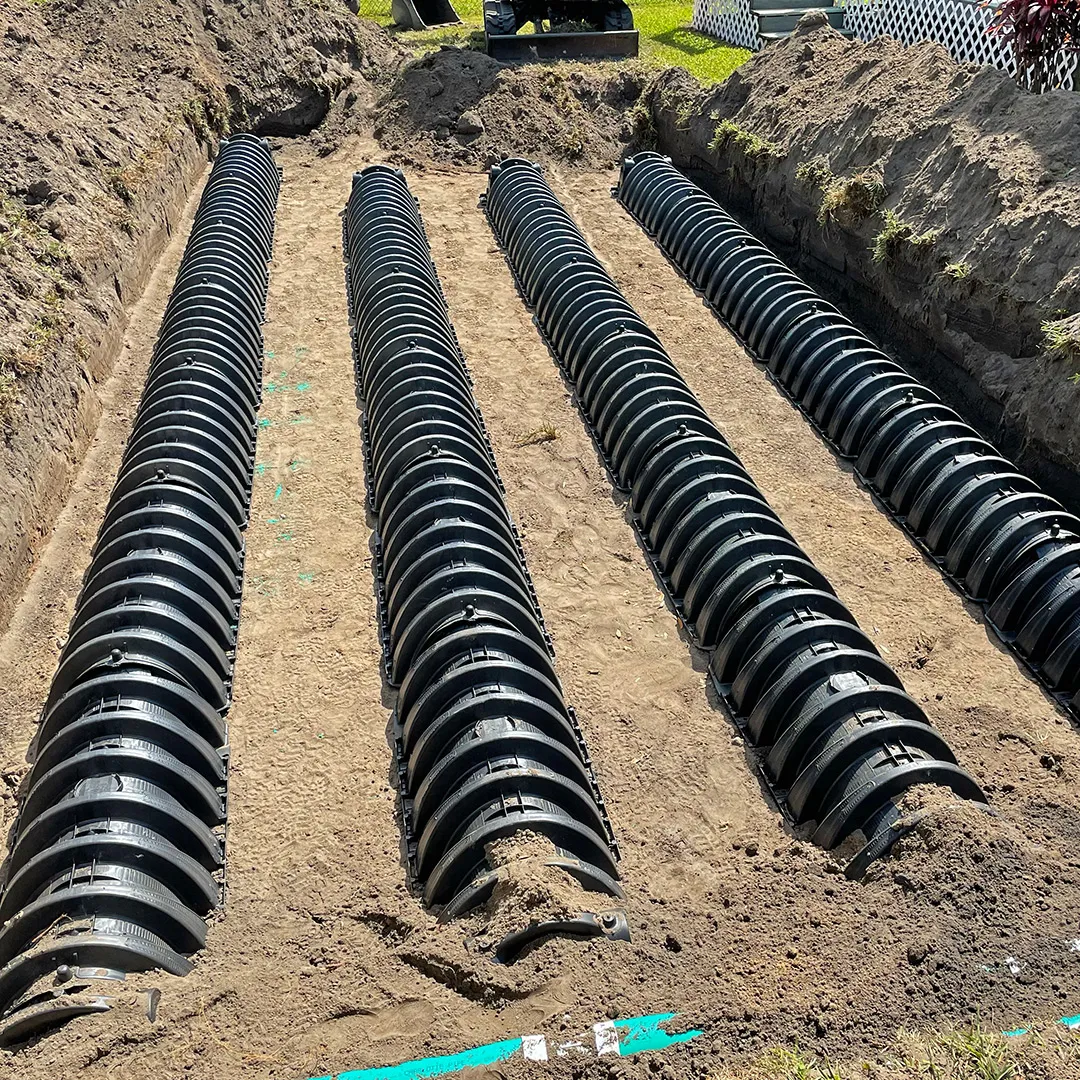
Why a field quits around here
Four culprits show up on this side of Polk, and they leave different fingerprints. Biomat is the common one: a slick dark skin that grows along the trench walls until effluent has nowhere left to soak away. It is the honest end of a long working life. The second is clay. Old mining country south of town left seams of heavy ground salted through the sand, and a trench cut into one of those seams never percolated properly on day one, no matter what the paperwork said. Third is the water underneath, which climbs in the rainy months and takes away the breathing room the trenches were designed around. Fourth is solids: a baffle that rotted out years ago has been letting sludge ride downstream into the pipe ever since, and that damage accumulates quietly for a decade before anyone smells it.
Those four demand different answers, which is why guessing is expensive. Clay is the one that fools people most often, because a yard fifty feet away can be pure sand and drain like a sieve while yours holds water like a bathtub. If a field went in on a clay pocket, no amount of relieving the trenches changes the geology, and the fix is a new field sited on ground that will actually take water. A rotted baffle is the opposite story: correct the tank, clear what escaped, rest the field, and you may have bought a long stretch of ordinary service.
So we dig enough to know. Lids off, sludge and scum depths measured, the splitter box uncovered to see whether it has tipped and been feeding one trench while its neighbors sat idle, and a hand probe down the length of the lines to find where the wet stops. That is the same opening sequence as any repair visit, and it settles the argument with evidence instead of opinion. Finished jobs from around the county are in the gallery, and the walk itself is free: ask for one here.
Tired field or failed field
- Tired: slow drains only in a hard rain week
- Failed: slow drains in a dry March
- Tired: a damp patch that dries in a day
- Failed: standing water with a gray film
- Tired: grass a little too green over one line
- Failed: odor at the trenches on a still evening
- Failed: the tank fills back up within days
Restoration against replacement
Two different jobs, two different prices, and one honest sentence separating them.
What restoration covers. Pumping the tank so nothing new is feeding the trouble, repairing or swapping the failed baffle that started it, re-leveling a splitter box that has settled out of true, opening and resting the loaded trench while its neighbors carry the house, and pulling roof and yard water off the field with a swale or a redirected downspout. The trenches stay where they are.
What a replacement field covers. New trench area, new stone or chambers, new distribution, permits through the health department, and the hauling and grading to put the yard back. It is the bigger number, and it is the right number when the ground under the old field is spent, sealed or clay to begin with.
How you get told which. Out loud, in the yard, with the lids still open and the reason pointed at. Jacob has no interest in selling a restoration that fails next summer, because he is the one who gets that phone call. If the odds are bad he says the odds are bad. Ask anything at (863) 514-2176.
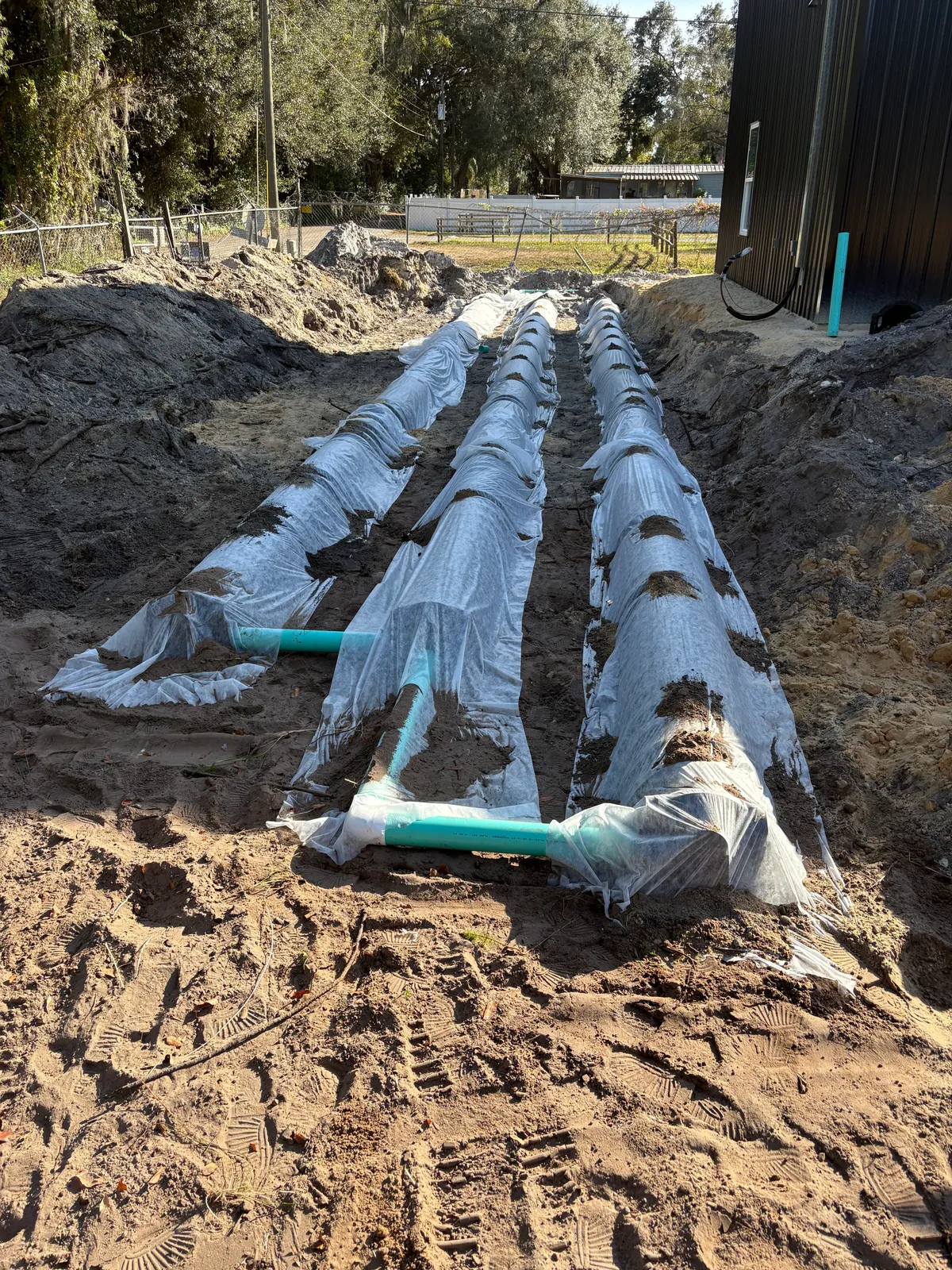
Finding ground for a new field
Whoever built the original system put it on the best soil the lot had. When that field is spent, the replacement has to go somewhere else, and somewhere else is by definition the second-best ground on the property. On the acreage off Highway 60 or the homesteads up 98 toward Highland City there is usually room to make that work, and the answer is a survey of the open ground and a soil test where the numbers look promising.
Tighter lots take more thought. We map what is already committed, which means the well, the old field that stays in place as a reserve area, the driveway, the shop slab, the big oaks worth keeping, and then test what is left. Sometimes the workable spot is out front. On the Peace River floodplain side of town elevation drives the whole conversation, because a trench cut too low is a trench that spends the summer submerged, and fill and grading become part of the septic job rather than a separate one. All of it goes through the Florida Department of Health in Polk County, and Jacob files the paperwork and meets the inspector so the process never becomes your errand. When the new field is the answer, the installation crew and the grading are the same people.
Amazing customer service his work was top notch highly recommended
Mario Mantecon · Google review
Where the calls come from
Outside the sewered core, mostly: the acreage east and west along Highway 60, the rural roads running south toward Fort Meade, and the homesteads up 98 toward Highland City. All of it sits inside Polk County and the wider service area, and the rest of the local work runs from the Bartow page. Buying a place with an unknown system? Start with an inspection, not a hunch.
Bartow field questions, answered plainly
What comes up once the ground out back stops behaving. Something else on your mind? Send it over.
The yard only goes soft in the summer. Is my field done?
Not necessarily. Rainy-season water climbs into the trench zone and squeezes out the room a field needs, so a system with a slim margin struggles for a few months and then recovers. A field that is genuinely finished misbehaves in a dry March too. The season you test in changes the answer, so we weigh both.
How would clay under my lot affect the fix?
It changes what is even possible. Heavy ground left from the old mining country will not take water at any useful rate, and relieving a trench sitting in it accomplishes nothing lasting. Where clay is the cause, the honest answer is a new field on ground that percolates, sized from a fresh soil test.
What exactly does restoration include?
Pumping the tank, fixing whatever let solids escape, re-leveling a settled splitter box, opening and resting the overloaded trench, and moving roof or yard water off the field. The trench layout stays put. It is the smaller job, and it works when the cause is mechanical rather than the soil itself being spent.
My system is older than the house rules. Does that matter?
It matters for expectations. Fields laid generations ago were built to standards nobody would approve now, sometimes undersized, sometimes placed poorly. Those often restore once and then need replacing, so we tell you where yours sits on that curve rather than letting the second failure be a surprise.
Do those additives from the hardware store help a clogged field?
They do not. The blockage sits out in the soil at the trench wall, and nothing flushed down a drain travels far enough or dissolves what is there. We have opened fields belonging to loyal additive users and they look like every other worn-out field. Put the money toward the pump-out.
Is there room on my lot for a whole new field?
Usually, though it takes a walk to prove. We locate the well, the existing field, the drive and anything else that blocks ground, then soil-test what remains. Acreage rarely has a problem. Tighter parcels sometimes put the new field somewhere unexpected, like the front yard, and that is fine.
When is the best time of year to do this work?
Dry months are easier to dig and easier to grade back, so if your field is limping rather than failing outright, winter and spring are kinder. Do not wait out a true failure, though. Every extra saturated summer costs a field capacity it never gets back, and it can turn a restorable system into a replacement.