
Auburndale · Grading
When the rain stays put between Lake Ariana and Lake Juliana
Sandy Polk County topsoil is supposed to drink rain. Pour a bucket on it and the water is gone in seconds. So when a yard on the flat ground between the two lakes holds a sheet of water all afternoon after a storm, something besides the weather is going on. Usually it is the shape of the ground. Sometimes it is the lake itself pushing up from below. Telling those two apart decides what kind of work actually fixes the yard.
Sand that drains fast, and a yard that does not
Try this during the next storm. Pick a spot in the yard that never holds water, the high corner or the strip along the driveway, and watch it during a heavy storm. If that ground soaks rain up quickly while the low middle of the lawn stays flooded for hours, the soil is fine. The water is simply running downhill to one spot and piling up faster than the sand under that spot can take it.
That is a grade problem. Rain from the roof, the patio, the driveway and half the lawn all funnels toward the lowest ground on the lot. Even fast sand can only swallow so much in one place.
On a lot this flat, the low spot is often just a few years of small changes. A patio poured a little high. A flower bed edged in with soil brought from elsewhere. A trench from old utility work that settled. None of it looks like much. Together they can turn the center of the yard into a shallow bowl.
When the lake is part of the story
Lots near Lake Ariana and Lake Juliana have a second thing going on. In the wet season, when the lakes come up, the ground under those yards fills from below as well, and there is less dry sand between the surface and the water.
That changes the test above. If every part of the yard stays soggy, high spots included, and the wetness tracks the season more than any single storm, the water is coming up as much as it is coming down.
Grading cannot lower a lake. What it can do is get surface water moving off the lot fast, so rain does not add to ground that is already full. On a lakeside yard that usually means gentle swales carrying storm water toward an outlet that can take it, and keeping that water away from the house and the septic field on the way.
If a drain field sits in one of those wet yards and drains have started slowing, that is a separate conversation. Our drain field restoration work starts with figuring out whether the field or the yard is the real problem.
Reading the yard before moving any dirt
The first visit is mostly looking. Jacob walks the lot, checks how each part sits relative to the slab and the property lines, and asks where the water stood during the last real rain. Photos taken during a storm are worth more than anything said about it afterward, so text them over if you have them.
The goal is a simple picture of where rain lands, where it wants to go and where it ends up. The roof matters more than most people expect. It is the biggest hard surface on the lot, and every downspout dumps its share in one spot.
From there the plan is usually plain. Some ground comes down, some ground goes up, and a path gets shaped to carry water off the lot. Rain cannot be sent onto a neighbor’s property, so the outlet gets settled early. On flat ground between two lakes, finding a good outlet is sometimes the hardest part of the whole job.
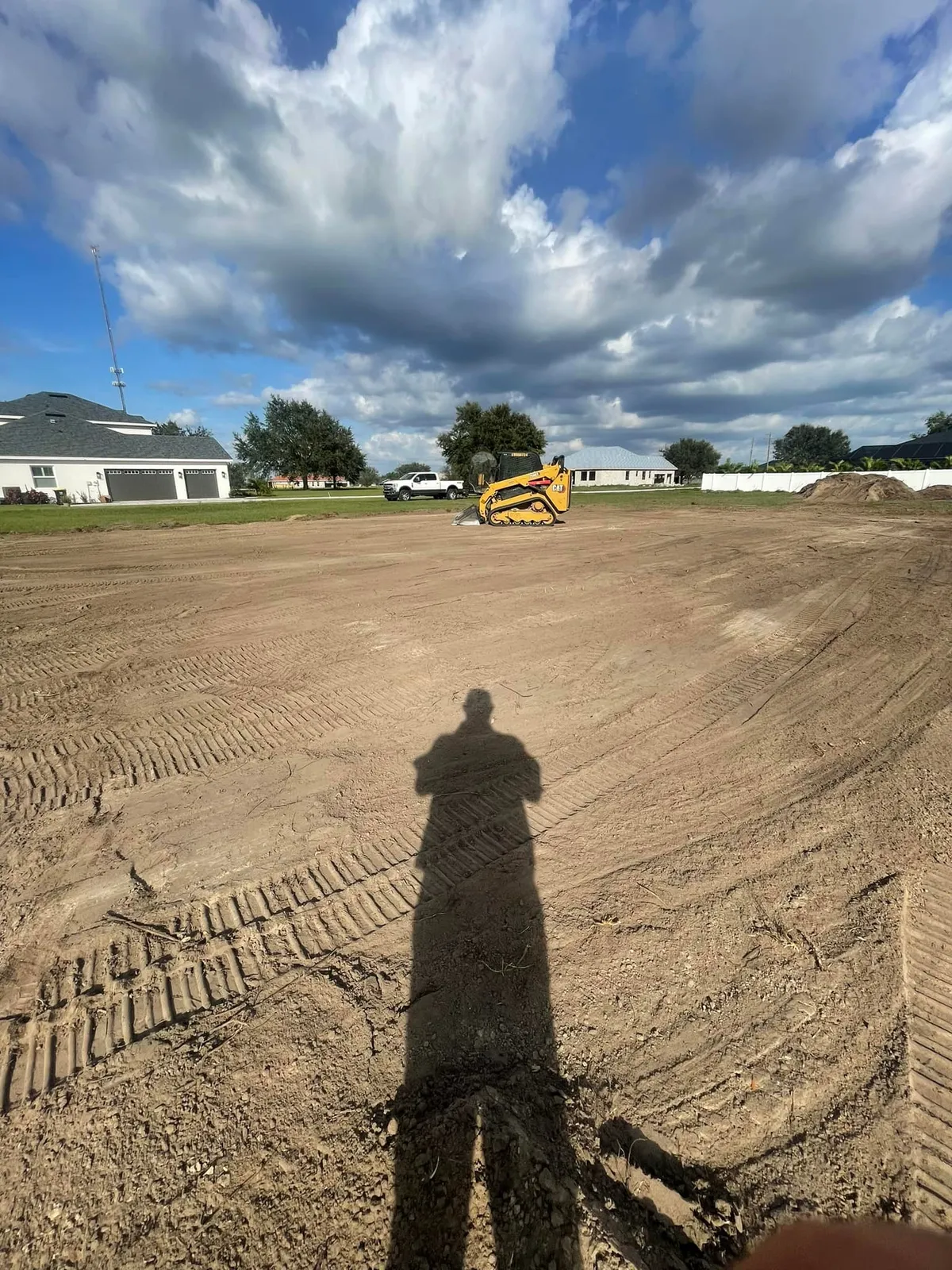
Sloping the ground away from the slab
The ground right around a house should fall away from it on every side. Water that sits against a slab finds its way under doors, into garages and against the foundation. Getting that first stretch of yard sloping outward fixes a surprising number of complaints by itself.
Past that, the yard gets shaped so water has somewhere to travel. A swale is a shallow, wide channel worked into the lawn. A good one is gentle enough to mow straight across. Rain finds it, follows it and leaves the lot without crossing the patio or pooling in the middle of the grass.
Fill goes in where the ground is too low. It is placed in layers and packed as it goes, or the low spot simply sinks back in a season. Ground that comes down gets moved where it helps instead of hauled off without a reason. The finish is smooth, ready for sod or seed, and pitched the way the plan calls for.
Finish grade on new builds, and after the digging
New houses going up along Berkley Road need a finish grade before the sod goes down. Builders rough the lot during construction, but the last shaping is what decides whether the new yard drains the way the plan says. Sod laid on rough grade locks in every dip.
The other common call comes after somebody else’s digging. A septic install, a water line or an electrical trench leaves a strip of loose soil across the yard. If that strip was backfilled without being packed, it settles in the first wet season and turns into a rut that holds water and points it somewhere new.
Putting the grade back means packing the trench line properly and blending it into the yard around it. We do that as part of our own septic and utility work as a matter of habit, and we fix it for other people’s jobs too. One customer left a short Google review after a grading job: “Excellent customer service and high-quality work!”
Everything on yard drainage around town is on our Auburndale land grading page. The excavation side handles bigger swales and small retention areas, and the gallery shows finished yards.
Standing water questions
Can I grade so the water goes onto the vacant lot next door?
No. Water cannot be pushed onto a neighbor’s property, vacant or not, and that lot will not stay vacant forever. The grade has to carry rain to an outlet that can take it, such as the road ditch or a swale on your own ground. Settling that outlet is one of the first things the walk covers.
How much slope does the first ten feet off the slab need?
Enough that water clearly runs away from the house. A common rule of thumb is about six inches of fall over the first ten feet. A tight lot sometimes cannot give that much, and then a swale has to pick the water up closer to the wall. What matters is that nothing tilts back toward the slab anywhere along the house.
Does a swale need a pipe at the end?
Usually not. On Polk County sand a swale often spreads its water out and lets the ground take it, or hands it to the road ditch. A pipe comes in when the swale has to cross a driveway or a walk, or when the outlet sits higher than the yard. Jacob sorts that out on the walk, once he sees where the water has to end up.
Yard holding water after every storm?
Take a few photos during the next rain and send them to Jacob. He comes out, shows you where the water wants to go and writes up what the grading costs before any dirt moves.