
Winter Haven · Drain Fields
The lake sets the calendar for a Winter Haven drain field
People who live near the Chain of Lakes watch the water. They notice when the dock sits high and when the shoreline widens out into bare sand. What most of them never connect is that the same water sits under the back yard, rising and falling with the chain. A drain field lives in that sand. So the field keeps a calendar too, and owners who learn it have far fewer bad days with their septic system.
Water under the lawn moves with the chain
Winter Haven sits on sandy soil, and sand drains fast. That is the good news for a septic system. The other side of it is that sand puts up no wall against ground water. When the lakes come up, the water table under the neighborhoods around them comes up too, and it does not stop at the shoreline.
A drain field works by letting treated water soak down through dry sand. The sand below the lines does the finishing work, and every inch of it counts. When the water table climbs, the gap between the bottom of the trench and standing ground water gets thinner. The field has less soil to work with.
That is why a field’s required depth is set by the highest water of the year. A field that looks fine on a dry spring afternoon was supposed to be built for the soggiest week of August. Older near-lake fields were not always set with that much respect.
Dry spring, easy field
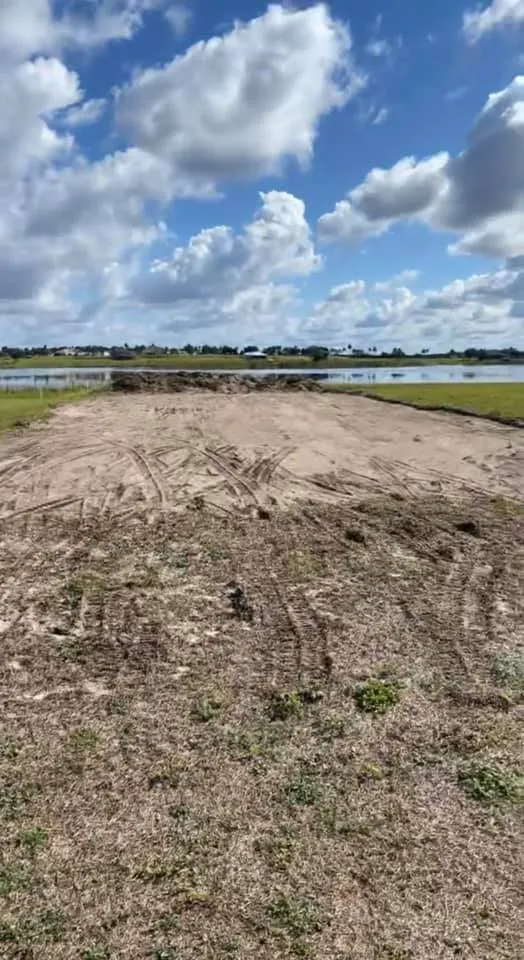
Spring is usually the dry stretch. Rain slows down, the lakes drop, and the water table falls with them. A tired drain field can look healthy for months in this window. Toilets flush. Nothing smells. The grass over the lines is the same color as the rest of the yard.
This is the season people forget they own a septic system at all, and that is fair. A field with a deep layer of dry sand under it is doing exactly what it should.
It is also the best season to look. When the ground is dry, what shows up is honest. A soft spot or a green stripe over the lines in April says more than the same thing in August, because in April there is no rain to blame. If a field already shows wear during the easy months, summer will be harder on it. That is worth knowing while there is still room to plan.
Spring is also when a lot of owners around the chain start yard projects. If new sod, a patio or a fence is planned anywhere near the lines, find out where the field actually sits first. Dry ground makes that easy, and nobody wants to learn the layout by cutting a pipe with a post-hole digger.
Wet summer, half-drowned trenches
Then the afternoon storms start. Rain falls on the yard, pours off the roof, and fills the lakes back up. The water table rises toward the trenches from underneath while rain soaks in from above. A field set too low in lake-side sand spends every wet season half-drowned.
When that happens, the effluent has nowhere to go. It backs up along the lines, then into the tank, and the house notices last. Slow drains come first. Then a gurgle in the tub. Then a wet patch over the field that smells the way grass should not.
Fields in high-water-table sand rarely quit in one day. They struggle through a summer, recover a little in the dry months, and struggle a bit worse the next year. That pattern fools people, because each spring the problem seems to fix itself. It has not. Caught early, a lot of these fields can be brought back with drain field restoration before anyone has to talk about a new one.
Reading your own yard by the season
You do not need tools for this. You need to walk the yard a few times a year and remember what you saw.
- In spring, look at the grass over the field. A strip that stays greener or grows faster than the lawn around it is getting water and food from below.
- In early summer, step on the ground over the lines after a normal day of laundry and showers. Firm is good. Spongy is a question.
- In the heart of the wet season, pay attention inside the house. Drains that slow after a few days of heavy rain and recover when the weather clears are a field near its limit.
- After a big storm, look for standing water that sits over the field longer than anywhere else in the yard.
Take a phone photo with the date on it. Jacob would much rather hear that a spot was soft last August and again this June than guess from a single visit.
Timing the pump truck and the machine
A tank refills within days of a pump-out, so the field is back to its usual flow almost right away. The value of pumping in spring is what leaves with the truck: settled sludge and floating scum that could otherwise drift toward lines already short on dry sand. With the lid open while the yard is still dry, Jacob checks the baffles too. That is one reason near-lake homes lean toward the shorter side of the usual pumping range. At every pump-out he measures the sludge layer, so the next interval comes from your own tank.
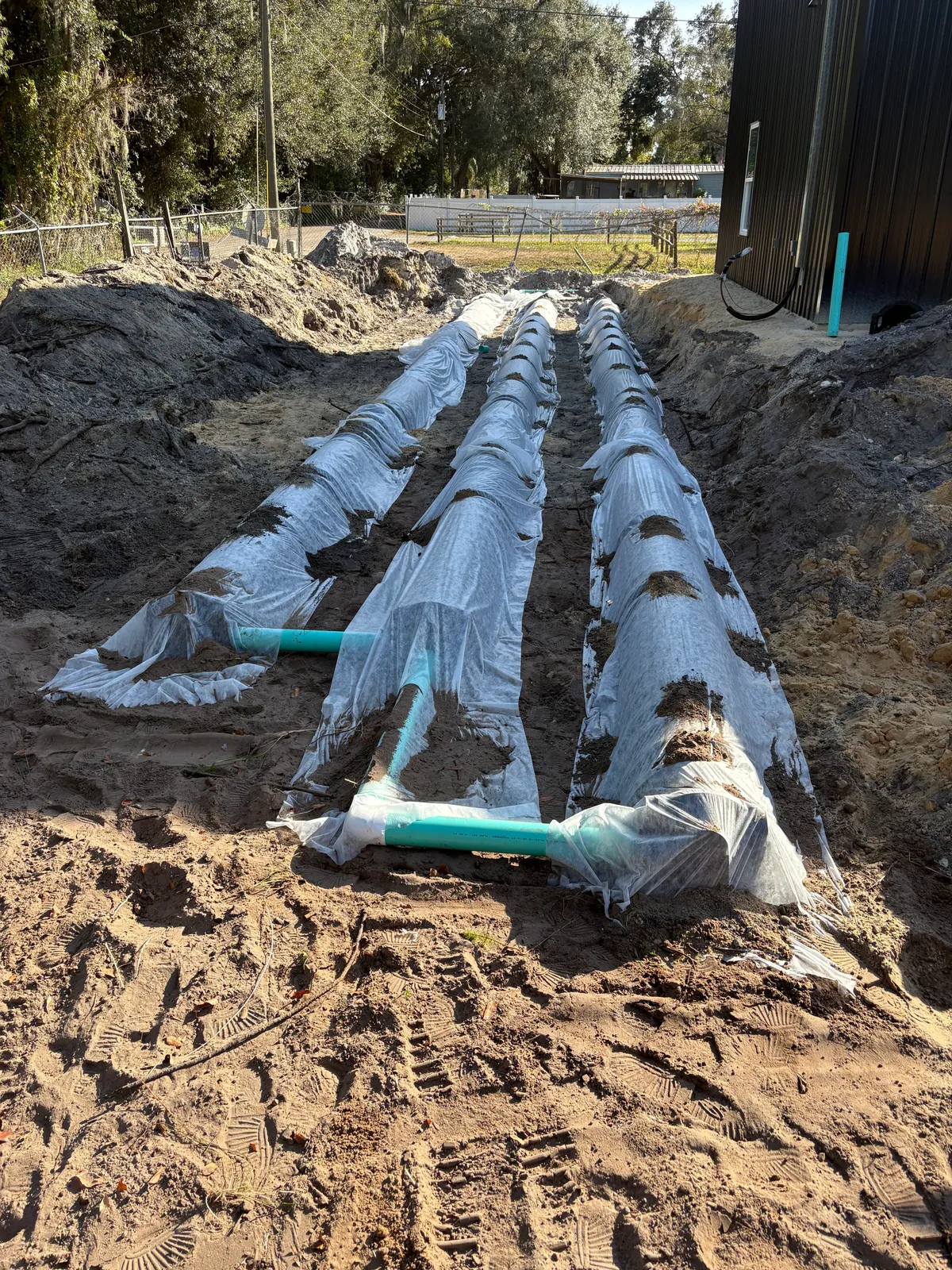
Field work keeps its own calendar. Digging trenches in saturated sand is slow and messy, and a new or restored field is easiest to set right when the water table is low enough to see the ground clearly. When a field does need replacing, the height of the new lines above that summer water decides how every wet season after it goes, and on some lots that height only comes from a mound. Planning that in the dry months is a lot easier than planning it in a flooded yard.
Lake-season septic questions
Should I pump my tank before the rainy season starts?
Spring works well on a near-lake property. The tank refills within days, so the field’s load returns to normal quickly, but the truck hauls away the settled solids before the wettest months and the open lid lets Jacob check the baffles while the yard is dry. A pump-out will not rescue a field that is already failing.
My drains slow down after heavy rain and then recover. Is that normal?
It is common near the lakes, and it is a warning. That pattern usually means the water table is rising close to the drain field lines and the field cannot take water as fast as the house sends it. Many of these fields are restorable when someone looks at them early, before a soft summer turns into a failed one.
Can a drain field be installed during the wet season?
Sometimes, depending on the lot and the weather that week. The trouble is that saturated sand is hard to work and hard to read. On a lake-side property it usually makes more sense to plan the job for the drier months, when the ground shows its real shape and the elevation can be set with confidence.
Is your field keeping up with the lake?
Tell Jacob what the yard does in August. He walks it, reads it, and puts a firm written price in your hand before any work starts.