
Bartow · Septic Repair
The pipe under your Bartow driveway is older than you think
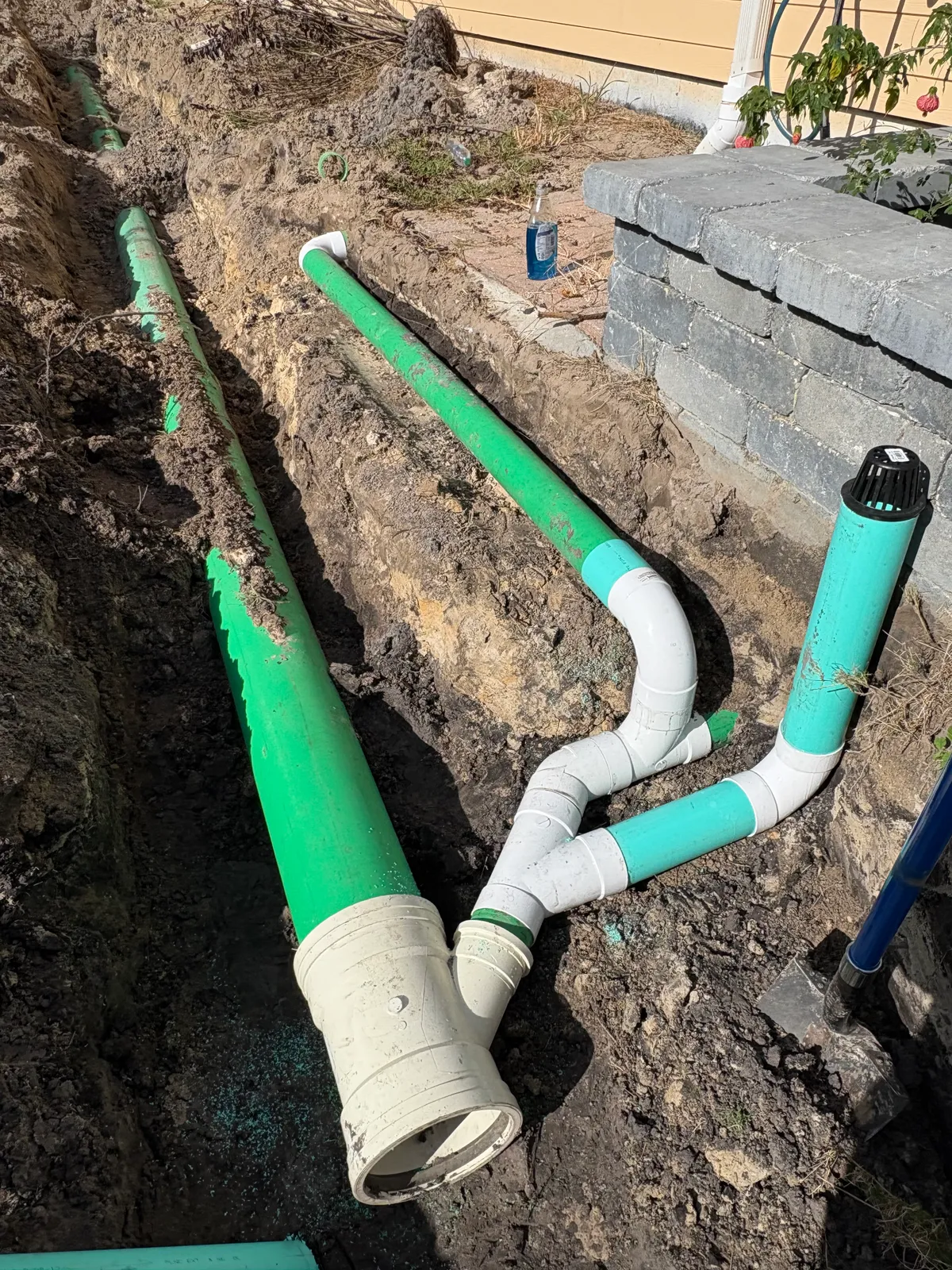
Everybody worries about the tank, because the tank is the part with a name. The stretch that actually strands people around the county seat is humbler: the run of pipe carrying waste from the house out to that tank. On a property this old it was very likely made of something nobody has installed in a lifetime, and it has spent every one of those years with vehicles rolling over it.
The materials that came before plastic
Two show up constantly on older parcels here. One is a fiber pipe, made from wood pulp bound with tar, that was completely ordinary building material in its day. It is light, easy to handle and cheap, and its weakness only appears with decades of ground pressure: it deforms. The round bore slowly turns oval, then flat, and a flat pipe carries nothing.
The other is clay. Clay pipe is rigid and lasts remarkably well against the waste inside it, but it comes in short lengths with joints between them, and rigid material under a shifting load does not bend. It cracks or it shears at a joint. Both materials were fine choices at the time. Both are now well past the working life anybody imagined for them, and both fail in ways a homeowner reads as a tank problem.
Why the driveway is where it gives up
The line has to leave the house and reach the tank, and on plenty of these lots the shortest sensible path crosses the drive. That was a reasonable decision when the pipe went in. What nobody planned for was seventy years of loads on top of it, or the fact that vehicles got substantially heavier along the way.
A car is one thing. A loaded work truck, a delivery vehicle, a trailer with a tractor on it, or a concrete truck the year somebody poured a slab, those are another thing entirely, and they concentrate weight onto a strip of ground that has an old pipe sitting under it. Ground that has been soaked by a wet summer transmits that weight even better. So the failure tends to arrive not the day of the heaviest load but a season or two later, once the deformation finally closes the last of the bore.
How this masquerades as a tank problem
Here is the pattern that costs people money. The house backs up, the owner calls for a pump-out, and the truck empties the tank. Everything runs fine for a few days, then it backs up again. So they pump it again. On a real crush, that cycle can repeat several times before anybody stops to ask why a tank that was just emptied is behaving like a full one.
The tell is in the tank itself. If the level inside is low and the house is still struggling, the trouble sits upstream of the tank rather than beyond it, and no amount of emptying will touch it. That single observation separates a line failure from a field failure, and it is the reason opening the lids comes before anything else. Reading it wrong sends a homeowner shopping for a new drain field they may not need at all.
Finding the break without opening the drive
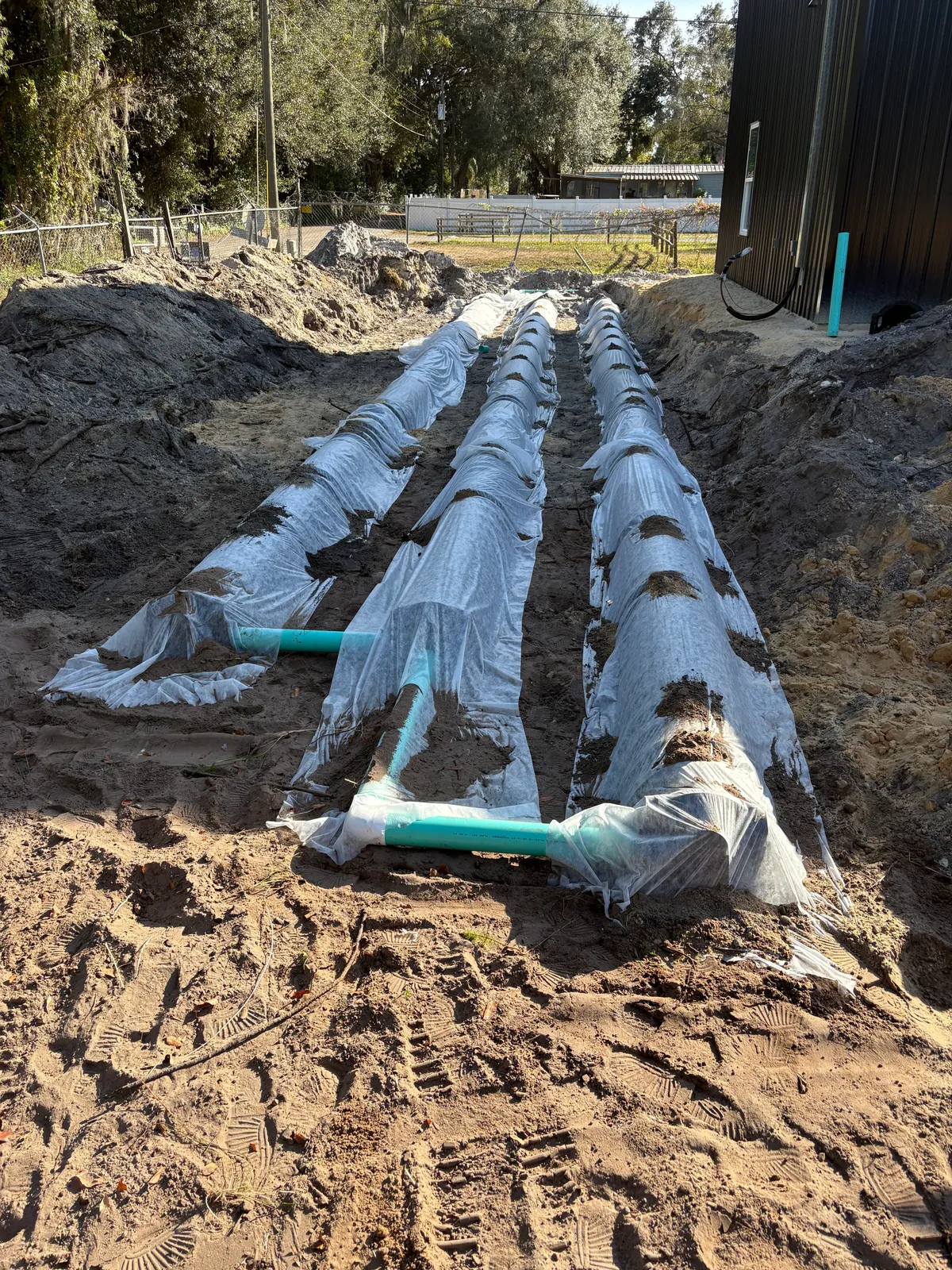
A camera settles it. Run down the line from a cleanout or from the tank end and the picture shows the flat spot, the offset joint or the break, and the footage counter says how far out it sits. Combine that with a probe from the surface and the damage gets marked on the ground within a foot or so.
That precision is what saves the concrete. Knowing the failure sits three feet past the edge of the slab means the repair happens in the dirt beside it rather than through it. Sometimes the answer is picking the run up on both sides and rerouting around the drive entirely, which costs a little more trench and saves the whole slab. Sometimes it genuinely is under the middle, in which case a narrow cut that patches cleanly beats breaking out the apron. Which route makes sense depends on depth and how far the damage runs, and that is a decision made from evidence rather than a guess made from the driveway.
The oaks get a say too
Old Bartow streets have mature trees, and roots follow moisture toward any joint that weeps. On clay pipe, with a joint every few feet, that is an open invitation. Fine roots slip in, thicken inside the bore and turn a working line into a plug over several seasons.
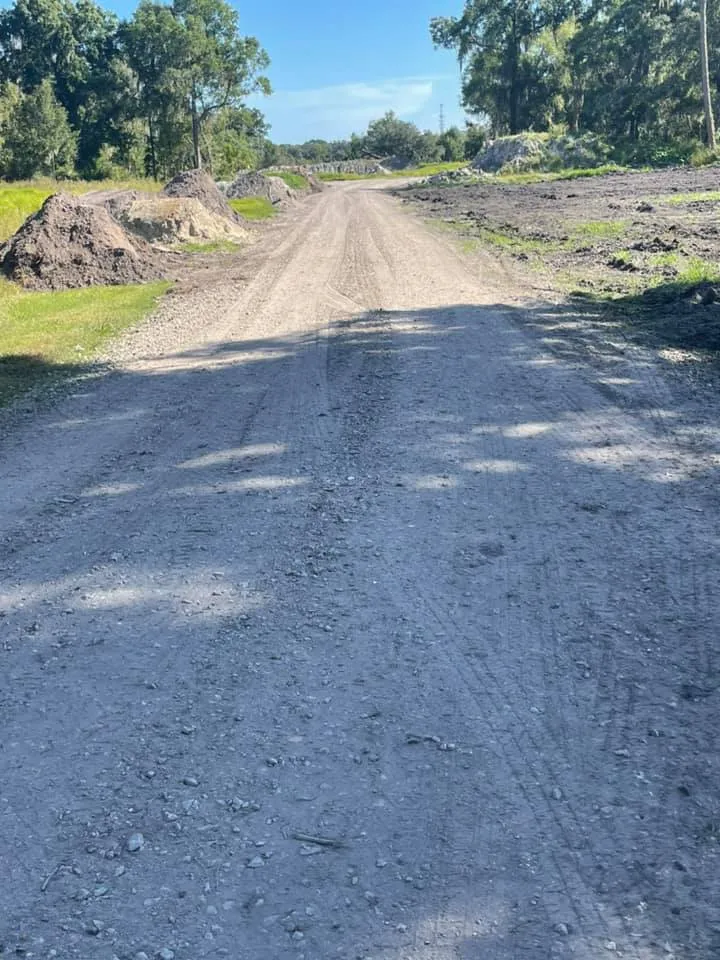
Losing the tree is almost never the answer. We work outside the trunk flare, hand-dig where the machine would tear feeder roots, and set the new run where it has room to stay clear of trouble. Spoil goes on boards, sod comes up in pieces, and backfill goes in lifts so the lawn is not a settling ditch by the next rainy season. A pipe replacement done properly should be invisible in a year except for the part where the drains work.
What to do about it before it strands you
If your house dates from the era these materials were normal and nobody has ever replaced that run, it is worth knowing what you have. A camera pass is quick, and finding a bore that is halfway to flat gives you the option of choosing when to fix it rather than discovering it on a holiday weekend. Ground that is soft or sunken in a strip where the pipe crosses the drive is the surface clue worth acting on.
When the line does need work, it is a targeted dig with a firm written price on that specific job, not a reason to replace a whole system. Everything involved in a Bartow repair call is laid out on its own page, and if the tank the line runs into turns out to be steel with a rusted baffle, that changes the conversation toward a replacement tank and you will hear it plainly rather than a year later.
Old pipe questions from Bartow properties
How do I know whether my line is one of these older materials?
Age of the house is the first clue and a camera is the proof. If nothing has been replaced since the place was built and the build date puts it in that era, assume the original run is still down there. The footage inside tells you the material, the shape of the bore and whether any joints have shifted.
Does fixing it mean tearing out my driveway?
Usually not. Once the camera locates the damage and a probe marks it on the surface, we know whether it sits under the slab or beside it. Plenty of these repairs happen in the dirt alongside, or take the run around the drive completely. Breaking concrete is the last option rather than the first.
My tank was just pumped and the house backed up again. What is happening?
That pattern points upstream of the tank rather than out at the field. If the tank level reads low while the house still struggles, waste is not reaching the tank in the first place, which means the run between the two is flat, cracked or plugged. Pumping again will not change it, so stop and get the line looked at.
Backing up again right after a pump-out?
Get the line looked at before you buy another truckload of guesswork. Diagnosis first, then a firm written price.