
Bartow · Drain Fields
A few inches of elevation decide a Bartow drain field
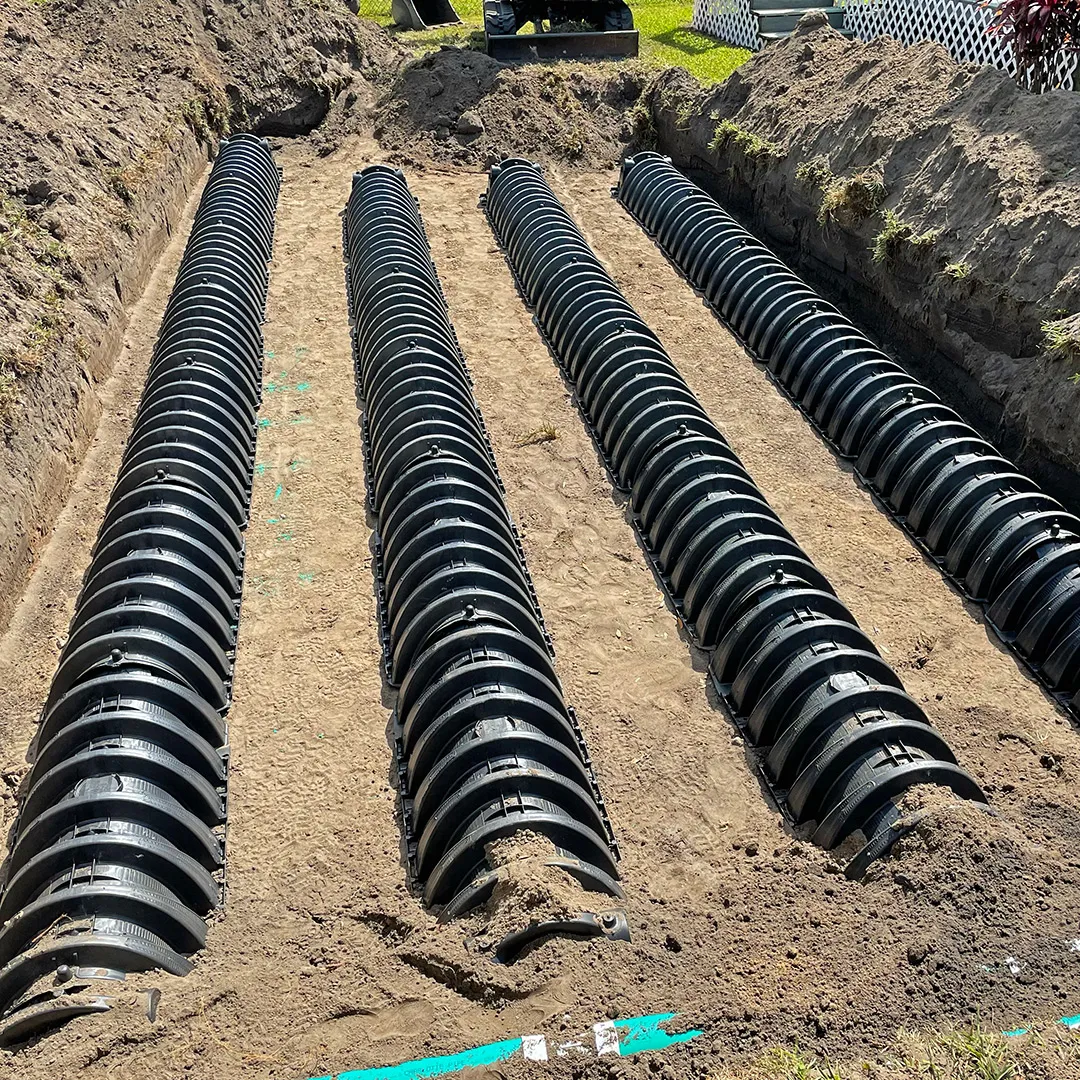
A drain field does not treat waste on its own. It hands water to the soil beneath it, and the soil does the work in the unsaturated space under the trenches. Take that space away and nothing about the field has changed except that it no longer functions. Around the county seat, the amount of that space you have is mostly a question of how high your trenches sit.
What the ground under a field is doing
Below any field there is a depth at which the ground is saturated, and that depth moves through the year. It sinks during dry stretches and rises when rain arrives, and the distance between the bottom of your trenches and that rising line is the working room the whole system depends on.
The number that matters is not where the water sits today, it is how high it comes during the wettest part of a normal year. That is the reading a site evaluation takes, and it is the reason two fields on the same road, built the same way in the same year, can have different fates. One sits with room to spare underneath it and works for decades. The other sits a foot lower, spends every summer with its working room gone, and gets blamed for being a bad field when it is really a well-built field in the wrong position.
Why the river end of town plays by different rules
The Peace River floodplain side of Bartow is where this stops being theoretical. Low ground holds water longer and gives it up more slowly, so a parcel down there can have perfectly good sand and still offer very little vertical room once the rains set in.
Mix in the other half of the local geology and it gets more particular. The phosphate country south of town left clay-heavy pockets stirred into the native sand, and heavy ground holds what falls on it instead of letting it drain away. A low parcel with a clay seam under it is the hardest combination we work with, because the field has both problems at once: less room to begin with, and ground that is slow to give the room back.
The system that works in March and quits in August
This is the most common version of the story we get called about. Drains run normally through the dry months. The yard is firm, nothing smells, the household never thinks about it. Then the rains arrive, the ground beneath fills, the working room disappears, and the same system that was fine in April starts backing up and pushing water to the surface.
Then the rain stops, the ground drains down, and it behaves again. Owners understandably read that as random. It is not random at all, it is a field with a thin margin doing exactly what the season asks of it. What matters is telling that apart from a field that is genuinely finished, and the difference is simple: a spent field misbehaves in a dry March too. So the season a system gets tested in changes the answer, and any honest read has to say which season it saw.
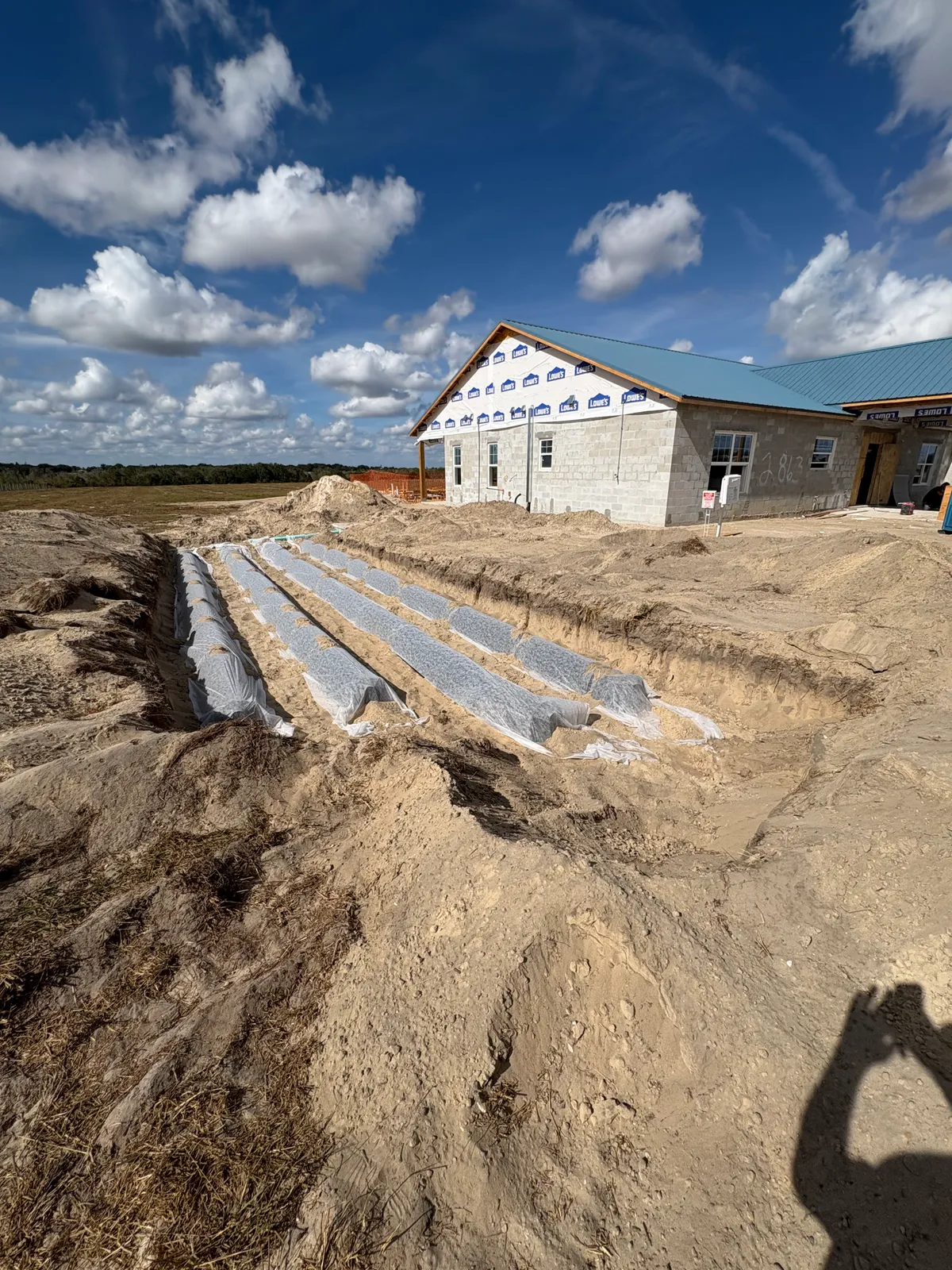
Building the room back
You cannot lower the water table under a property, so on low ground the field goes up instead. Clean fill placed under the trenches lifts them a safe distance above where the seasonal water rises, and a field built that way works through a wet summer that would have drowned the same design cut into the original grade.
That is a genuine cost and schedule item rather than an upsell, so it belongs in the first conversation instead of appearing later. It also has to agree with the rest of the site. The house pad, the driveway and the field all sit in one landscape, and cutting one of them a few inches too low is the sort of thing a property reminds you about every wet season. Shooting the whole area before anything gets designed is what keeps those grades in agreement, which is exactly why a septic installation down here is a grading job as much as a plumbing one.
Reading your own yard through the year
You have better information about your property than any visitor does, because you have watched it in every season. Worth paying attention to:
- Whether the ground over the trenches stays soft for days after rain while the rest of the lawn firms up.
- Whether drains slow in a predictable stretch of the year rather than at random.
- Whether the grass over the field is a different green than the grass around it, and whether that changes seasonally.
- Where roof water and yard runoff end up, since a downspout aimed toward the field is spending your working room for you.
- Whether the tank refills quickly after being emptied, which says the ground out there is refusing to take what it is given.
What can be done about a low field
Not every seasonal system needs replacing, which is the useful part. Where the trouble is water arriving rather than water rising, moving it can buy real capacity: extending downspouts well clear of the trenches, cutting a swale so yard runoff goes somewhere else, correcting a grade that funnels storm water into the low corner the field sits in. That work is ordinary and it can add years.
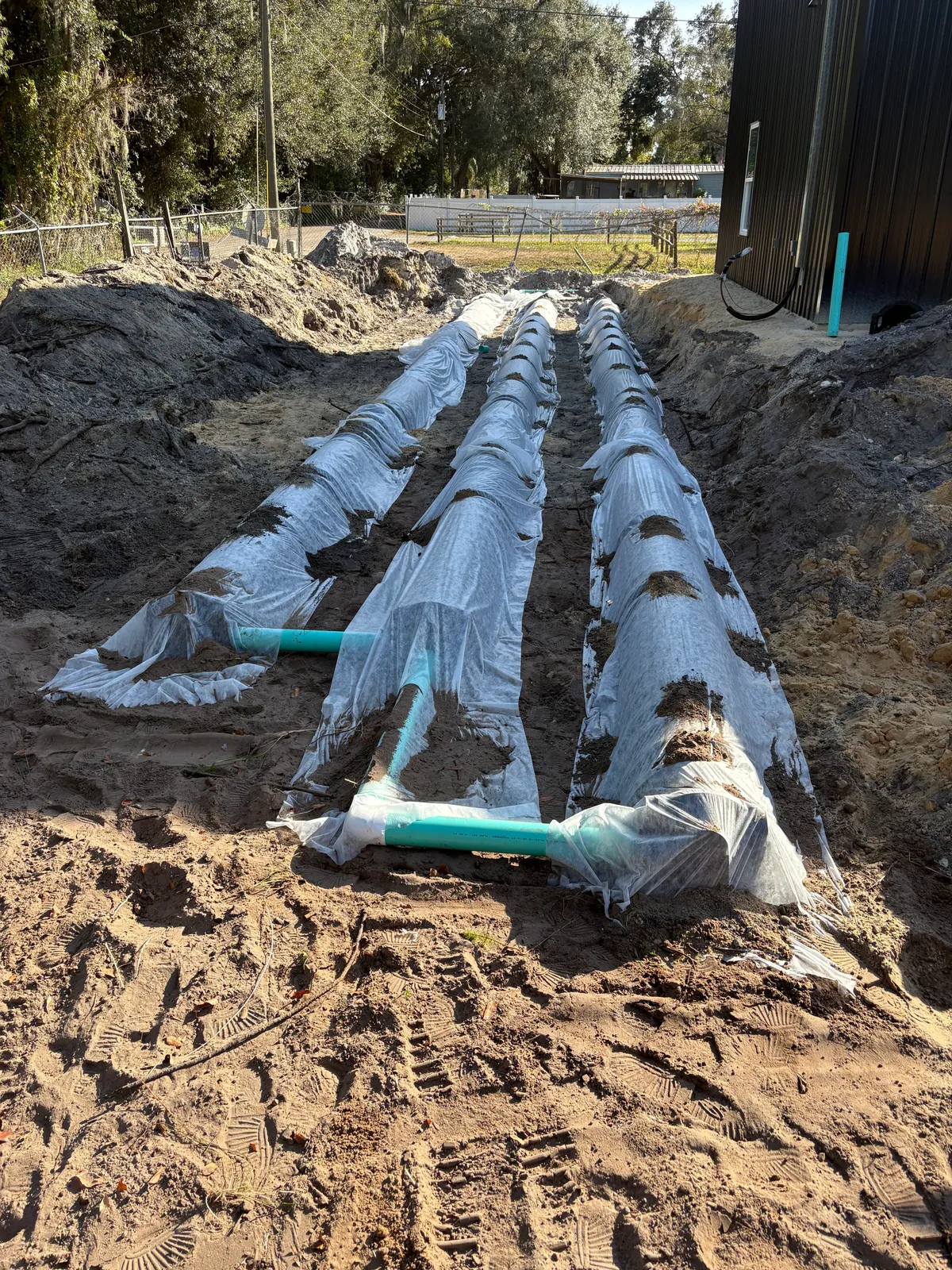
Where the trouble is the elevation itself, the honest answer is a field built higher on ground selected for it, and hearing that early beats spending a few seasons treating symptoms. Either way the diagnosis happens with the lids open and the ground probed, not from the driveway. The comparison between restoring a field and replacing it gets made out loud in the yard, with the reason pointed at, and if what is really failing is a component rather than the ground, that is a repair and a much smaller day.
Elevation questions from around Bartow
My field only struggles in the wet months. Is it finished?
Probably not, though it is telling you the margin is thin. Seasonal water rising into the trench zone takes away the room the field needs, and a system with little to spare will limp until the ground drains down. A field that is genuinely done misbehaves in a dry March as well, so we weigh both seasons before calling it.
Can anything be done for a field that sits too low?
Sometimes a great deal. If extra water is arriving from roof and yard runoff, moving it away with extended downspouts, a swale or a corrected grade gives real capacity back. If the problem is purely how high the trenches sit relative to seasonal water, the lasting answer is a field built up on clean fill.
Why does a raised field cost more than a conventional one?
Because it includes dirt work the other does not. Clean fill has to be brought in, placed and shaped under the trenches to lift them above the seasonal water line, and the whole area has to be graded to blend back into the yard. That is material, machine time and hauling on top of the septic work itself.
Yard going soft every summer in Bartow?
Find out whether it is the season or the field, with the lids open and a firm written price on whatever it needs.