
Haines City · Site Work
Building on a Haines City lot with no sewer? The septic comes first
A Haines City lot outside the sewer network is a good lot to build on, as long as the septic runs in the right order. The system goes in early, ahead of the driveway, ahead of final grade and ahead of anything green. It is the first question the ground gets asked, and the answer shapes the rest of the property.
Haines City has grown hard along US-27 and the I-4 corridor, and much of that growth sits on acreage and infill lots no sewer main reaches. Here is the sequence we run, and where people lose money running it backwards.
The site evaluation comes first and decides the rest
Before anyone picks a tank or draws a trench layout, the ground gets read. A site evaluation and soil test tell what your parcel is made of and how high the seasonal water table climbs on it. On Haines City sand, that second number carries the job. One lot on a street can drain freely all year while the lot next door sits close to water every August.
The part that matters is who makes the call. The county health department reviews the evaluation and determines what kind of system the lot can take and at what elevation. That is not a contractor’s opinion, ours included. We walk the property and get the evaluation scheduled. Whatever comes back on the permit is what gets built.
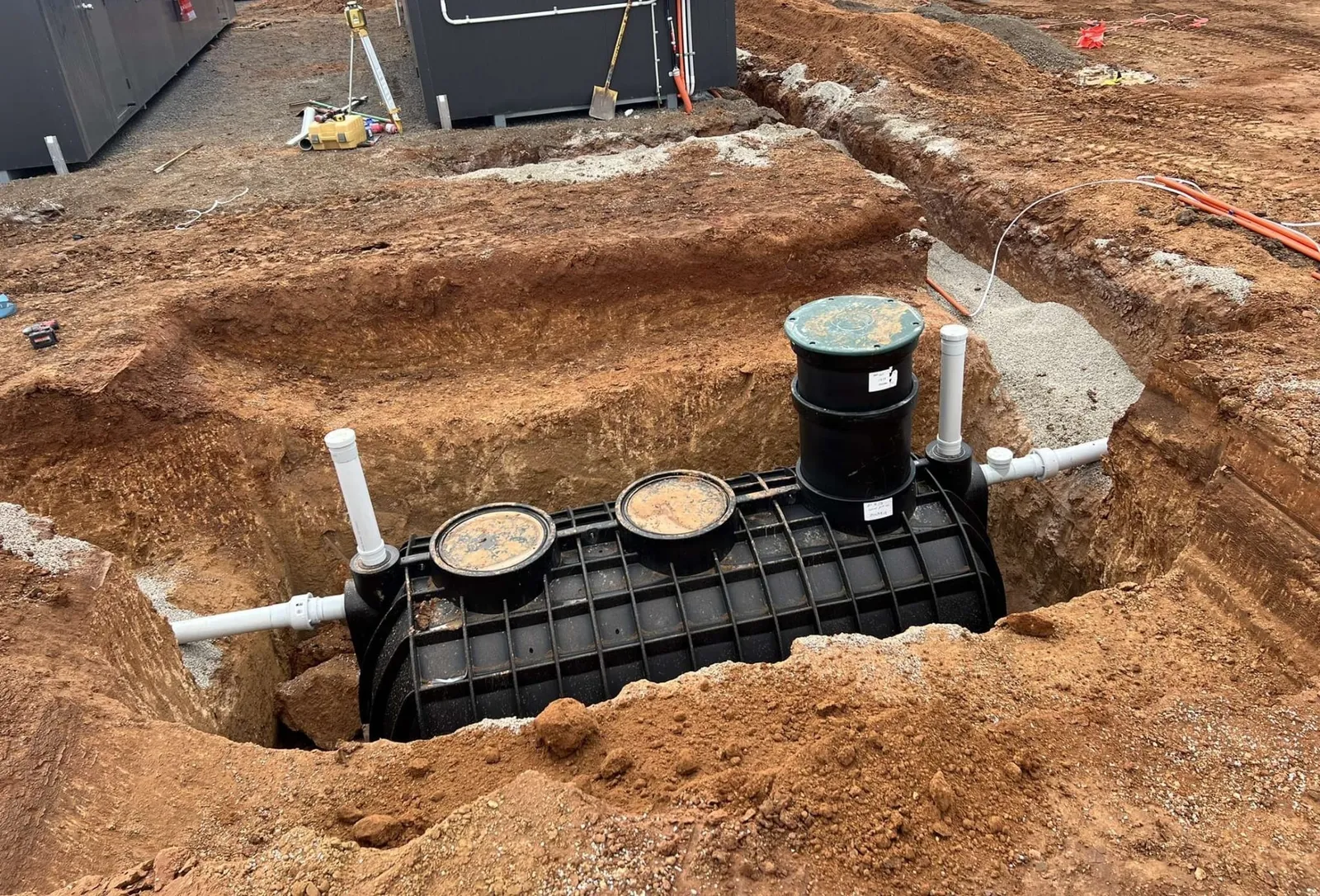
Sometimes the answer is a mound
On the lower, wetter parcels around town, the determination often calls for a mound or another elevated system. The drain field gets built up in clean fill instead of cut into native ground, so the trenches stay above the wet-season water line. It also changes the yard. An elevated field reads as a low, broad rise, and the ground around it has to be graded to blend into it instead of trapping water against it. That moves the sod line, the fence line and where a pool could ever go. Hear it at evaluation and you design around it. Hear it after framing and you are redrawing the back yard.
Sized by bedrooms, not by acres
Owners with five acres assume they get a bigger system than the neighbor on a half acre. It does not work that way. The county health department sizes the system by bedroom count and expected flow, so pasture does not buy you a larger tank and a tight lot does not shrink one. The trap is the bonus room. A space over the garage goes on the plans as an office, the permit is issued on that number, and three years later it has a closet and a bed in it. The system was never sized for that load. If a room is going to be slept in, count it now, while the hole is open and the machine is on the lot.
The order the work has to happen in
Once the permit is in hand, the sequence runs like this, and every step sits where it does for a reason:
- Clearing and rough grading, so the system location gets set on real ground instead of a drawing.
- Fill and pad prep, because the pad fixes the elevations everything downstream is measured from.
- Tank and field, set to the elevation on the permit and inspected before anything is covered.
- Driveway and culvert, routed so no traffic lane ever crosses the field.
- Final grade, shaped to carry water away from the field instead of across it.
- Sod, irrigation and landscaping last, once the ground under them is done being disturbed.
Run it out of order and you buy the same work twice. A driveway poured before the tank goes in is a driveway that gets cut. Sod laid before final grade is sod that gets peeled. Irrigation trenched across the field area before the field is located is a repair waiting to happen.
Coordinate with the builder before the pad
Clearing, fill and pad prep all decide where the system can physically sit, so the septic and the site work cannot be planned in separate rooms. Where the pad lands, how much fill comes in and which trees stay all move the available area. When one outfit handles the clearing, the excavation and the grading, that conversation happens on the lot instead of across three phone calls. If your builder is running the site work, get the system location marked and agreed before the pad goes in. The ugliest version of this job is a compacted pad sitting where the field was supposed to be.
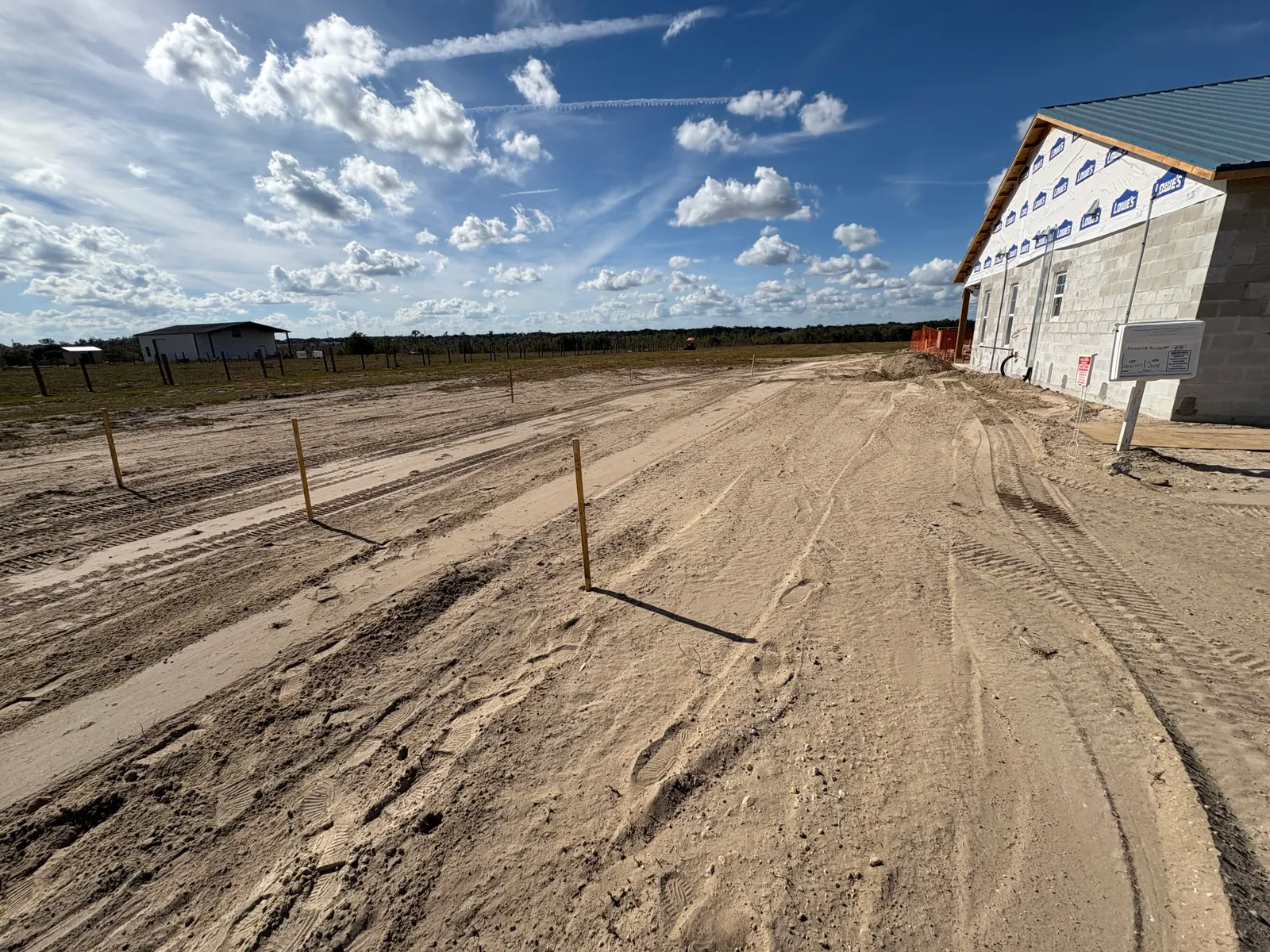
Two things nobody plans for on install day
The first is truck access. A pump truck is heavy, and thirty years from now it still needs a route to the tank that does not cross the field or squeeze through a gate built too narrow. On a wooded lot that route is easy to keep while the trees are still coming down and expensive to add once the yard is finished. Set risers at grade while the hole is open, too.
The second is protecting the field through the rest of construction. The system sits in an active job site for months, and one loaded truck parked on it compacts the ground and undoes the work. Stake it, rope it, tell every trade on the lot. If something does get parked on it, handle the drain field repair before the sod goes down.
The two papers to keep
When the job closes out, you get the permit paperwork and the as-built drawing showing where the tank and field actually sit. File both somewhere you will find them. The as-built saves an hour of probing every time the tank gets serviced, and it is the first thing a buyer’s inspector asks for when you sell.
If you have a lot outside the sewer line and a build coming, the first move is a site visit and an evaluation. See how a Haines City job runs, line up a new system install, or tell us about the lot and we will come look.
Haines City lot and septic FAQs
Do I need the evaluation before I can get a price?
Yes. Until the county health department has the evaluation and makes its determination, nobody knows whether your lot carries a conventional field or an elevated one. Those are different jobs at different prices.
Does a bigger lot mean a bigger system?
No. The county health department sizes the system by bedroom count and expected flow, not by acreage. Five acres and a half acre with the same house get sized the same way.
Can the septic go in after the driveway?
We would not do it that way. The tank and field go in before the driveway, before final grade and before sod, or you end up cutting finished work to reach them.
What happens if a truck parks on the drain field?
Compacted soil over the trenches. Sometimes it shows right away and sometimes it waits for the first heavy wet season. Keep everything off it and deal with it early if it happens.
What paperwork should I have when the job is done?
The permit paperwork and the as-built drawing with the tank located. Keep both. The as-built is what a service crew and a buyer’s inspector will each want later.
Building on a Haines City lot?
Get the ground evaluated and the system placed right before the pad goes in, from the licensed owner who does the work himself.