
Haines City · New Owners
New to septic in Haines City: what is buried out back and how to live with it
Haines City has been filling in fast. Whole subdivisions off US-27, new 55-plus communities, streets that were orange grove ten years ago. A lot of that growth went up quicker than the sewer network could follow, so plenty of new neighbors are living on septic for the first time in their lives. If you came from a sewered house in Orlando or up north, nobody handed you a manual with the keys. Here is the short course, from the crew that digs these systems up for a living.
What is actually buried out there
Two pieces of equipment sit in your yard, and they do completely different jobs.
The tank is the first stop. Everything the house sends down a drain lands there, and the tank has one job, which is separation. Solids settle to the bottom and become sludge. Grease and lighter material float to the top as a scum layer. The clearer water in the middle is what moves on. A tank is not a container where waste disappears. It is a settling chamber, and it works only while there is room inside for things to settle. Crowd that middle band and solids start riding out with the water.
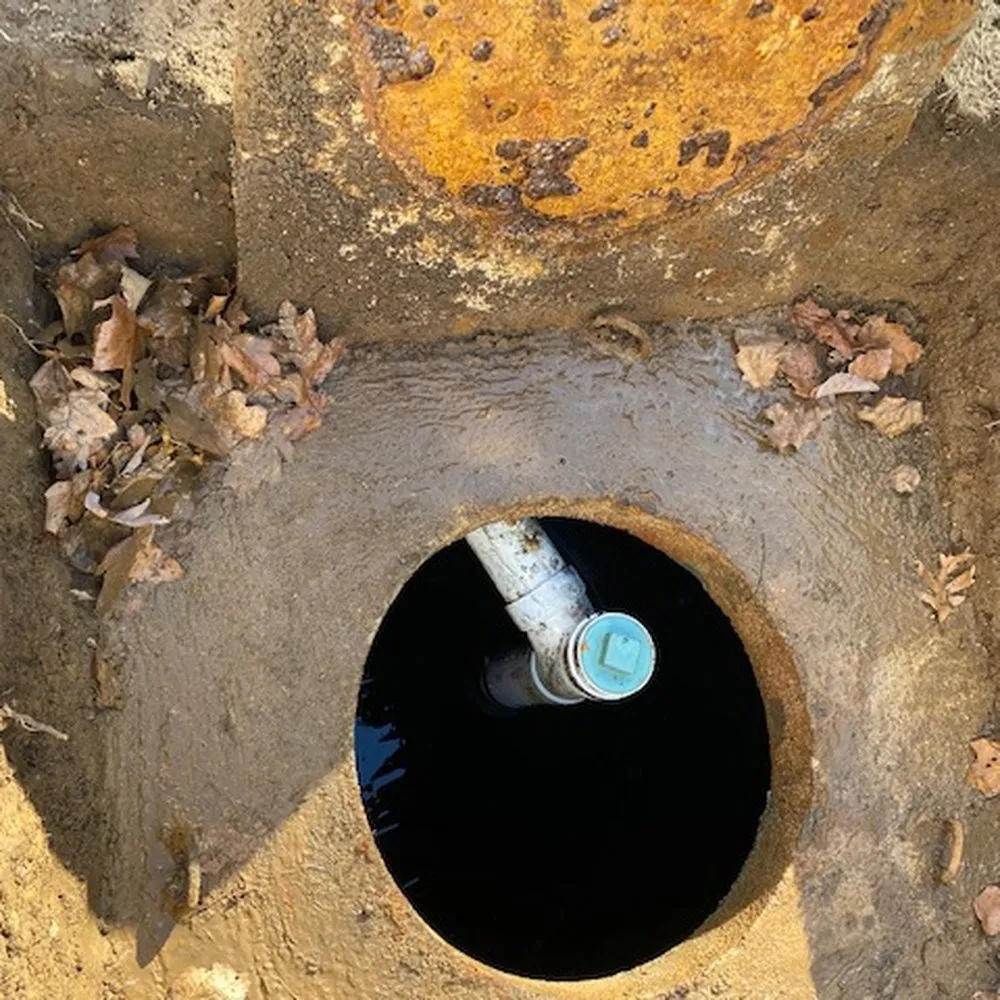
The drain field is the second stop, and it does the actual treatment. Perforated pipe sitting in gravel or plastic chambers spreads that middle water out underground, and the sandy soil under most of Haines City finishes the job as the water works its way down. The field is the costly part, the fragile part, and the part you will never see.
The mental shift nobody warns you about
On city sewer, the system is somebody else’s problem by design. You flush, it leaves the property, and a utility handles the rest. You can pour bacon grease down the sink on Sunday and run five loads of laundry on Monday and the house never says a word.
A septic house is a closed loop in your own yard. Whatever goes down the drain stays on your property until the soil finishes with it. That is no reason to be nervous, and it does not mean tiptoeing around your own plumbing. It means a few ordinary habits carry more weight here than they did at your old address.
The short list that actually matters
You do not need to become an expert on your own system. Four things carry nearly all the weight.
- What goes down the drains. The tank handles waste and toilet paper. It cannot digest much else.
- How much water goes down at once. Volume in a short window pushes solids out before they can settle.
- What parks on the drain field. Weight compacts soil, and compacted soil stops accepting water.
- A pumping rhythm you actually keep. The one appointment that protects everything else in the yard.
Wipes, and why flushable is a marketing word
Flushable describes clearing the toilet trap. It says nothing about what happens next, and what happens next is nothing. The fibers in a wipe do not break down the way toilet paper does. They stay whole, mat together, and build a layer that turns a routine pump-out into a fight. We pull them out of tanks in brand new subdivisions constantly, usually from households who were told the package was septic safe. Same story for paper towels, cotton rounds, floss, cat litter and the disinfecting wipes by the sink.
The kitchen sink does more damage than the bathroom
New owners brace for the toilet and never think about the kitchen. Grease is the bigger threat by a wide margin. Warm bacon fat, pan drippings, salad oil and the film rinsed off dishes all pour down easily, then cool in the tank and join the scum layer up top. That layer grows, it does not go away on its own, and once it thickens it starts pushing toward the outlet and out to the field. Grease in a drain field is close to unrecoverable, because it coats the soil and the soil stops taking water. Wipe greasy pans with a paper towel first. Pour cooled fat into a can and throw the can away.
Four loads on Saturday, or four loads across the week
Laundry surprises people. A septic system cares less about your monthly water total and more about how much arrives at once. Four loads back to back on a Saturday morning sends a surge through the tank that lifts settled solids and carries them toward the field, and it floods the field faster than the soil can take it. The same four loads spread across the week are barely noticed. Spacing them out costs you nothing.
Two appliances are worth thinking about. A water softener discharges a slug of brine every time it regenerates, which is real added volume going into the tank. A garbage disposal turns food scraps into sludge the tank has to hold, and heavy users fill a tank noticeably faster. Neither is forbidden. Both mean more load, and more load means a shorter interval between visits from us.
Track down the paperwork now, not during a sale
Somewhere there is a permit and an as-built drawing for your system. The as-built is the useful one, because it shows where the tank sits, where the lids are, and where the field runs. Without it, the first service call includes probing the yard to find the tank, and that is time you pay for. The Polk County health department handles septic permitting and record keeping, so that is the office to ask. Start with your address and the year the house was built. A builder or the previous owner may have a copy too. Do that on a quiet weekday rather than during a sale, when a buyer’s inspector wants it in three days.
Early signs worth knowing
These systems rarely fail without warning. They fail without warning that anyone recognized. Things to notice:
- Drains slowing down all over the house at once, especially the ones farthest from the tank.
- Gurgling from a toilet or a tub while the washing machine drains.
- Grass over the field that is greener, taller or wetter than the rest of the yard.
- Soft or spongy ground over the tank or the field when it has not rained.
- A sewage smell outdoors, or waste backing up at the lowest drain in the house.
One of these on its own is worth a phone call. Two or three together means call today. A septic inspection tells you which part of the system is talking, and a pump-out often settles it. Nobody should be opening or climbing into a tank to check, by the way. That is a confined space with dangerous gas in it, and it is our job with our equipment. If you are new to the neighborhood, we can walk your Haines City property and give you a straight read on the shape it is in.
First-time septic owner FAQs
I moved from a house on city sewer. What is the biggest change?
What goes down the drains now stays on your property until the soil finishes with it. Watch the content, and avoid dumping a week of water use into one afternoon.
Are flushable wipes really a problem in a septic tank?
Yes. Flushable describes clearing the toilet, not breaking down afterward. Wipes stay whole in the tank and mat together. Toilet paper and human waste are the only things that belong down there.
How do I find the permit and drawing for my Haines City system?
Ask the Polk County health department, which handles septic permitting and holds the records. Bring your address and the year the home was built. The builder or previous owner may have a copy too.
Does a garbage disposal or water softener hurt a septic system?
Neither is forbidden, but both add load. A disposal sends more solids to the tank and a softener adds volume every time it regenerates. Plan on servicing the system a little more often.
How do I know when the tank should be pumped?
Tank size, how many people live there and daily habits all move the number, so no single answer fits every house on the street. Tell us about your system and we will give you a straight read.
New to septic in Haines City?
Send us the address and we will give you a straight read on the system you inherited, from the licensed owner.